
Some links in this guide are affiliate links. If you book through them, Hello Korea Tips may earn a small commission at no extra cost to you.
Last checked: October 31, 2026
Most of the official info on autumn leaves in Seoul is only in Korean: the peak map from the Korea Forest Service and the city’s own list of foliage roads. So I read through them, plus the palace notices, and pulled out what actually matters if you’re in Seoul this November. Short version: early November is your window, and the Secret Garden is the one ticket I’d book ahead.
Quick answer
- 🗓️ Peak: early November; maples at Seoul Botanic Park are forecast for November 2
- 📍 Best bets: the Secret Garden at Changdeokgung, the Deoksugung stone-wall road, the ginkgo at Seoul Forest
- 💰 Palace tickets: 1,000 to 3,000 won; the Secret Garden adds 5,000 won
- ✅ Book ahead if: you want the Secret Garden: online tickets open 6 days before
Leaves don’t follow your calendar, of course. But the forecasts give you a good starting point, and the rest of this guide is about where you’ll want to be once the color shows up.
When do the leaves peak in Seoul in 2026?


The Korea Forest Service publishes a peak map, and the 2026 one came out on September 22. On that map, “peak” means half the leaves have turned.
Inside Seoul, the map has one point: Seoul Botanic Park, where maples are forecast to peak on November 2. If you’re staying a few days, these points just outside the city help you read the timing:
| Place | Where | Maples | Ginkgo |
|---|---|---|---|
| Seoul Botanic Park | Gangseo-gu, Seoul | November 2 | Not on the map |
| Surisan | Gunpo, Gyeonggi | November 2 | November 4 |
| Korea National Arboretum | Pocheon, Gyeonggi | October 29 | October 31 |
| Mulhyanggi Arboretum | Osan, Gyeonggi | November 6 | November 6 |
If your dates are flexible, I’d aim for the first week of November and plan the rest of your trip around it.
Here’s the catch: ginkgo don’t hang around.
In a Seoul Forest feature from November 27, 2025, the Seoul city news site warned that once ginkgo start dropping leaves, the branches go bare within days. It called that weekend the end of the season.
One honest warning about ginkgo season: the fallen berries smell, let’s say, memorable. Watch where you step, and maybe skip the suede shoes.
The Korea Meteorological Administration uses its own yardstick for mountains. It counts the first color when about 20% of a mountain has turned from the top down, and the peak at about 80%. Both agencies post their updates in Korean, so I’d run the pages through a translation app the night before you go.
The Secret Garden at Changdeokgung: the one I’d book
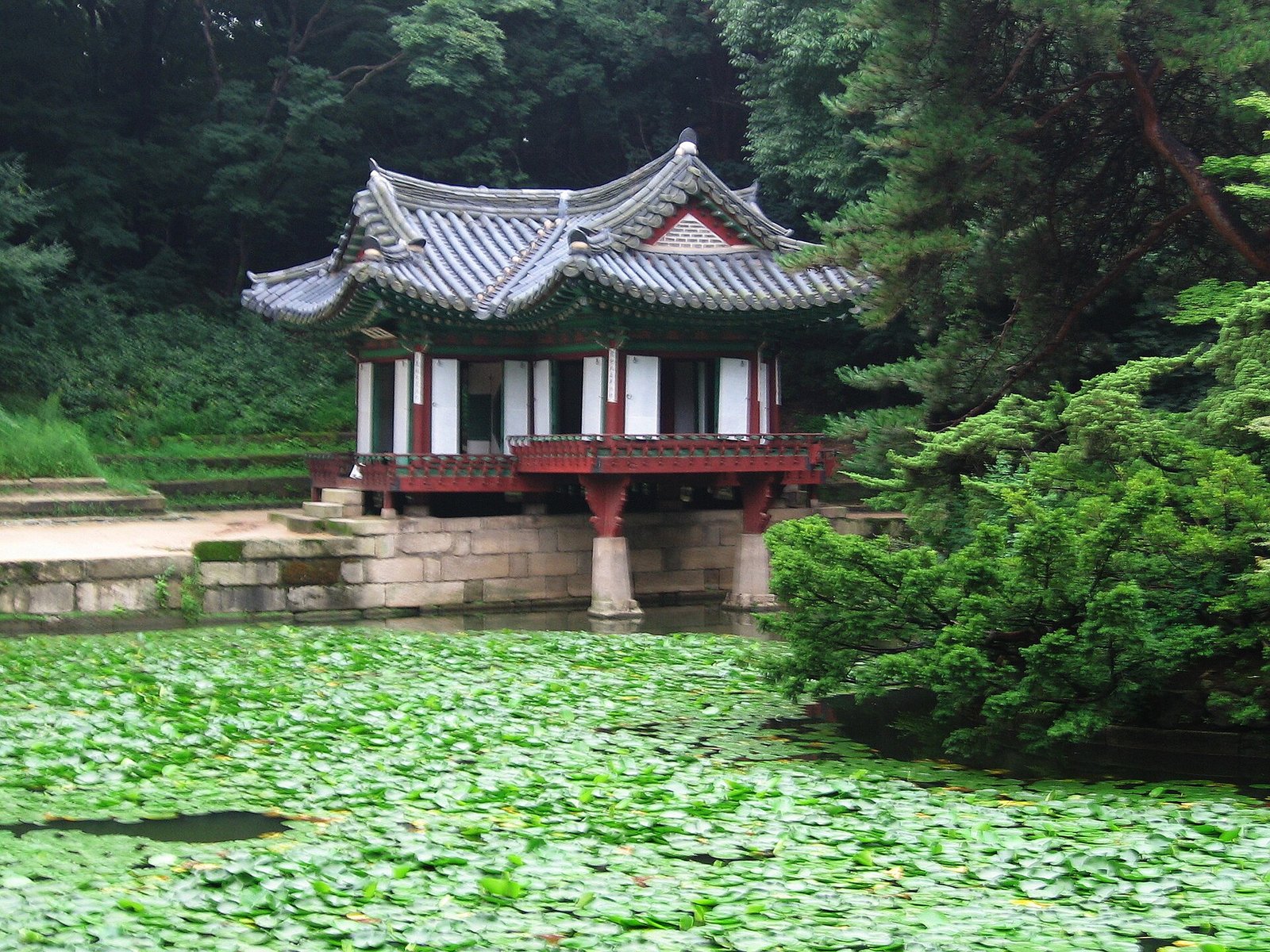

If you only have time for one palace in November, I’d pick Changdeokgung and its Secret Garden, called Huwon in Korean. You can only walk the garden on a guided tour, so you won’t be fighting a crowd for every photo.
The palace itself is open 9 a.m. to 5:30 p.m. from November to January, with ticket sales ending at 4:30 p.m. Adults (19 to 64) pay 3,000 won, and it’s closed on Mondays. The Secret Garden costs you 5,000 won more, on top of that palace ticket.
Here’s how the garden tickets work, from the English site of Changdeokgung:
- Online: 50 tickets per tour, from 10 a.m. six days before until the day before.
- On the day: the other 50 sell at the ticket office.
- English tours: 10:30 a.m., 11:30 a.m., 2:30 p.m., and 3:30 p.m., from March to November.
With 100 tickets per tour and only half of them online, I would set an alarm for 10 a.m. Korea time, six days before your date. I wouldn’t gamble a November trip on the walk-up half.
⚠️ Heads-up
Foreign-language tours are for foreigners only. And the 6,000-won Royal Palace Pass (the four palaces plus Jongmyo Shrine) does not cover the Secret Garden at all, so you will still need to book the garden separately.
Gyeongbokgung and Deoksugung: no booking needed
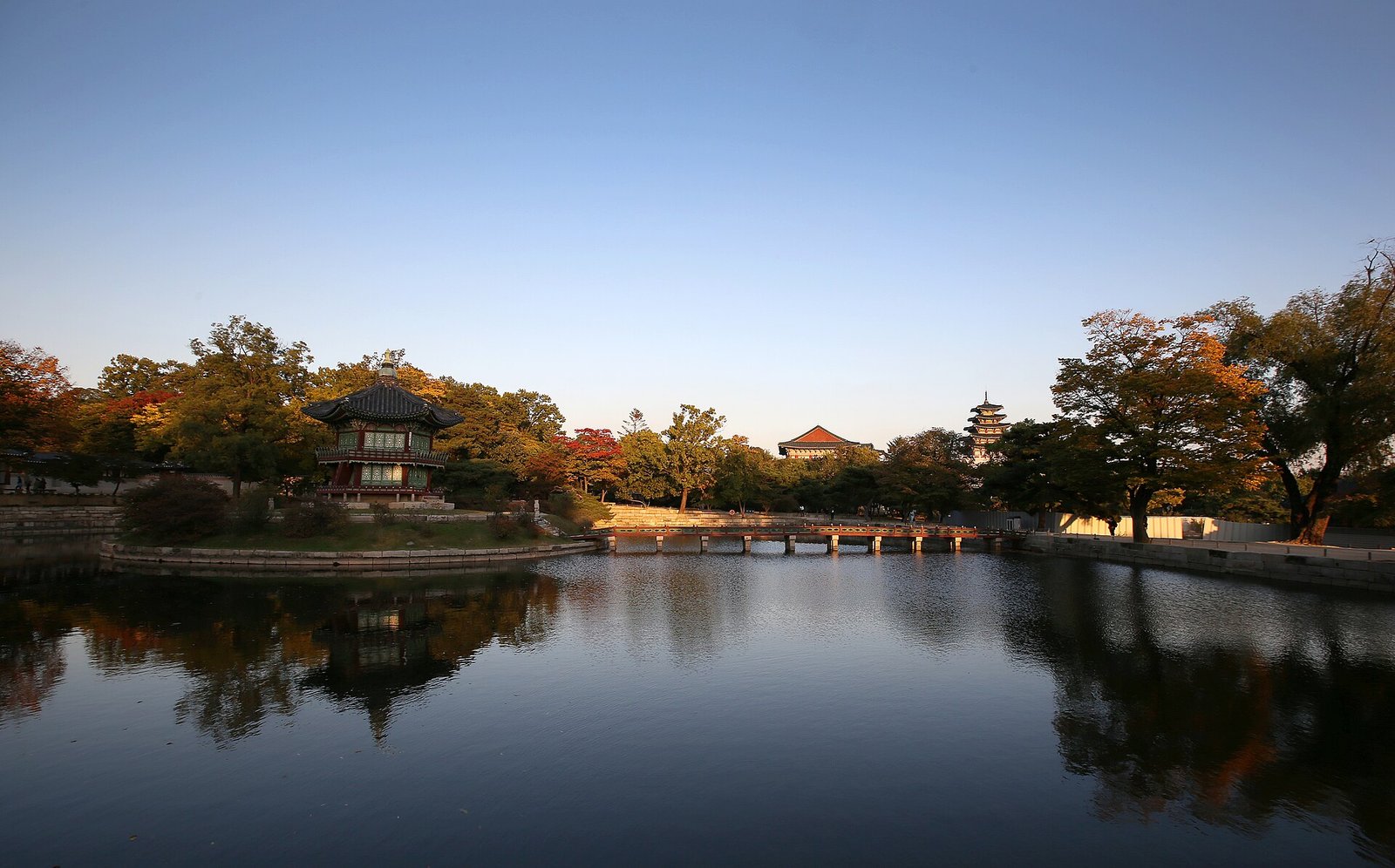

You can just walk up to the ticket booth at these two, which makes them easy to slot into your day.
From November to February, Gyeongbokgung opens 9 a.m. to 5 p.m., with the last entry at 4 p.m. It closes on Tuesdays, and adult tickets are 3,000 won. If you want the courtyards before the tour groups arrive, I’d go right at opening.
Deoksugung keeps much longer hours: 9 a.m. to 9 p.m., last entry 8 p.m., closed on Mondays. Foreign adults (19 to 64) pay just 1,000 won.
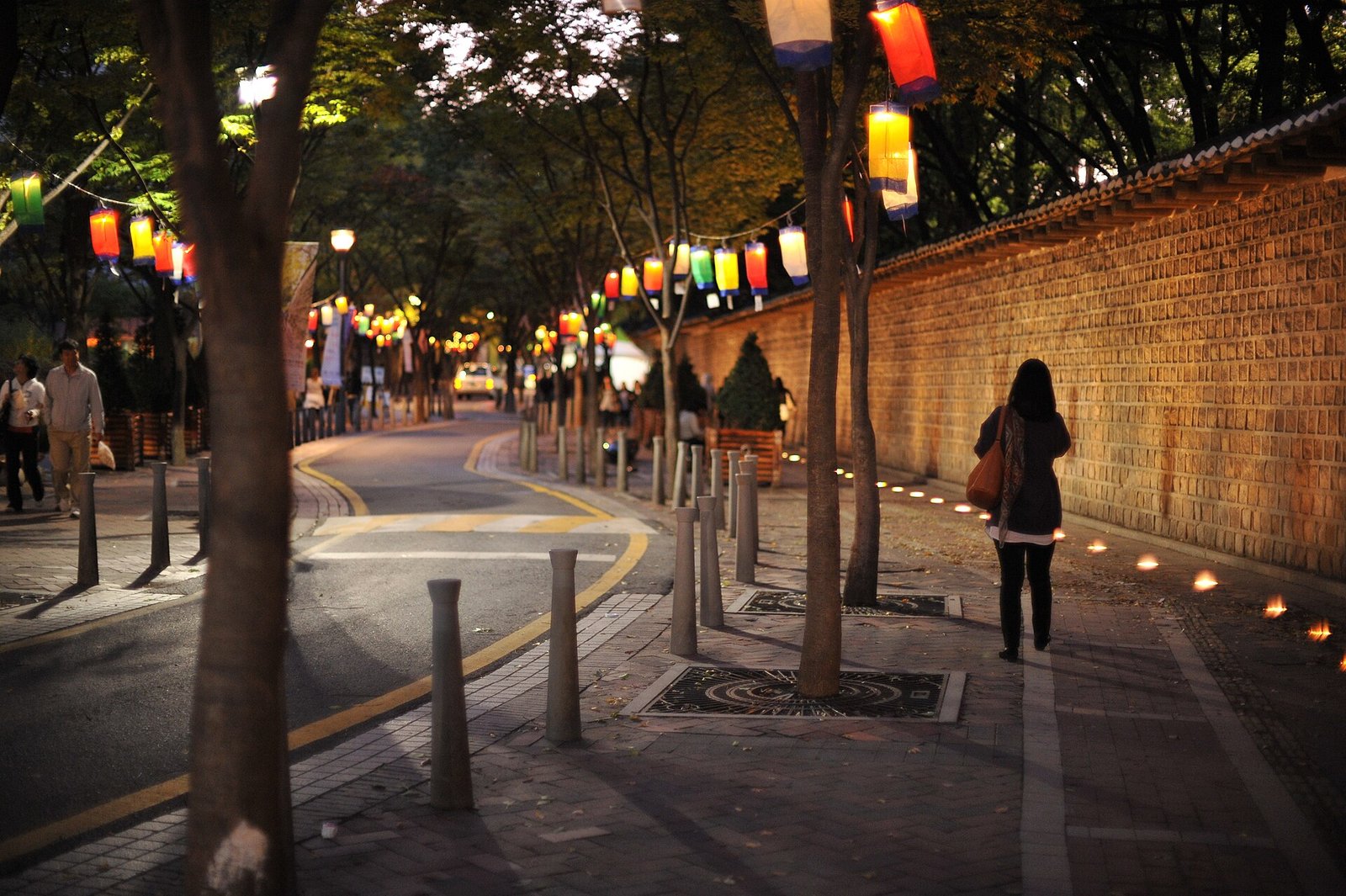

Visit Seoul, the city’s official tourism site, points out the stone-wall walkway along Deoksugung and the autumn night views inside. Put those two together and you have a lovely evening.
Honestly, I’d save Deoksugung for the late afternoon.
Walk the stone-wall road while there is still a little light, then step inside after dark. You have until 8 p.m. to get in.
Wearing a full hanbok? Visit Seoul says it gets you into Gyeongbokgung free, and the same goes at Deoksugung. That’s a fun excuse to rent one for a day! If you’re here at the end of the month, Visit Seoul also lists free entry to Gyeongbokgung on Culture Day, the last Wednesday of each month.
Where are the best ginkgo spots? Start at Seoul Forest
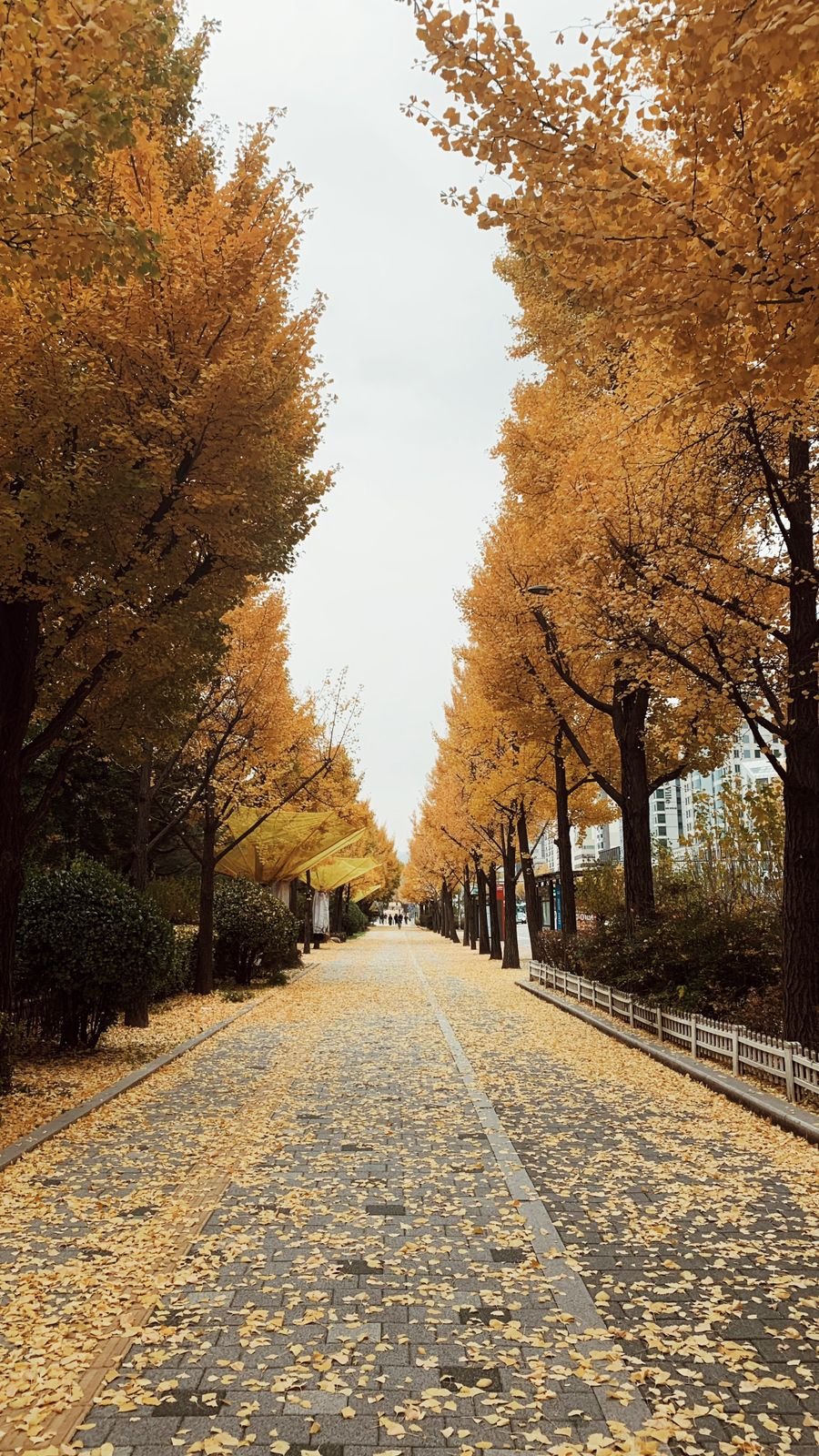

The Seoul city government keeps a list of foliage roads. Its 2025 list has 110 roads, about 167 km in total, lined with roughly 72,000 trees such as ginkgo, zelkova, cherry, and metasequoia. The roads are on the Smart Seoul Map, in Korean.
If you only pick one from that list, I’d make it the ginkgo forest at Seoul Forest. The city news site counts about 600 ginkgo trees there, and people call the fallen leaves the “golden carpet.” Here’s how you get there:
- Fastest way in: Seoul Forest Station on the Suin-Bundang Line, exits 3, 4, or 5, then under 5 minutes on foot.
- From Line 2: Ttukseom Station, exit 8, then 10 to 15 minutes on foot.
- Inside the park: enter at Gate 9, where the ginkgo path starts.
Honestly, I think the fallen leaves are the best part, so don’t worry if you arrive a little late in the season. If you can, go on a weekday morning. You’ll have more of that golden carpet to yourself.
Yuna’s pick
Short on time and all about the yellow? I’d do the Seoul Forest ginkgo in the morning and the Deoksugung stone-wall road at dusk.
Here for red maples more than ginkgo? I’d head to Seoul Botanic Park around November 2, when its forecast peak lands.
The giant ginkgo trees at Sungkyunkwan
In the courtyard of Myeongnyundang, the old lecture hall of Sungkyunkwan, you’ll find the Seoul Munmyo Ginkgo Trees, Natural Monument No. 59. Like the rest of Seoul’s ginkgo, they are forecast to peak in early November.
Take Line 4 to Hyehwa Station, leave by exit 4, and walk about 10 minutes to the Sungkyunkwan University entrance. I’d pick a sunny day if you can, since yellow leaves against a blue sky are hard to beat.
Honest take
This isn’t a whole afternoon. It’s one courtyard and its old trees, so I would treat it as a 30-minute stop on a day around Jongno rather than a trip of its own.
Seoul Botanic Park: maples on the forecast map
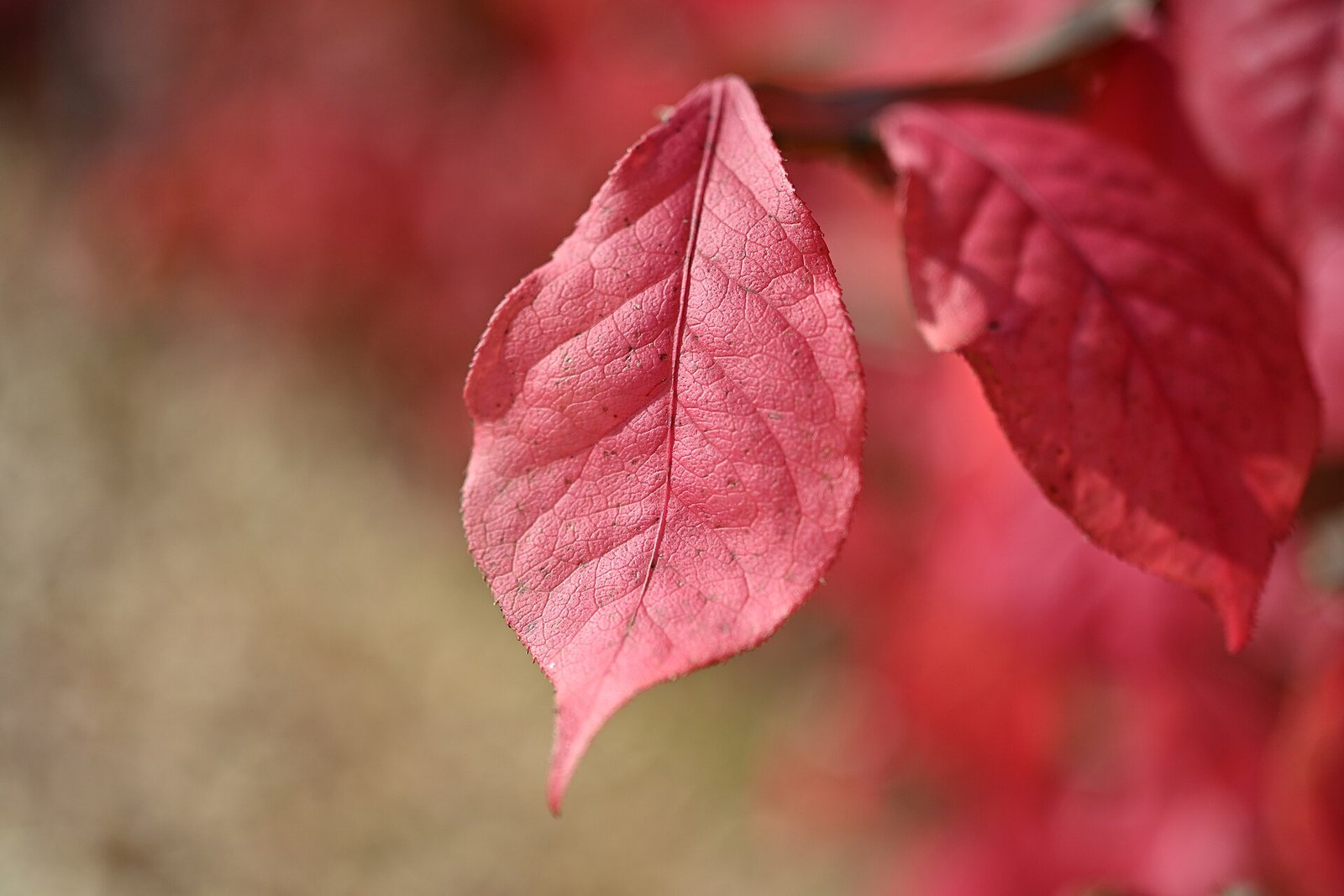

This is the only Seoul spot on the maple map from the Forest Service, and you can see much of it for free. The Open Forest, Lake Garden, and Wetland Garden are free and open all year.
- Theme Garden: the greenhouse and themed gardens cost 5,000 won for adults.
- Winter hours (November to February): 9:30 a.m. to 5 p.m., last entry 4 p.m., closed on Mondays.
- Getting there: Magongnaru Station (Line 9 and the Airport Railroad), exits 3 and 4 lead into the Open Forest.
That last line is the useful one.
Magongnaru is on the Airport Railroad, so the park can fit into your arrival or departure day if you have a few spare hours and light bags. I’m a big believer in a slow first morning, and a free garden walk is my kind of slow.
💬 Say it in Korean
단풍 구경
danpung gugyeong
“Leaf-peeping.” This is what Koreans call an autumn outing to see the colors. If you spot it in a Korean post, you’ll know it’s about where the leaves are right now.
FAQ
Is mid-November too late for leaves in Seoul?
Not necessarily. The maple forecast for Mulhyanggi Arboretum, south of Seoul, is November 6. And in 2025, the Seoul city news site still pointed people to the fallen ginkgo at Seoul Forest on November 27. I’d still go, and I’d check the latest updates the night before.
Which palaces close on which day?
Gyeongbokgung closes on Tuesdays. Changdeokgung and Deoksugung close on Mondays, so if you’re free on a Monday, make it your Gyeongbokgung day.
Next, you’ll probably want to sort out how to get between all these spots. My Climate Card guide covers exactly that. Happy leaf-peeping!
Hwaiting!
Yuna
📌 Read next
- Seoul Climate Card for Tourists (2026): Prices, Foreign Cards & T-money: unlimited subway rides between palaces and parks
- Incheon Airport to Seoul (2026): AREX, Limousine Bus or Taxi?: the Airport Railroad that also stops at Magongnaru
🎟️ Book it
Want it sorted before you fly? These are the ones I would look at on Klook:
Sources and last check
How I put this guide together: from the Korea Forest Service’s 2026 peak forecast and maps, the Korea Meteorological Administration, the Korea National Arboretum, Changdeokgung’s English site, VISITKOREA, Visit Seoul, Seoul Botanic Park, and the Seoul city government’s open data and news site, all checked on October 31, 2026. Nothing here is sponsored (the booking links are affiliate links, as noted at the top). More on how I research every guide is on the About page.
Last checked: October 31, 2026. Forecasts change with the weather, and palace hours and tour times can change too, so please confirm on the official pages before you go. This is an independent guide, not affiliated with any palace, park, or agency named here.
Official sources:
- Korea Forest Service: 2026 autumn peak forecast (September 22, 2026, in Korean, with the maple and ginkgo maps)
- Korea Meteorological Administration: when to see autumn leaves this year (October 8, 2026, in Korean)
- Korea National Arboretum: autumn peak search service (press release, in Korean)
- Changdeokgung: Admission fee, operating hours and seasons
- Changdeokgung: Secret Garden course
- VISITKOREA: Gyeongbokgung Palace
- Visit Seoul: Gyeongbokgung Palace
- VISITKOREA: Deoksugung Palace
- Visit Seoul: Autumn leaves at Gyeongbokgung Palace and other spots in Seoul
- Seoul Open Data Plaza: Seoul foliage roads, 110 routes (in Korean)
- Seoul city news: the “golden carpet” at Seoul Forest (November 27, 2025, in Korean)
- Seoul city news: the ginkgo trees at Sungkyunkwan Munmyo (in Korean)
- Seoul Botanic Park: Visitor information and fees (in Korean)
- Seoul Botanic Park: By subway (in Korean)