Some links in this guide are affiliate links. If you book through them, Hello Korea Tips may earn a small commission at no extra cost to you.
Last checked: October 31, 2026
Picture it: your one free morning in Seoul, and the palace gates are shut because it’s Tuesday. Let’s not do that. Come any other day, aim for the 10 a.m. guards, and give yourself about two hours. And if you’re here by November 15, 2026, you get in free, which makes you very lucky.
Quick answer
- 🗓️ Open: 9 a.m. to 5 p.m. in November, last entry 4 p.m., closed every Tuesday
- 💰 Ticket: 3,000 won for foreign adults, free from October 29 to November 15, 2026
- 🚇 Get there: Gyeongbokgung Station (Line 3), Exit 5, a 2-minute walk
Is it free right now? Here’s who pays
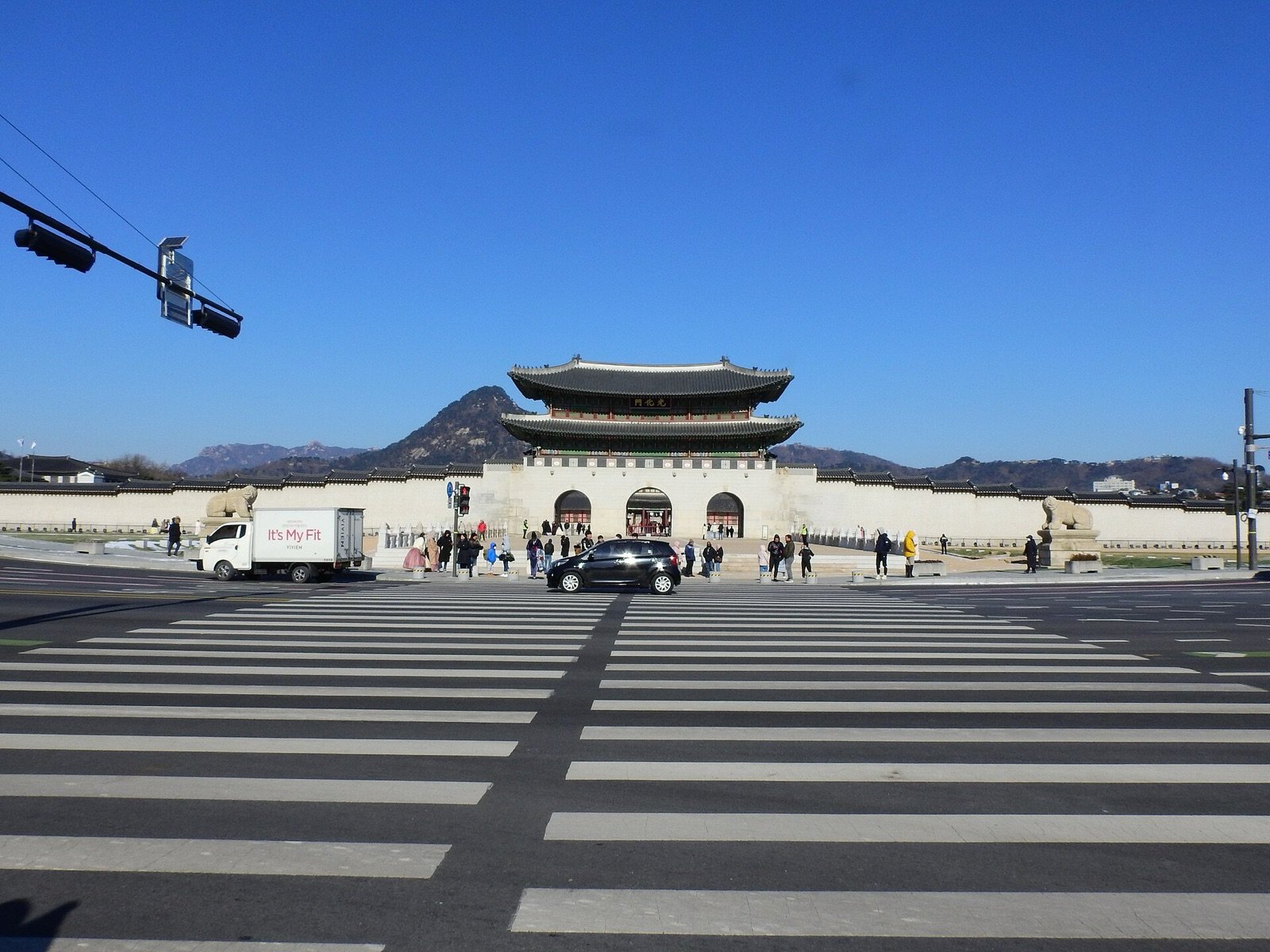
Right now, nobody does. The four main palaces, Jongmyo Shrine, and the royal tombs are all free from October 29 to November 15, 2026, for the Korea Grand Festival. Closed days still count, though, so the gates stay shut on Tuesday, November 3, and Tuesday, November 10.
Outside those dates, here’s the damage:
| Who | Price |
|---|---|
| Foreign adults, 19 to 64 | 3,000 won |
| Foreign visitors 18 and under, or 65 and over | Free |
| Groups of 10 or more | 2,400 won each |
| Anyone wearing hanbok | Free |
Planning more than one palace? The 6,000-won combined ticket covers the four main palaces plus Jongmyo for 6 months, just not the Secret Garden at Changdeokgung. It pays off only if you plan both big palaces, Gyeongbokgung and Changdeokgung, plus one more. For Gyeongbokgung alone, I’d skip it.
⚠️ Heads-up
Other palaces now have free Wednesdays, but Gyeongbokgung is still waiting its turn. A May 2026 notice says it will join later, once safety and crowds have been looked at. The 3,000-won price may move too, but nobody has set a date yet.
Does your hanbok count? What the palace accepts
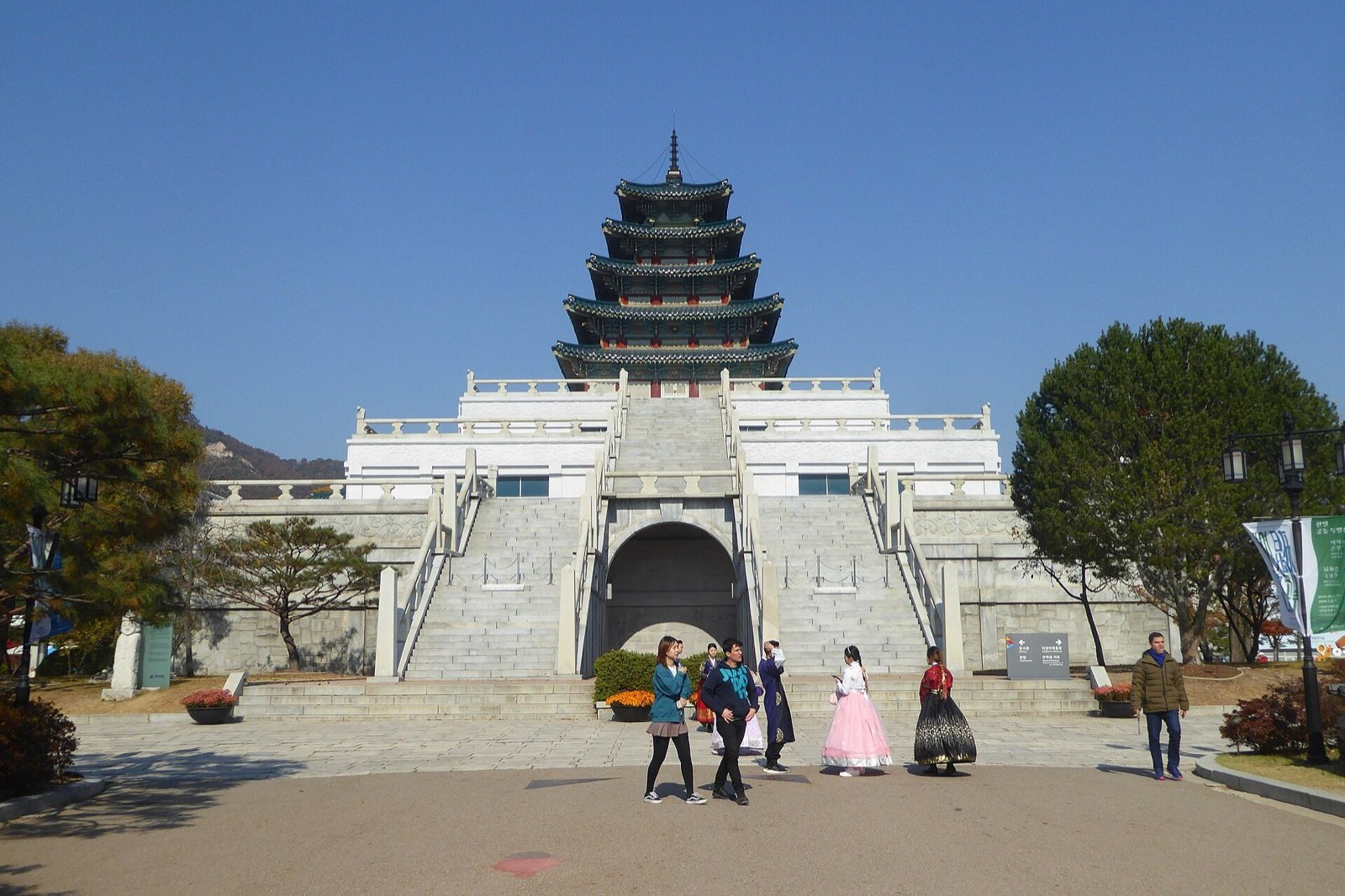

Wear hanbok and you walk in free, whether you’re Korean or not. Traditional and modernized styles both count, but the one firm rule is the full outfit, top and bottom, and half an outfit won’t get you through the gate.
- Accepted: a jeogori (the hanbok top) with a hanbok skirt or pants.
- Not accepted: jeans with a jeogori, or hanbok bottoms with a T-shirt.
- Also not accepted: a T-shirt-style top, or a one-piece hanbok dress with no jeogori.
They can turn you away at the gate, so don’t get creative.
Honest take
Rent a hanbok for the photos, not the savings. I mean that kindly: the most you can save is 3,000 won, and until November 15, the saving is exactly zero!
When is the Royal Guard Changing Ceremony?
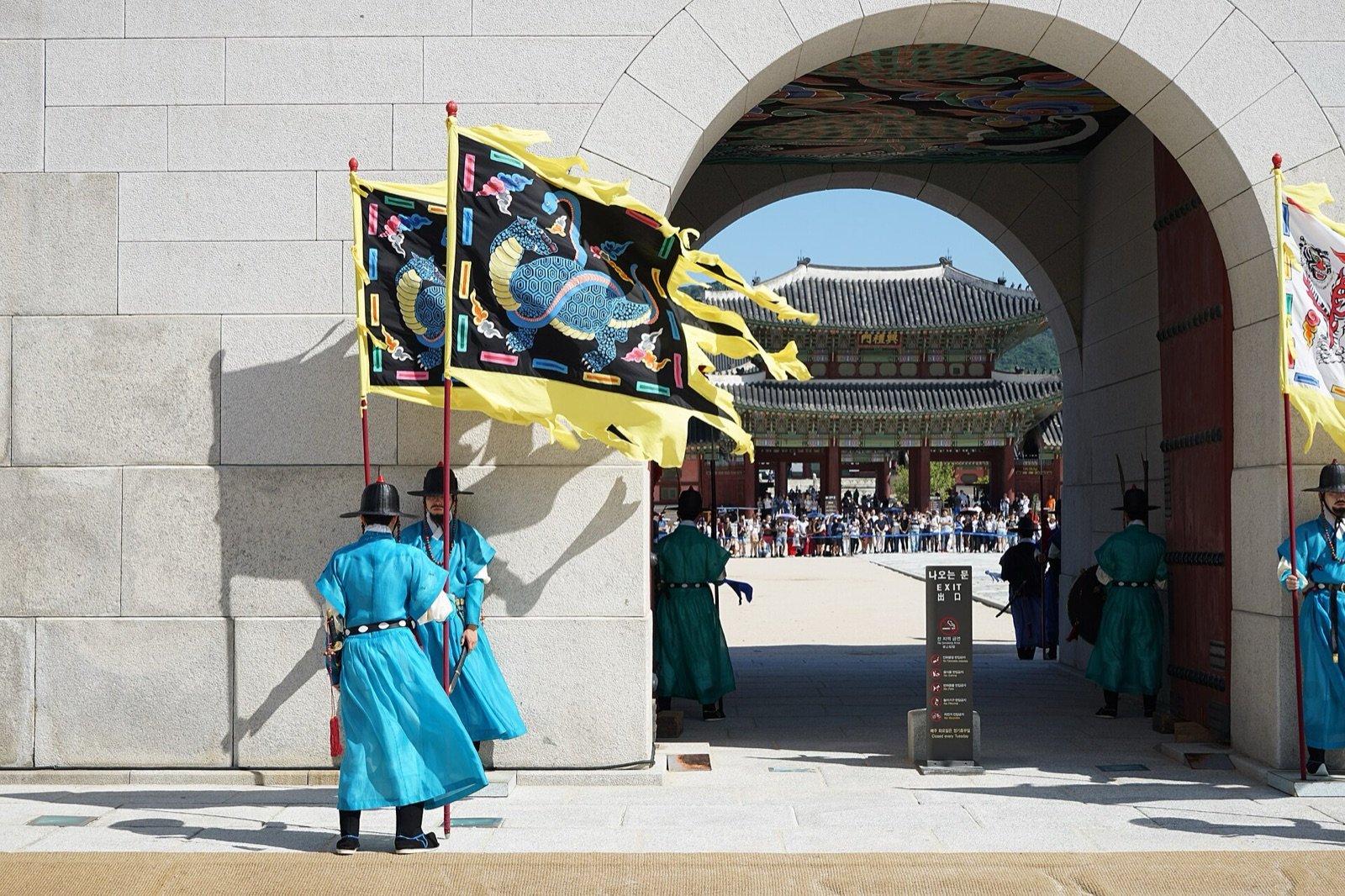

Twice a day: 10 a.m. and 2 p.m., about 20 minutes each, every day of the year except closed days. So no guards on a Tuesday, because there’s no palace on a Tuesday.
Look for it in front of Heungnyemun, the gate just inside Gwanghwamun, though the official site doesn’t spell out the spot. Bad weather can reportedly shorten or cancel it, so check the sky first. Don’t rearrange your whole day around it.
💡 Yuna’s tip
I’d take the 10 a.m. ceremony. You’re at the gate an hour after opening, the whole palace is ahead of you, and an English tour leaves at 11 a.m.
What should you see first? The route I’d walk
Quick history so the dates make sense: built in 1395, destroyed in 1592, rebuilt by 1867. Most of what you see is from the 1800s, and it’s still being put back together. The Japanese Government-General Building only came down in 1996, and Gyejodang was restored in 2023. I find that oddly moving.
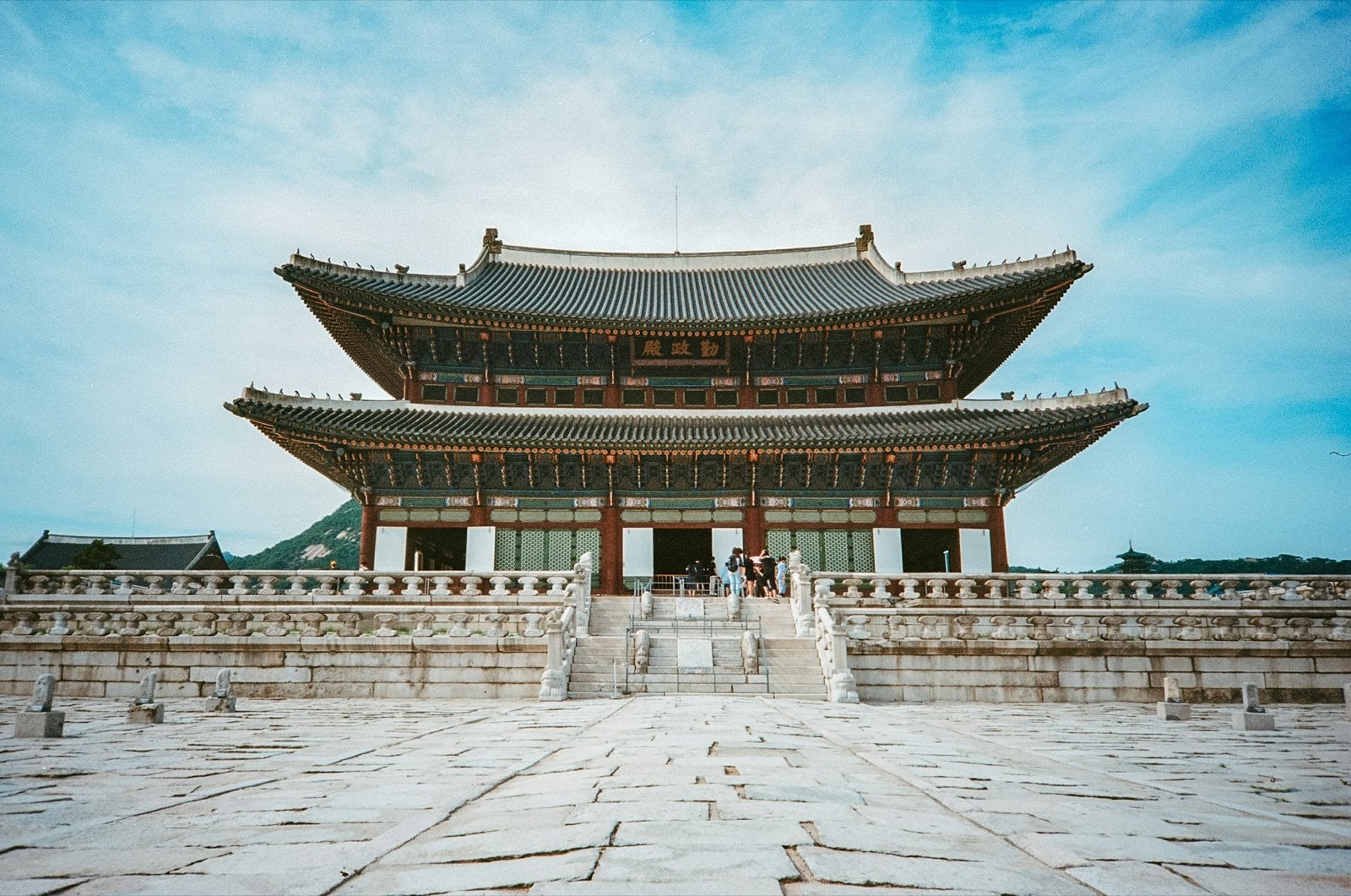
I’d keep your route simple, since you just keep going deeper: Geunjeongjeon, then Gyeonghoeru, then on to Hyangwonjeong at the very back. Tired already? Do the throne hall and Hyangwonjeong, and skip the rest.
Geunjeongjeon: the throne hall
This is the big one, a National Treasure where kings ran state affairs, held national ceremonies, and received foreign envoys. Everyone crowds in for the throne photo, and I don’t blame them, but the painted ceiling is the better view.
One more for your head: 1446, the year Hunminjeongeum went out, is on this palace’s timeline. That marks the start of Hangul, the alphabet on every sign you’ve been squinting at.
Gyeonghoeru: the party pavilion
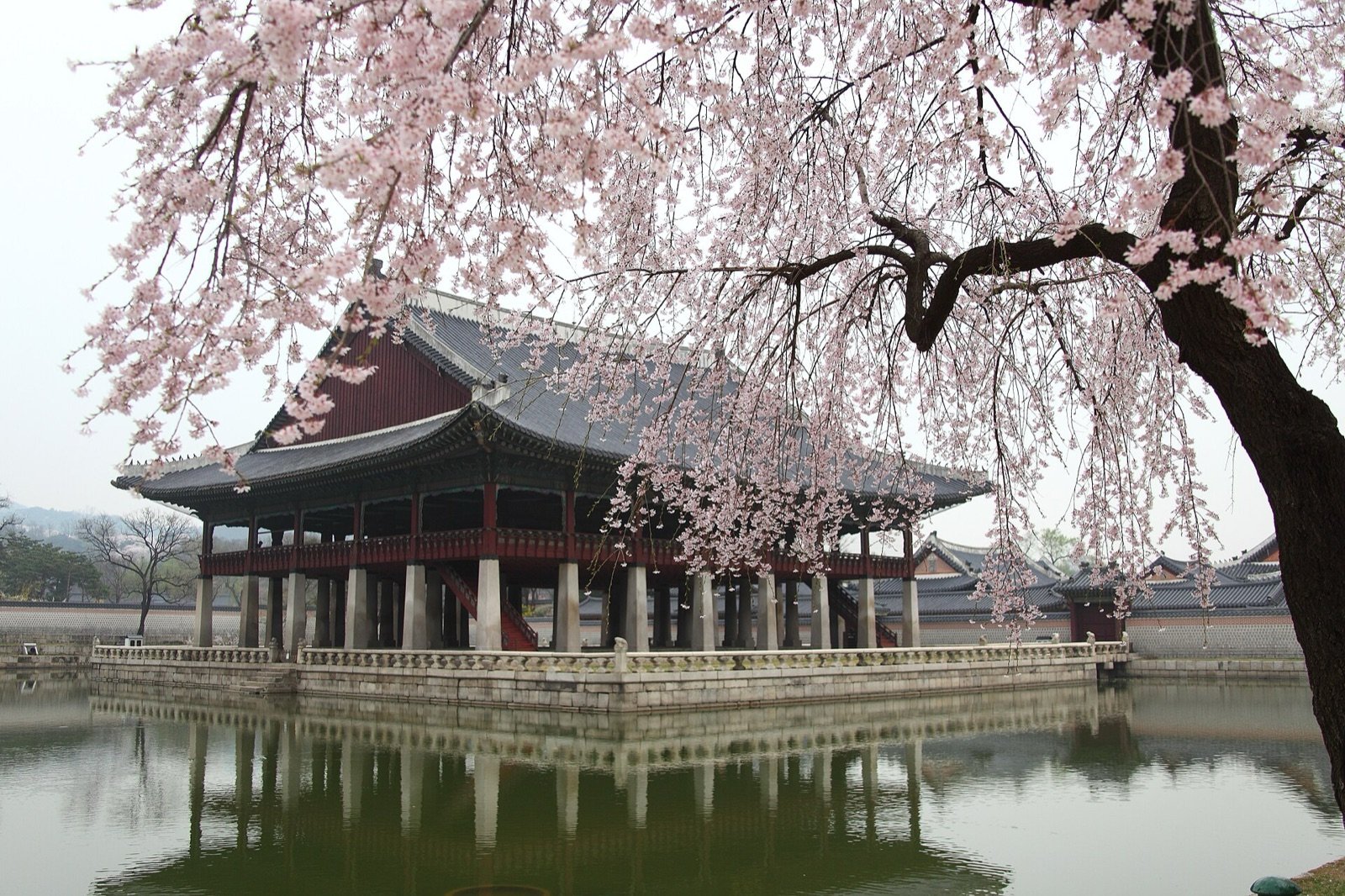
Yes, the kings had a party building, and I think that’s my favorite fact about this palace. In 1412, King Taejong enlarged the pond and put up a two-story pavilion for banquets and foreign officials, and today’s version dates from 1867. Admire it from the outside, because the special inside viewing for the second half of 2026 ended on October 30 and ran in Korean only.
Gangnyeongjeon: the king’s quarters
After all that ceremony, this is the part that feels lived in. These were the King’s Quarters, with Gyotaejeon Hall and Amisan Garden close by, so slow down here and let your feet rest.
The palace’s story turns dark after this. King Gojong built Geoncheonggung in 1873, and Empress Myeongseong was assassinated in 1895. I’d go quiet for a minute back here.
Hyangwonjeong: the one I’d save my legs for
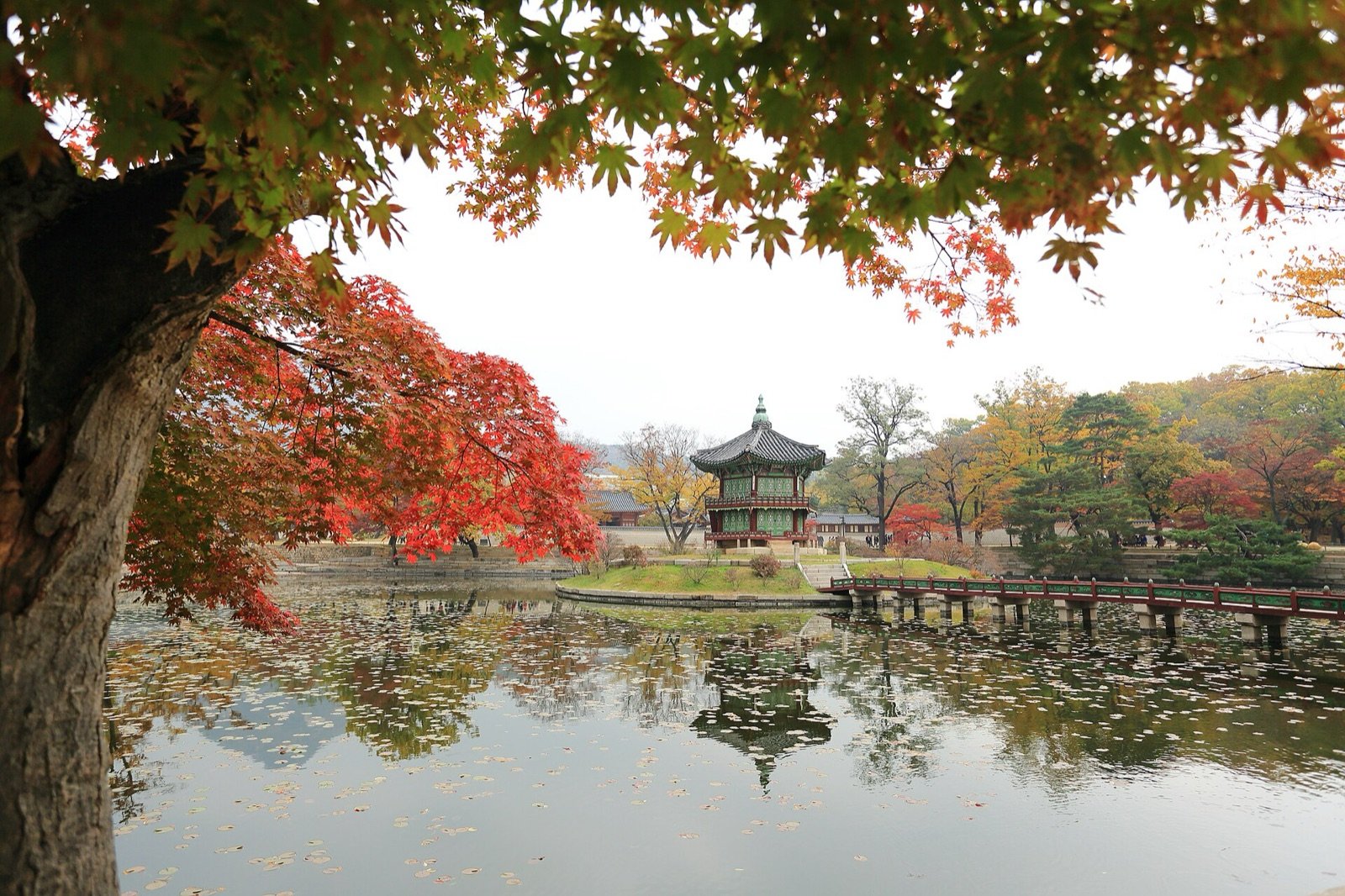
Keep walking. Yes, all the way to the back. Your reward is a six-sided, two-story pavilion on its own little island in a square pond, with Chwihyanggyo Bridge leading out to it. Kings and their families came here to relax, so clearly they knew where the good corner was. If I had time for only one corner, this would be it.
It’s from the 1800s, and I’d call autumn its moment. If it’s leaf season, go here first.
The National Folk Museum of Korea is just east of the pavilion, and the National Palace Museum sits on the west side, outside Heungnyemun. Skip both today, because in my book they are rainy-day plans.
Is the English guided tour worth it?
Yes, take the tour. These buildings mean a lot more with a story attached, and it beats reading every sign with your neck craned. English tours leave every day except Tuesday at 11 a.m., 1:30 p.m., and 3:30 p.m., and groups under 10 can just turn up.
Meet in front of the information office, just inside Heungnyemun, and don’t be late, because latecomers can’t join. Expect 1 to 1.5 hours, or 30 minutes less until November 15, 2026. Rain doesn’t stop them, so bring an umbrella.
Japanese and Chinese tours run too, with Spanish on Fridays and Saturdays and French on Wednesdays and Thursdays. Groups of 10 or more need a reservation, so call the palace office on +82-2-3700-3900.
Yuna’s pick
First palace ever: the 10 a.m. ceremony, then the 11 a.m. English tour.
Here for photos: skip the tour and head straight for Hyangwonjeong.
Kids in tow: the ceremony and the pond, then leave while everyone’s still happy.

How I’d plan your morning
- 9:30 a.m.: come up at Exit 5 and walk to the gate, so you’re settled before the ceremony.
- 10 a.m.: watch the guards change, which takes about 20 minutes.
- 11 a.m.: join the English tour at the information office.
- After the tour: walk back to Hyangwonjeong on your own and take your time.
Skip the afternoon version in November. A 2 p.m. ceremony and a 3:30 p.m. tour sound fine until you remember the 5 p.m. closing, and then you’re racing the clock.
Hours and getting there
The palace closes earlier in the colder months, and you need to be through the gate an hour before closing:
| Months | Open | Last entry |
|---|---|---|
| November to February | 9 a.m. to 5 p.m. | 4 p.m. |
| March to May, September, October | 9 a.m. to 6 p.m. | 5 p.m. |
| June to August | 9 a.m. to 6:30 p.m. | 5:30 p.m. |
One Tuesday twist works in your favor: if a Tuesday falls on a public or substitute holiday, the palace opens, and the next non-holiday becomes the closed day.
The easy subway stop is Gyeongbokgung Station (Line 3), Exit 5, about a 2-minute walk. Gwanghwamun Station (Line 5), Exit 2 and Anguk Station (Line 3), Exit 1 are about 6 minutes on foot. Your map app wants 161 Sajik-ro, Jongno-gu.
Buses 109, 171, 272, 601, 606, and 710 stop here too, and there’s a parking lot, but I’d take the subway.
FAQ
Is Gyeongbokgung open on Tuesdays?
No, except when a Tuesday is a public holiday, and then it closes on the next non-holiday instead.
Do foreigners get in free in hanbok?
Yes, in a full hanbok, top and bottom. The rule is the same for Koreans and foreigners.
Is there a night tour in November?
Not that I could find. Night openings are seasonal, and the 2025 fall session ran in September, so watch the official notices if one is on your list.
How long do you need at Gyeongbokgung?
I’d plan on two hours. The official tour alone runs 1 to 1.5 hours, and Hyangwonjeong is a long way from the front gate.
My advice: go early, wear shoes you can trust, and save your legs for the pond. Happy palace day!
Hwaiting!
Yuna
📌 Read next
- Seoul Climate Card for Tourists (2026): Prices, Foreign Cards & T-money: the easiest way to reach Exit 5
- Korea eSIM, SIM Card, or Pocket Wi-Fi (2026): How to Choose: so your maps work inside the palace walls
🎟️ Book it
Want it sorted before you fly? These are the ones I would look at on Klook:
Sources and last check
How I put this guide together: most of the official detail on the palace is only in Korean, so I read the pages and notices from the Royal Palaces and Tombs Center and the Korea Heritage Service, plus Visit Seoul and VISITKOREA, all checked on October 31, 2026. The other palaces’ ticket prices and the fee discussion come from Korean news coverage. Nothing here is sponsored (the booking links are affiliate links, as noted at the top), and no one at the palace reviewed it. More on how I research every guide is on the About page.
Last checked: October 31, 2026. Fees, free dates, and ceremony times change, so please confirm on the official pages before you go. This is an independent guide, not affiliated with the Korea Heritage Service or any office named here.
Official sources:
- Royal Palaces and Tombs Center: Hours and closed days (in Korean)
- Royal Palaces and Tombs Center: Fees (in Korean)
- Notice: October and November 2026 free entry (in Korean)
- Notice: October and November 2026 Gyeongbokgung operations (in Korean)
- Notice: Free Wednesdays expansion (May 2026, in Korean)
- Royal Palaces and Tombs Center: Hanbok guidelines
- Royal Palaces and Tombs Center: Hanbok guidelines (in Korean)
- Royal Palaces and Tombs Center: Guided tours (in Korean)
- Royal Palaces and Tombs Center: Directions (in Korean)
- Royal Palaces and Tombs Center: English home page (ceremony times)
- Royal Palaces and Tombs Center: Gyeongbokgung history
- Korea Heritage Service: Geunjeongjeon Hall
- Korea Heritage Service: 2025 night tour notice
- Visit Seoul: Gyeongbokgung Palace (edited October 7, 2026)
- Visit Seoul: Autumn leaves at Gyeongbokgung (edited November 2025)
- Visit Seoul: Gyeongbokgung walking tour
- VISITKOREA: Gyeongbokgung Palace
- SBS Biz: Palace fee increase on hold (in Korean)
- Hani Seoul: Guard ceremony guide (travel guide, in Korean)