Some links in this guide are affiliate links. If you book through them, Hello Korea Tips may earn a small commission at no extra cost to you.
Last checked: October 31, 2026
Short version: in Seoul for three days or more and taking three-plus trips a day? I’d get the Climate Card. If you ride less, take day trips, or use the Shinbundang Line, T-money is usually cheaper. Below, I’ll show you how the days really work and the airport rule that trips people up.
Quick answer
- 💰 Price: 1, 2, 3, 5, or 7 days for 5,000 to 20,000 won, plus 3,000 won for the card
- 🚇 Covers: subway within Seoul and Seoul city buses, not the Shinbundang Line or GTX-A
- 💳 Foreign cards: yes, at newer machines in Seoul Metro stations on Lines 1 to 8
- ✅ Worth it if: 3+ days, 3+ trips a day, mostly inside Seoul
The name doesn’t help, I know. “Climate Card” sounds more like a recycling campaign than a subway pass. The pass itself is simple: unlimited rides for a set number of days (some call it the tourist pass), sold only in Korea.
What it costs, and when it actually pays off
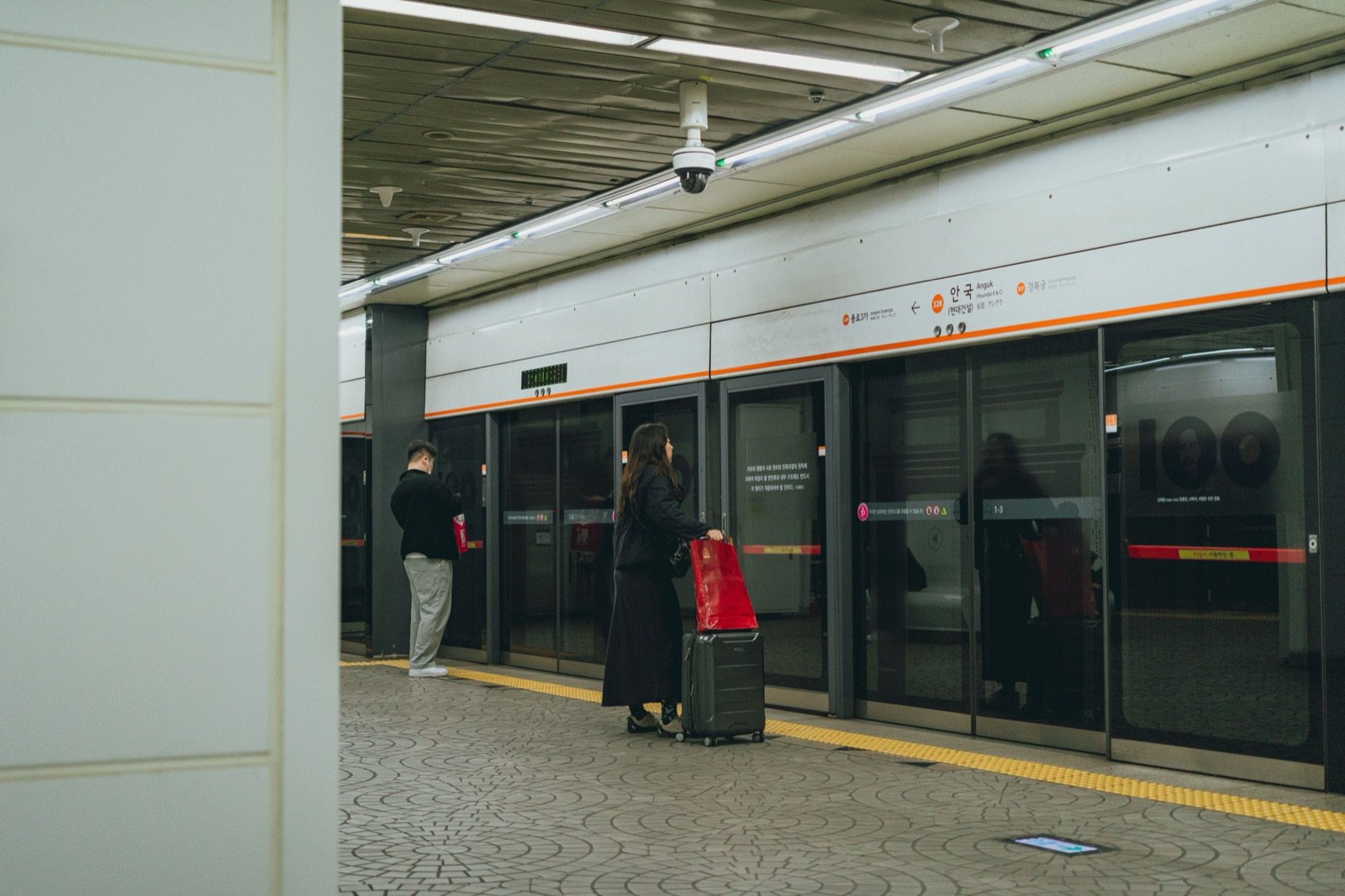
My yardstick is the adult subway fare on a T-money card: 1,550 won a trip.
I also count the 3,000-won card, because you’ll probably carry T-money anyway for arrival day and day trips. I worked out how many trips a day each pass needs to beat T-money:
| Pass and price | Counting the 3,000-won card | If you already own the card |
|---|---|---|
| 1-day 5,000 won |
6+ trips that day | 4+ trips that day |
| 2-day 8,000 won |
4+ trips a day | 3+ trips a day |
| 3-day 10,000 won |
3+ trips a day | 3+ trips a day |
| 5-day 15,000 won |
3+ trips a day | 3+ trips a day (2 is about even) |
| 7-day 20,000 won |
3+ trips a day | 2+ trips a day |
Quick note on counting: a trip here means one journey, not every time you board.
On T-money, a transfer within 30 minutes of getting off (60 minutes between 9 p.m. and 7 a.m.) counts as part of the same trip, for up to five rides. So a quick subway-to-bus hop still counts as one trip.
Take a relaxed week: out in the morning, back in the evening, two trips a day. Over seven days, that comes to 21,700 won on T-money, versus 23,000 won for a 7-day pass plus the card.
For a week like that, I’d stick with T-money.
If you pay by foreign card, the 3.7% fee doesn’t change any of these numbers.
Honest take
The 1-day pass is the hardest one to make worth it. With the card on top, you need six or more trips that day. I’d save it for your busiest day, not a slow one of cafes and side streets.
Is a 1-day pass 24 hours? No, and it matters
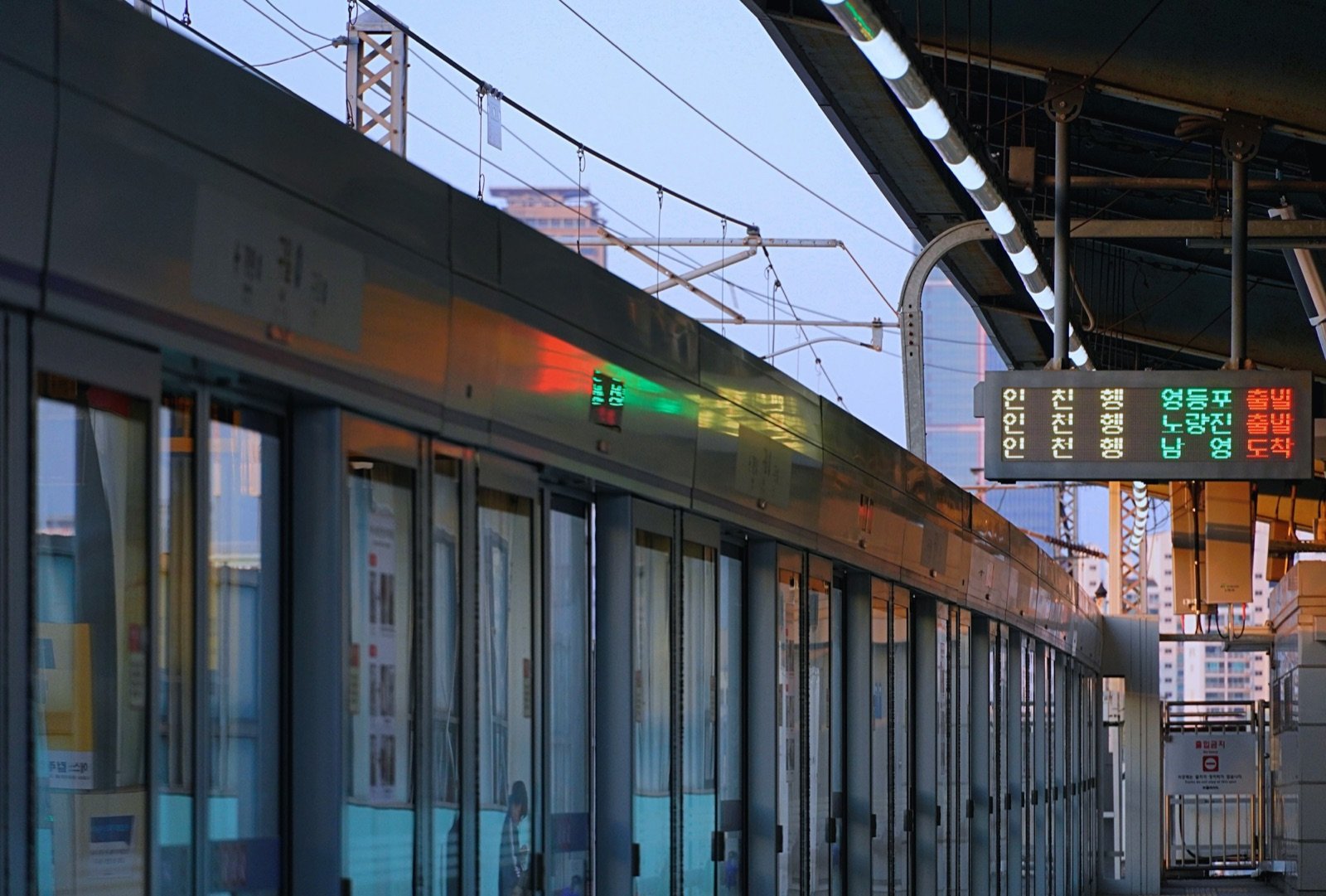
Some English guides make it sound like a 24-hour pass. It isn’t! Day 1 is the day you charge it, and there’s no “activate later” option.
Days are calendar days, counted inclusively, from 4 a.m. on day 1 until the last bus or train of the final day. Late-night buses are included, so the day really ends around 4 a.m. the next morning.
So if you charge a 1-day pass at 7 p.m. on July 1, it still ends with the last service of July 1. You’ve paid 5,000 won for a few hours, and I’d hate for you to find that out at the gate.
💡 Yuna’s tip
Landing Monday evening and flying home Saturday? Use T-money on Monday, then charge a 5-day pass on Tuesday morning. It covers Tuesday through Saturday, including the regular (all-stop) AREX train to the airport.
When a pass ends, you can charge a new one on the same card, even on a later visit. I’m a big believer in a slow first morning anyway: coffee first, then charge the pass.
Where it works, and what changed on October 1, 2026
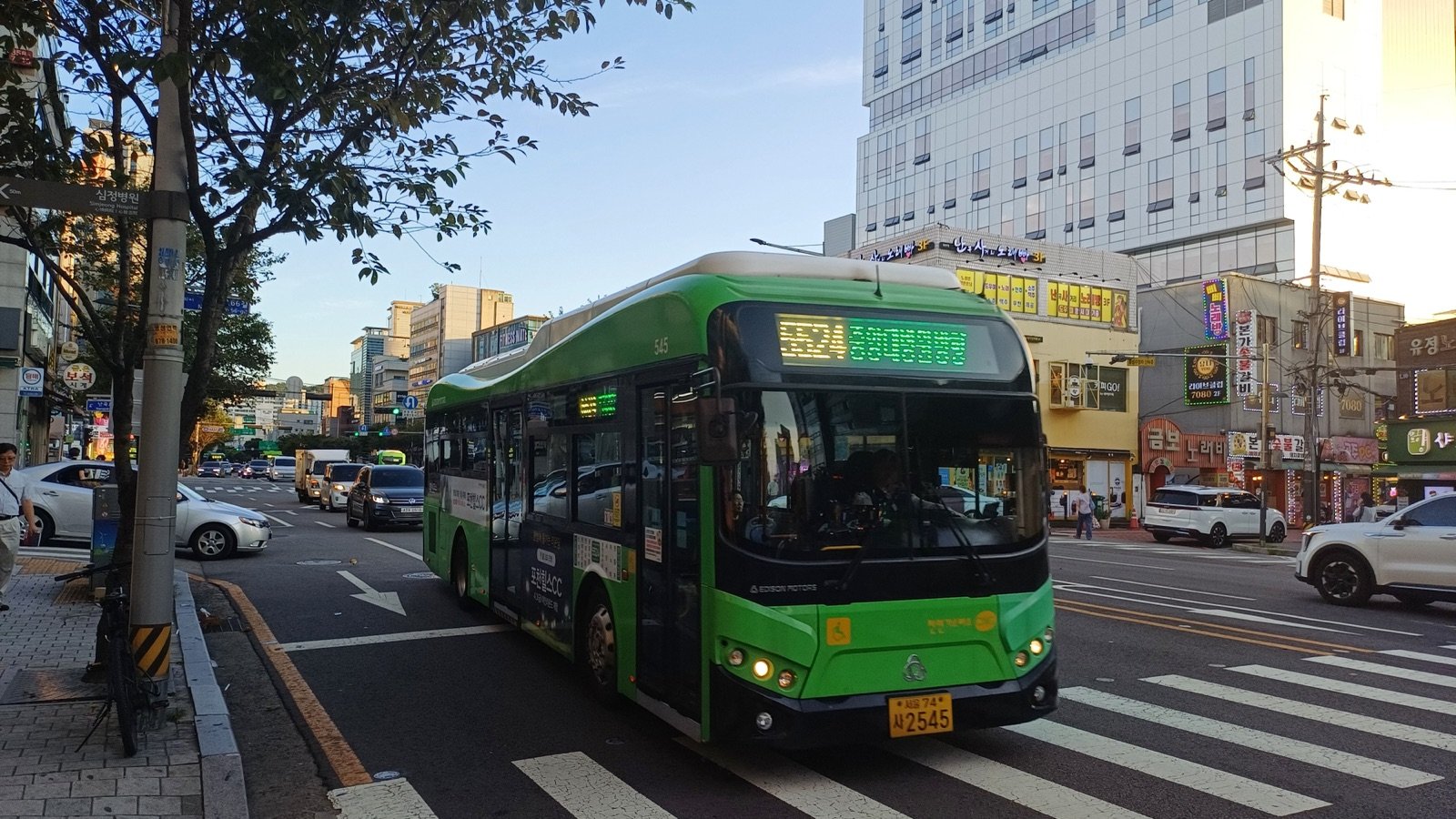
On the subway, you can use it at stations within Seoul. On buses, it covers Seoul-licensed city and village buses, including late-night and circular buses, even when you board or get off in Gyeonggi Province.
It doesn’t cover:
- The Shinbundang Line (even at its stations inside Seoul) or GTX-A
- Subway stations outside Seoul
- Wide-area express buses, airport limousine buses, and buses licensed by other cities
- Taxis, Ttareungyi (the city’s public bikes), the Hangang Bus, or shops, since the pass has no cash balance
Staying around Gangnam? The Shinbundang Line is the one I’d watch for: a separately run line toward Pangyo, and an easy one to tap into out of habit.
Here’s the catch if you’re reading older guides: on October 1, 2026, the pass stopped covering nearby cities such as Gimpo, Goyang, Gwacheon, Guri, Seongnam, Hanam, and Namyangju (the official notice says “and others”). Gimpo here means the city; Gimpo Airport station is inside Seoul.
If you get off outside the area, the gate won’t let you out on the pass. Staff will charge the full fare from where you boarded, paid with a regular transit card.
In practice, riding from Seoul Station to Bupyeong Market Station (the official example) means station staff charging you 1,950 won before you can leave. Not a fortune, but not my idea of a good end to a day out.
For day trips to places like Suwon or Incheon, I’d carry T-money too. To check a specific station, use the coverage search on the official Seoul pages linked at the bottom.
The Incheon Airport rule: it only works one way
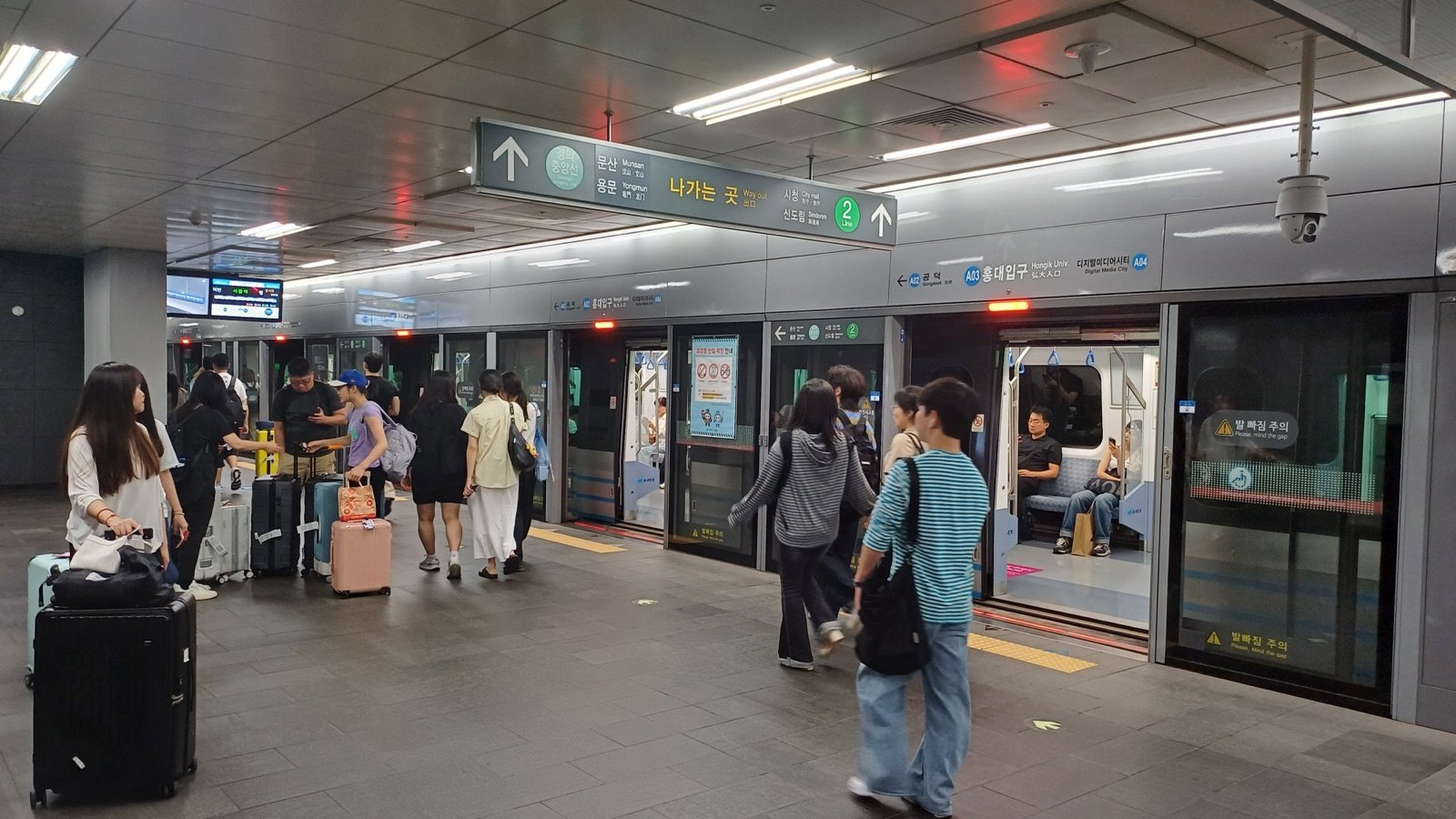
Since September 13, 2024, you can ride AREX (the Airport Railroad) from a covered Seoul station, such as Seoul Station, Gongdeok, or Hongik Univ., to Incheon Airport Terminal 1 or 2 at no extra charge.
The other direction is a no: you can’t board at the airport stations with the pass.
⚠️ Heads-up
On arrival day (airport to Seoul), the Climate Card doesn’t work, and AREX stations can’t charge it. Pay for your ride in another way, such as a T-money card or a single-journey ticket.
Departure day is the easy direction. Picture it: bags packed, one last coffee, then you tap in at Hongik Univ. and ride the regular train to your terminal without paying extra.
The pass works if it’s still valid, so I’d make sure yours still covers your flight day. Honestly, I’d rather not buy tickets with a suitcase in tow anyway.
My take: skip the Express on the pass. Official pages only describe the regular all-stop train, and the AREX Express uses separate tickets.
Can you buy it with a foreign card? Yes, at the newer machines
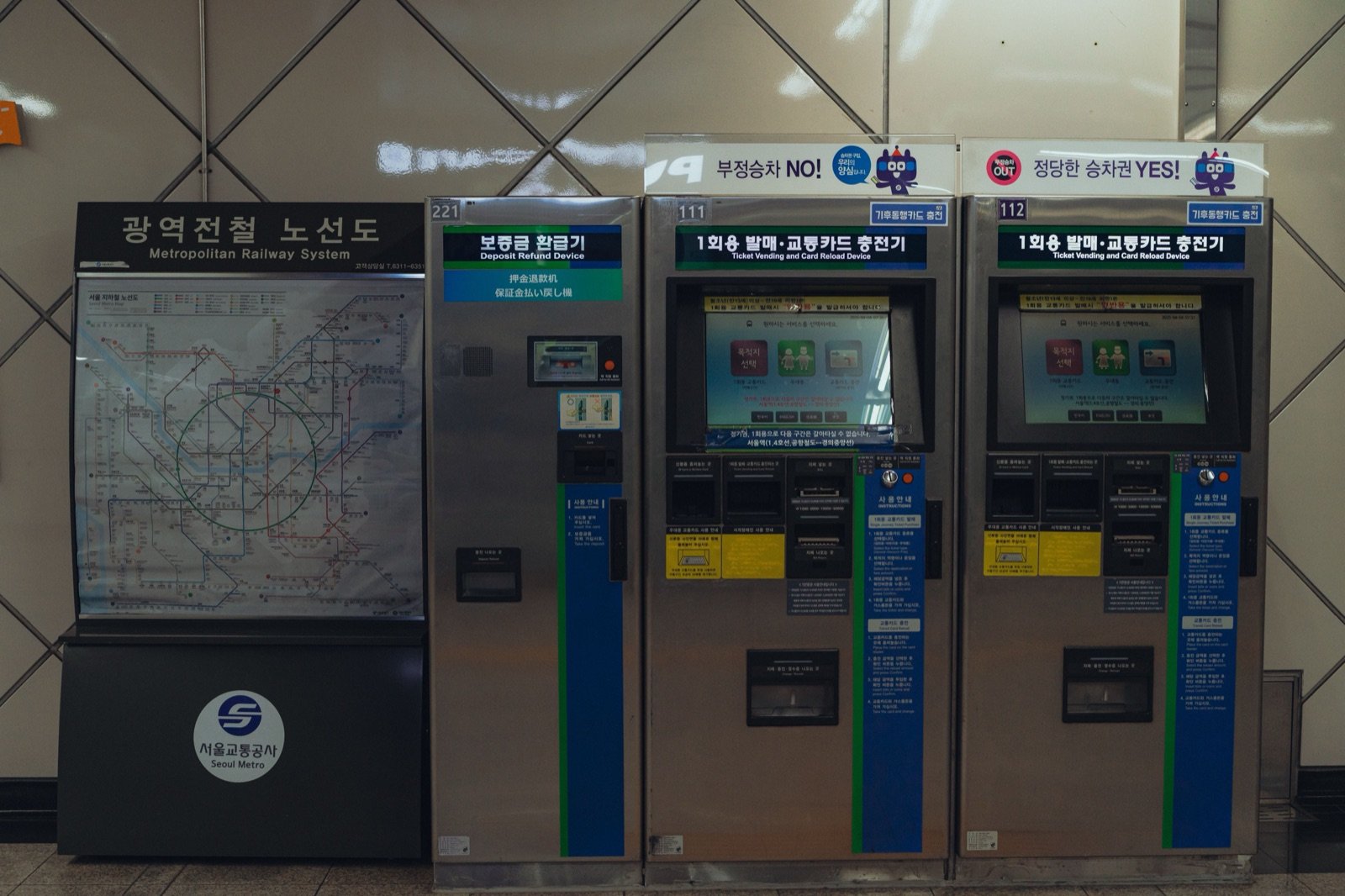
Good news: as of March 17, 2026, 440 newer ticket machines at 273 Seoul Metro stations (Lines 1 to 8) accept foreign-issued credit and debit cards such as Visa and Mastercard. Kakao Pay and Naver Pay work too!
This is the order I’d go in (menu names may vary):
- Go on the morning of your first full day of riding, since charging starts the clock.
- Find a newer machine at a Seoul Metro station on Lines 1 to 8. On Line 1, that means stations between Seoul Station and Cheongnyangni; Korail-run stops may not have them.
- Buy the card (3,000 won), charge your days, and pay by foreign card, cash, Kakao Pay, or Naver Pay.
- Register it on the T-money Card & Pay website if you might want a refund. Unregistered cards can’t be refunded.
- Tap in and tap out every time, buses included. That’s it, you’re riding!
💡 Yuna’s tip
Not every machine is the new type. If one declines your card, don’t fight it. Try another newer machine, or pay with cash.
Four more things I’d want to know:
- Convenience stores: some near stations sell the card, but official sources don’t agree on which, so I’d go straight to a station machine.
- Recharging: you can recharge at machines in Seoul subway stations; Korail, AREX, Shinbundang, and GTX-A stations can’t charge it. With a foreign card, use a newer Seoul Metro machine on Lines 1 to 8; others may take only cash or Korean cards.
- Phones: the mobile version is Android-only and needs Korean identity verification, so I’d skip it and get the physical card.
- Tap-to-pay: as of October 2026, you can’t tap a foreign bank card directly at subway gates. Seoul plans to add readers, buses first, and I’ll update this guide when it actually starts.
💬 Say it in Korean
기후동행카드 단기권
gihu donghaeng kadeu dangigwon
“Climate Card short-term pass.” Screenshot this and show it at the station counter. It saves a lot of pointing.
Climate Card or T-money? Here’s how I’d choose
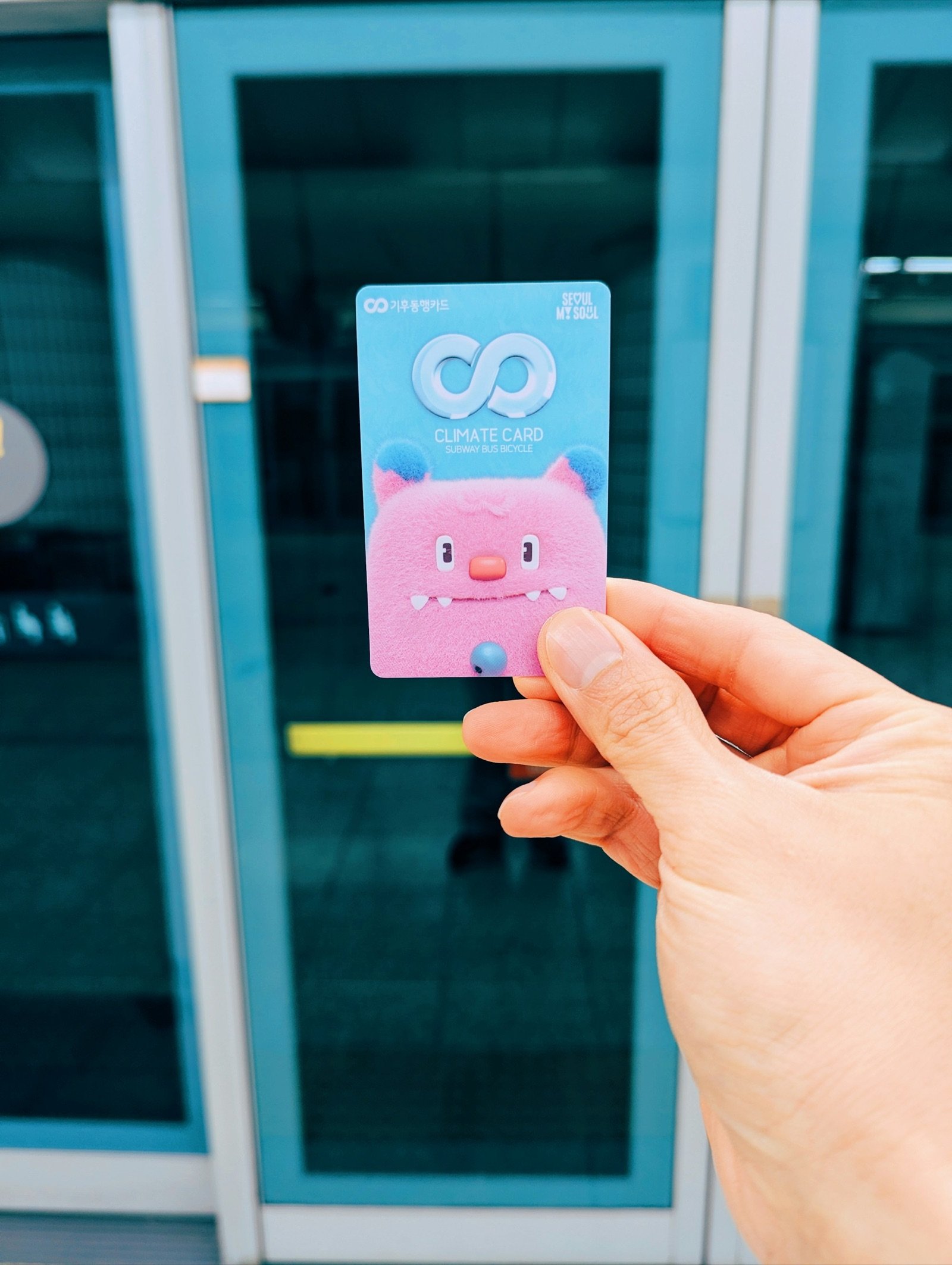
T-money is the standard rechargeable transit card in Korea: you load money and pay as you go. These are the adult fares:
| Ride | T-money fare (as of Oct 2026) |
|---|---|
| Subway, first 10 km | 1,550 won |
| Subway, longer rides | +100 won per 5 km after 10 km (per 8 km after 50 km) |
| Seoul city bus (trunk and branch) | 1,500 won |
| Village bus | 1,200 won |
| Late-night bus | 2,500 won |
Yuna’s pick
Three days or more, three-plus trips a day, staying inside Seoul? My pick is the Climate Card, especially if you’d rather not watch a balance.
Taking only one or two trips a day, heading out of Seoul for the day, or using the Shinbundang Line, GTX-A, or an airport limousine bus? My vote goes to T-money.
Honestly? For many itineraries, I think the simplest setup is both: the pass for busy sightseeing days, and T-money for the ride in from the airport and anything the pass doesn’t cover.
On your last day, convenience stores refund small T-money balances for a 500-won fee (GS25 under 20,000 won; 7-Eleven up to 20,000 won; CU and emart24 up to 30,000 won).
Need just a ride or two? A single-journey ticket costs 1,650 won plus a 500-won deposit you get back at the deposit refund machine in the station.
Seven mistakes I’d hate for you to make
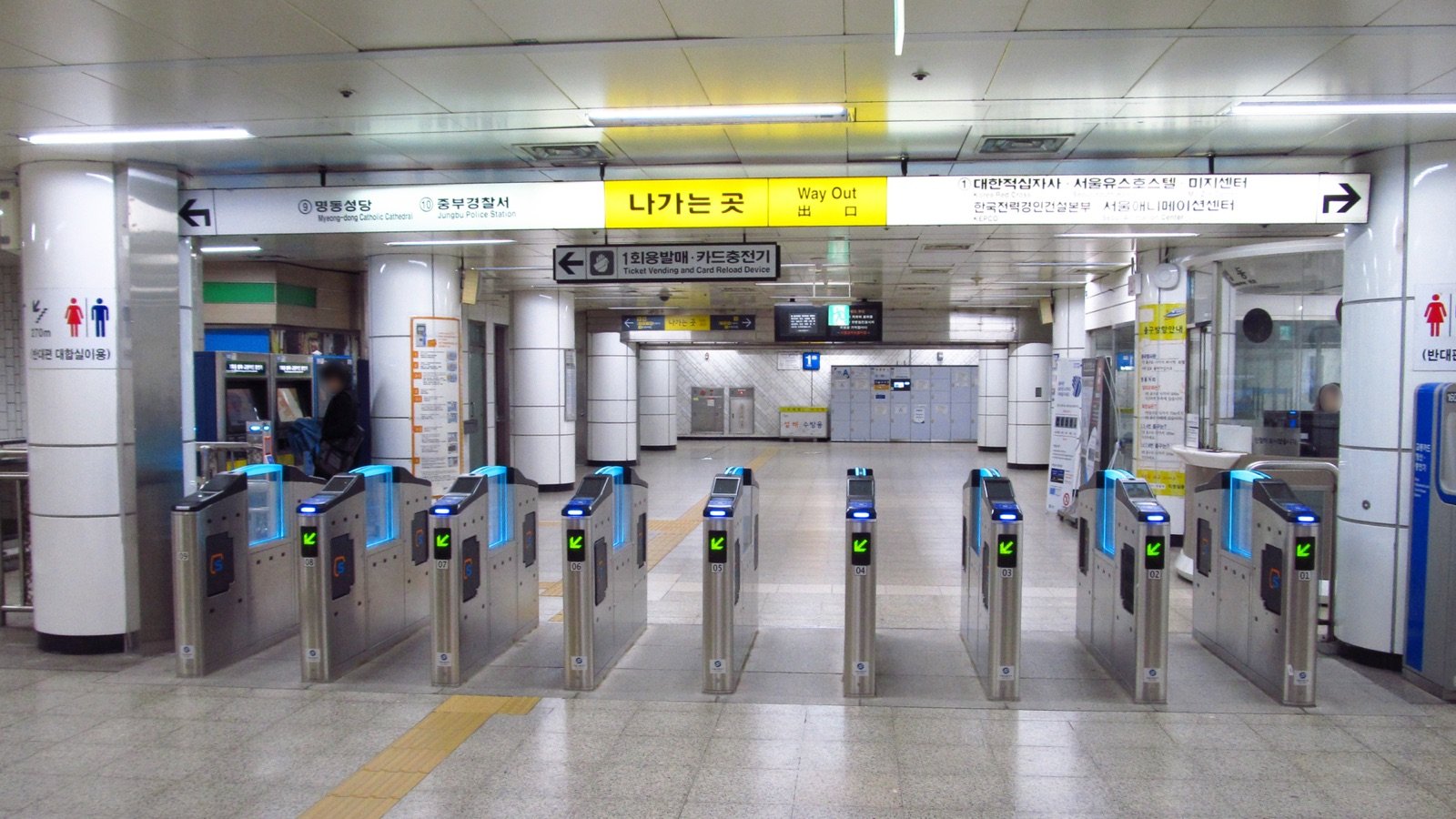

My quick checklist before you tap in:
- Buying a 1-day pass in the evening. It ends with the last service that day. Mornings only, please.
- Trying to use it at the airport on arrival. You can only get off there. Arrival day is a T-money day.
- Tapping in on the Shinbundang Line or GTX-A. Not covered, even inside Seoul. Around Gangnam, read the sign twice.
- Riding to a station outside Seoul. You’ll pay the full fare at the exit. Pack T-money for your day trips.
- Trusting a 2024 guide. Coverage shrank on October 1, 2026, and “cash only” advice is outdated. I’d check the date on anything you read, this guide included.
- Boarding an airport limousine or wide-area bus. You’ll need T-money, cash, or a ticket. The pass sits this one out.
- Buying extra days “just in case.” Refunds take registration, paperwork, and a fee. Nobody flies to Seoul to do paperwork!
Refunds: doable, but not fun
- You get back what you charged, minus the regular fare of every ride you took, minus a 500-won fee. After a few busy days, there may be nothing left, and the card price is not refunded.
- The card must be registered on the T-money Card & Pay website first.
- Card payments go back to the card; cash goes to a bank account. Without a Korean bank account, call the T-money customer center (1644-0088) first, since official pages disagree on cash refunds at the T-money head office.
⚠️ Heads-up
Refunds run on a clock. Suspend your card while the pass is still valid (at a recharge machine or in the app), then file online within 15 days of the end date.
My rule of thumb: buy only the days you need. I’d rather come up a day short than chase a refund, since you can charge a new pass on the same card once the old one ends.
FAQ
How long is the Climate Card 1-day pass valid?
Until the last bus or train of the day you charge it, roughly 4 a.m. the next morning. So not a full 24 hours.
Can I buy the Climate Card with a foreign credit card?
Yes, at newer machines in Seoul Metro stations on Lines 1 to 8 (as of March 17, 2026), with a service fee of about 3.7% on average.
Is the 30-day Climate Card still available?
No. The prepaid 30-day pass could be charged until August 31, 2026, and used until September 29, 2026. Since September 1, 2026, Seoul’s Climate Pass (built on the national K-Pass program, with benefits aimed at Seoul residents) has replaced it. Short-term passes are still on sale.
If you remember one thing, make it this: charge the pass on the morning you start riding. If you spot something that’s changed, tell me on the Contact page and I’ll check it against the official source. Have a great first ride!
Hwaiting! (It’s how Koreans say “you’ve got this.”)
Yuna
🎟️ Book it
Want it sorted before you fly? These are the ones I would look at on Klook:
Sources and last check
How I put this guide together: from the Seoul city and T-money pages in Korean (dates below), checked against the English notice on Korea.net. Nothing here is sponsored (the booking links are affiliate links, as noted at the top), and no organization paid for or reviewed it. More on how I research every guide is on the About page.
Last checked: October 31, 2026. Prices, coverage, and payment options can change, so please confirm on the official pages before you travel. This is an independent guide, not affiliated with the Seoul Metropolitan Government, Seoul Metro, or T-money.
Official sources (mostly in Korean; your browser’s translate feature helps):
- Seoul: Climate Card short-term pass guide (updated Oct 12, 2026)
- Seoul: Short-term pass FAQ
- T-money: Prepaid Climate Card guide
- Seoul: Foreign card purchases at station machines (Mar 16, 2026)
- Korea.net: Foreign card payment at 273 stations (English, Mar 17, 2026)
- Seoul: Climate Pass Q&A (updated Sep 17, 2026)
- Seoul: Getting off at Incheon Airport stations (Sep 11, 2024)
- Seoul: Public transit fares (updated Sep 18, 2025)
- Seoul: Bus fare change (Aug 10, 2023)
- Incheon: Subway fares (English)
- Seoul: Foreign card tap-to-pay plan (updated Oct 16, 2025)
- T-money: Card balance refunds
Leave a Reply