
Some links in this guide are affiliate links. If you book through them, Hello Korea Tips may earn a small commission at no extra cost to you.
Last checked: November 1, 2026
Gwangjang Market is loud, crowded, and full of people who seem to know exactly what to order, but you only need a short list. I’d start with one mung bean pancake, keep some cash in your pocket, and ask the price before you sit. Here’s what to eat, when to go, and how I’d avoid overpaying.
Quick answer
- 🍜 Order first: bindaetteok (mung bean pancake), then small gimbap
- 🚇 Find it: Jongno 5-ga Station (Line 1), Exit 8, with the food alley open daily from 9 a.m. to 11 p.m.
- ✅ Worth it if: you like grazing through small plates at a busy counter
I think this is one of the easiest ways to eat through old Seoul in a single afternoon, as long as you walk in with a plan.
Why does everyone send you to Gwangjang Market?
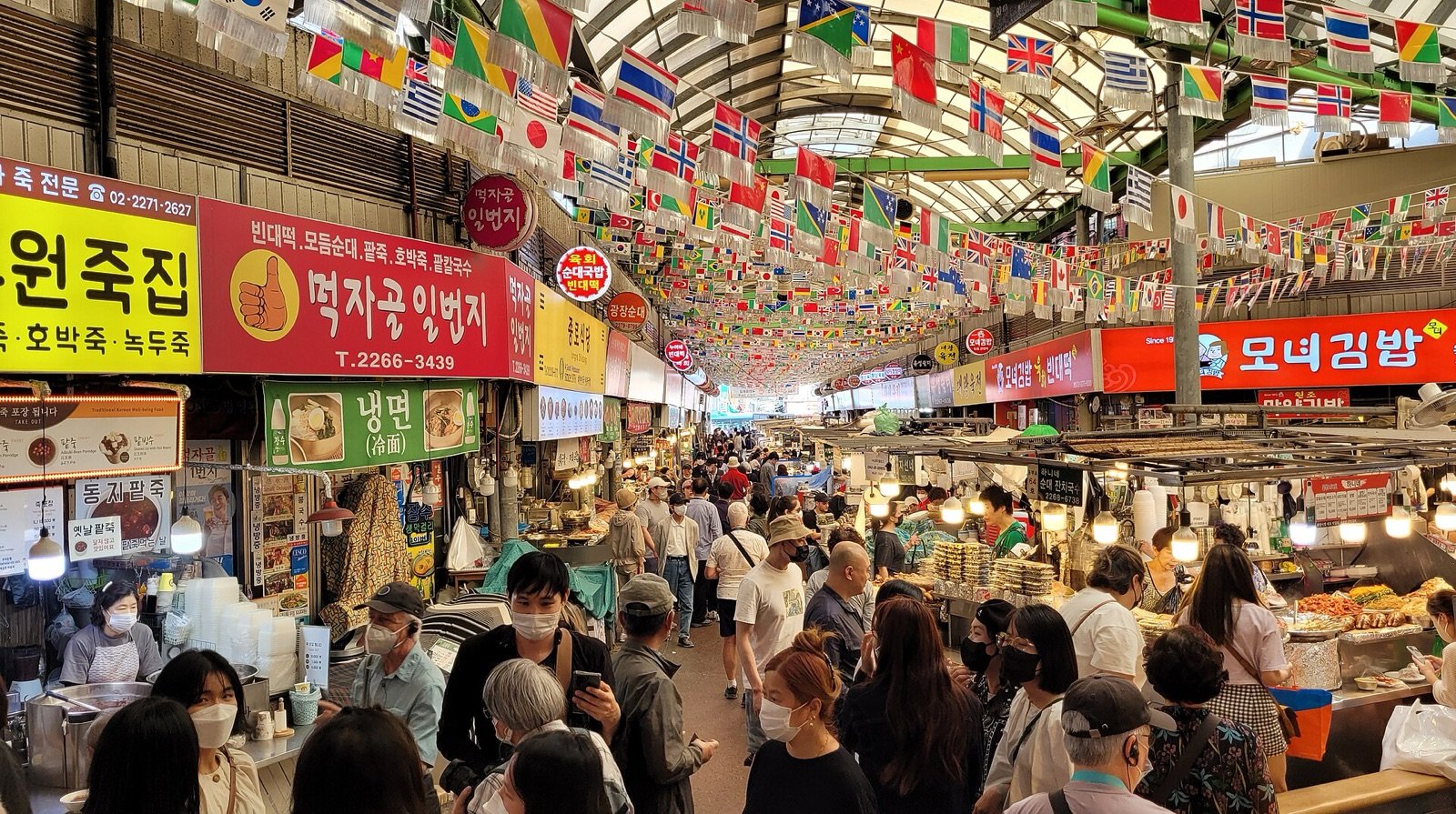
Partly its age. This place opened on July 4, 1905, as the first permanent market in Korea to run every day. It began as a textile and clothing market, and you can still buy hanbok, fabric, and bedding here.
The name means “to gather from afar and keep altogether.”
Mostly, though, people come for the food street, the stretch connected to the East Gate, North Gate 2, and South Gate 1. Expect restaurants side by side, all baking mung bean pancakes and meatballs, with makgeolli (rice wine) going until late at night. The eateries run down the middle of the market in a rough cross shape, so getting properly lost takes real effort.
Sit on a bench, eat, move on, and don’t try to see all of it in one go. Pick your dishes first, and let the wandering happen around them.
Start here: bindaetteok, the dish the market is known for
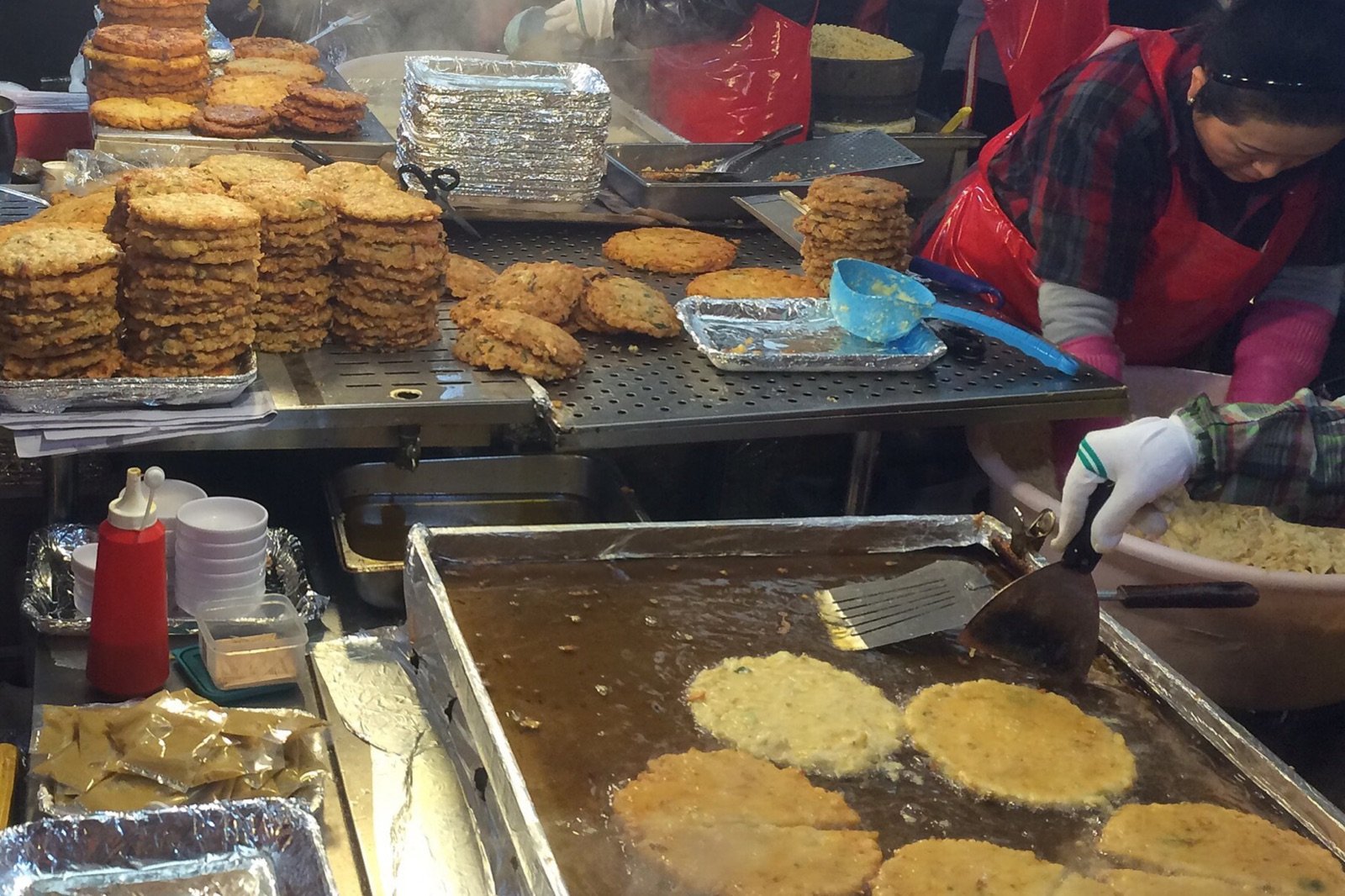
This is the market’s signature dish and its most popular food, so nobody gets to call you boring for ordering it.
Think of a fried pancake of mung bean, meat, and vegetables, usually with meatballs frying right beside it. There’s a good story behind it, too. A 2025 Seoul city article passes on the account that refugees from the Hwanghae-do region, now in North Korea, first made it with shortening from U.S. military bases.
Start with Soonhee’s Bindaetteok. It grinds its mung beans on millstones and makes exactly two things, mung bean pancakes and meat pancakes, to eat at a table or take away.
💡 Yuna’s tip
Order one pancake to share, then decide. A whole market is waiting, and one plate shouldn’t end your day. Thirsty? Makgeolli is the pairing to ask for.
I couldn’t find a current official pancake price. Check the board at the stall, and if you can’t find one, ask before you order.
Small gimbap, big argument
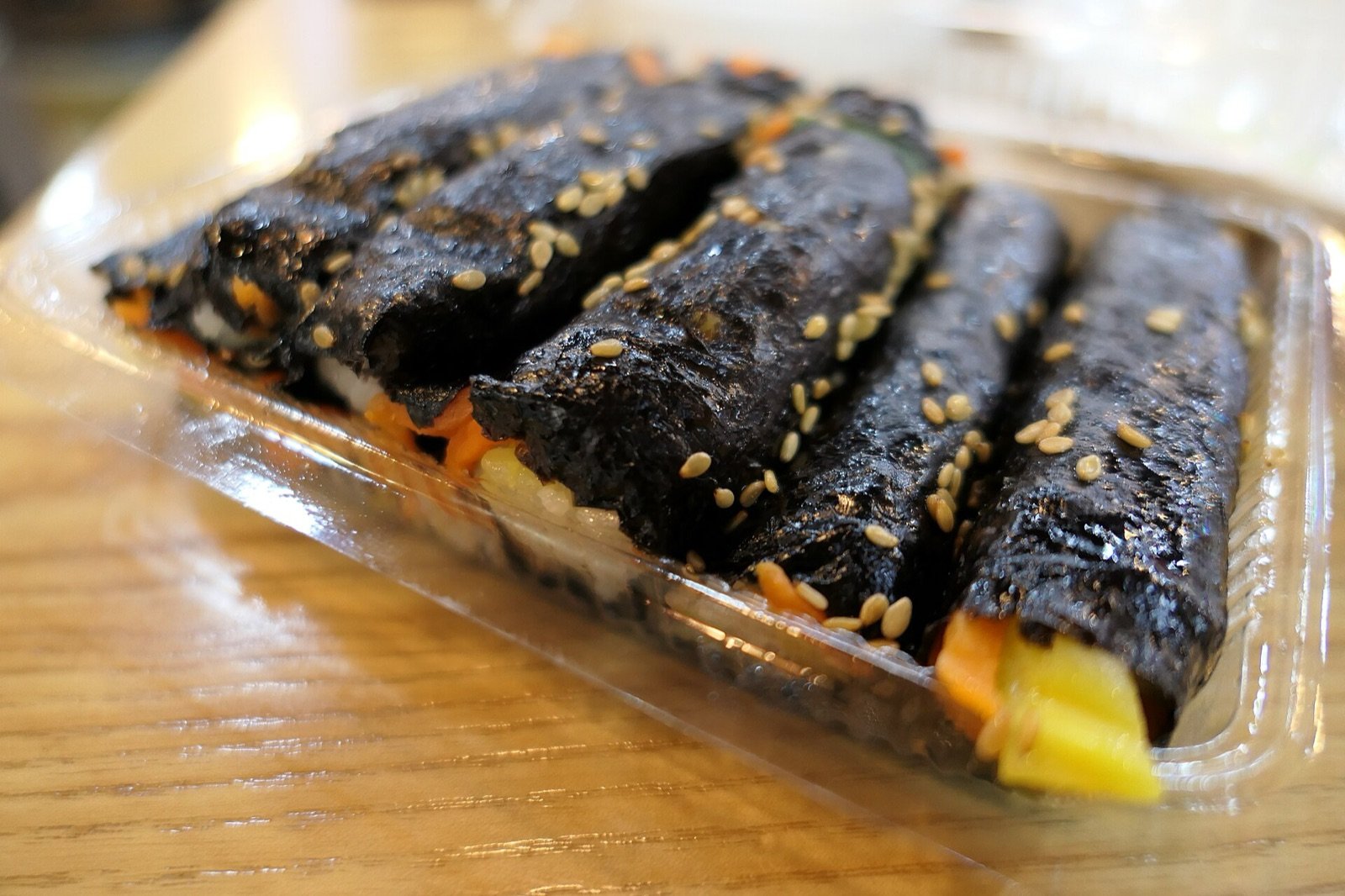
Next up is the tiny gimbap. Mayak gimbap literally means “narcotic gimbap,” a joke about how addictive it’s supposed to be. Relax, the roll is only rice, seaweed, vegetables, sesame oil, and sesame seeds.
You may also see it sold as kkoma gimbap (“small gimbap”), so look for either word on the sign. The dipping sauce is soy-based, with wasabi in a 2025 Seoul city article and mustard in Visit Seoul’s 2026 food guide.
As for who made it first, Visit Seoul calls Mother and Daughter’s Gimbap “the real original,” with over 40 years behind it, then admits most other stores claim exactly that. I’m not refereeing this one! I’d just order a plate before you decide whether you’re hungry.
Is yukhoe worth it if you’ve never had raw beef?
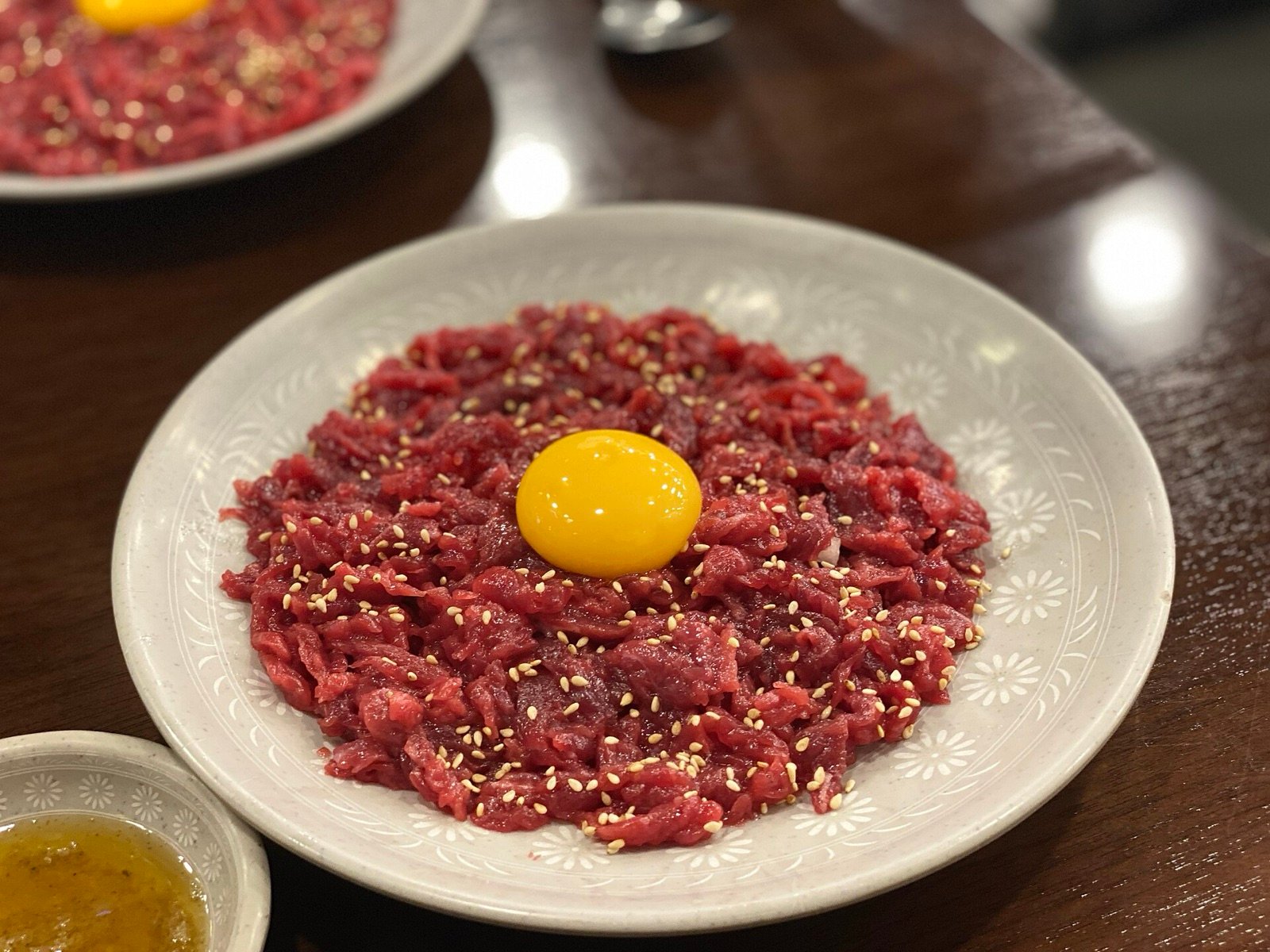
If you’re curious, yes. This is the Korean version of beef tartare, and the long queues around the market say plenty. Raw beef sounds like a dare, but I think it’s one of the better dares in Seoul.
It even has its own street, Yukhoe Alley, a short walk from the market. At Hyeongje Yukhoe Main, last I checked, beef tartare was 21,000 won and a beef tartare bibimbap was 10,000 won.
Honest take
Start with the 10,000-won bibimbap, the cheaper way to find out whether raw beef is your thing, and if it is, you already know where the full plate lives.
What else should you order?
Here’s the rest, in the order I’d bother:
- Tteokbokki: sliced rice cakes in chili sauce, with eomuk (fish cake) alongside. If you like heat, this is your next stop.
- Noodle soup and dumplings: stalls here appeared in Netflix’s Street Food. The official guides don’t name them.
- Modum-jeon: a plate of assorted savory pancakes, for when one kind is not enough.
- Sundae: sorry, no ice cream. This is a Korean sausage made with pork blood and intestine. Skip it if that sentence bothered you.
- Bibimbap: back in 2014, Korea.net said one serving could feed two adults, so look at a bowl before you order two.
- Twisted doughnuts: dusted with cinnamon powder, if any room is left.
If you only make it through the first two, I’d still call that a good lunch.
The market has gotten younger, too. In February 2025, a Seoul city article described pop-ups opening one after another since a Jeju Beer Company one in 2023. It also mentions ILHO Coffee Bar, which a sign inside says carries on from the oldest stall, No. 001. I couldn’t confirm it’s still open, so check before you make a special trip.
Yuna’s pick
Two of you: one bindaetteok, one plate of small gimbap, and something spicy.
Just you: a pancake to go, and keep walking.
Want to sit down properly? Noodle soup first, and call the pancake dessert.
Will you overpay? Here’s how I’d avoid it
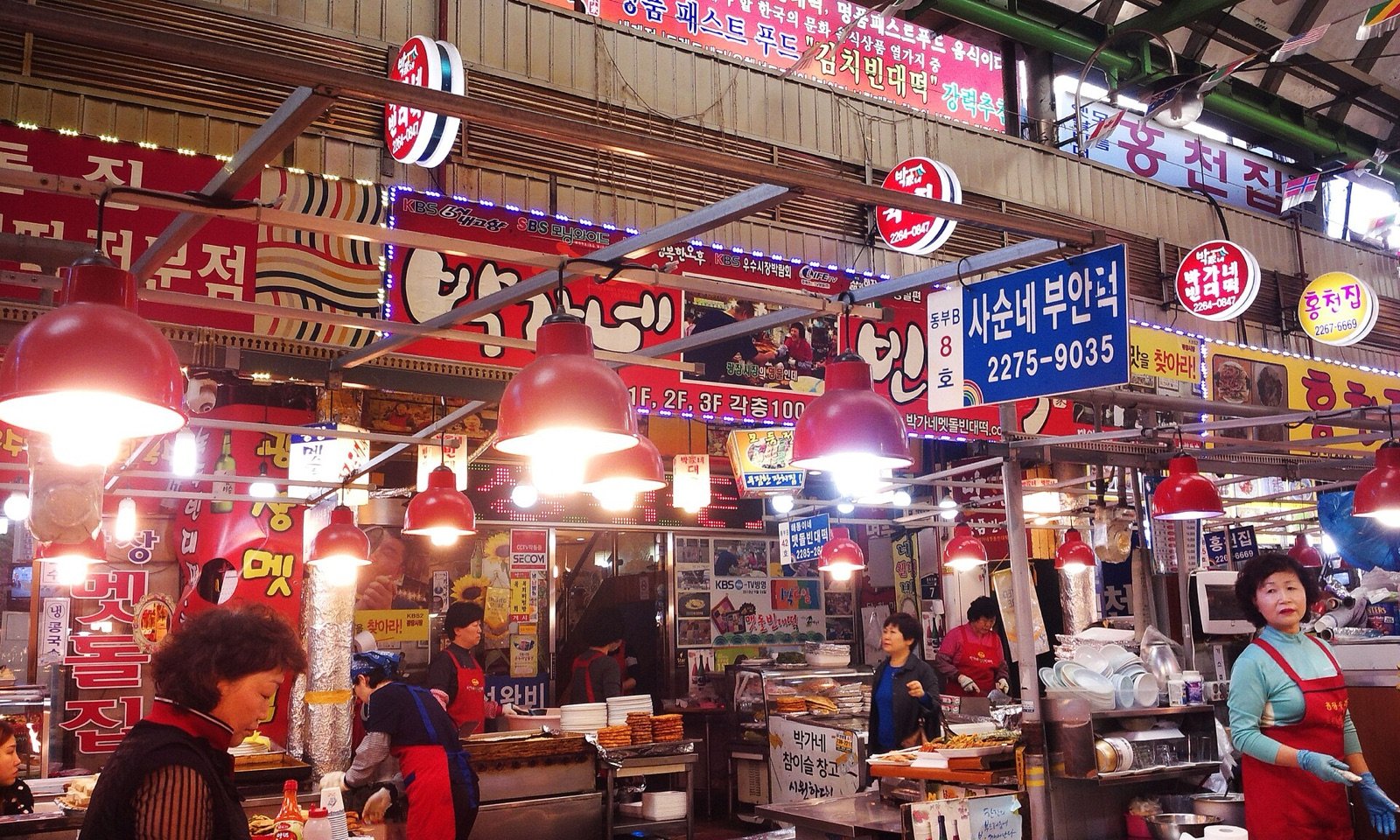
People get overcharged here, and Seoul’s own English site says so: “reports of severe overpricing resurface from time to time.” The official tourism site insists most dishes are reasonably priced, and both can be true.
In April 2026, a news report covered a foreign customer charged 2,000 won for an unlabeled bottle of water. That won’t wreck your trip, but asking first avoids it.
The merchants’ association promised portion labels and card payment back in 2023. Mystery shoppers have checked prices since then, and in April 2026 a news report said a QR service for reporting price gouging was running. How well it’s working, I couldn’t confirm, so assume nothing and ask.
Should this scare you off? I don’t think so. A few small habits are enough:
- Ask first: confirm the price before anything gets cut or plated, and skip the argument later.
- Order small: one dish at a time, so a bigger plate never surprises you.
- Bring cash: VISITKOREA says cards are accepted, but a 2025 Seoul city article said many vendors still refuse them, so keep some in your wallet.
- Skip the tip: tipping is not required or expected in Korea.
- If something goes wrong: call the 1330 travel hotline, +82-2-1330.
💬 Say it in Korean
이거 얼마예요?
igeo eolmayeyo?
“How much is this?” Point at the dish and ask before you order. Asking is perfectly normal at any stall.
When should you go, and how do you get there?
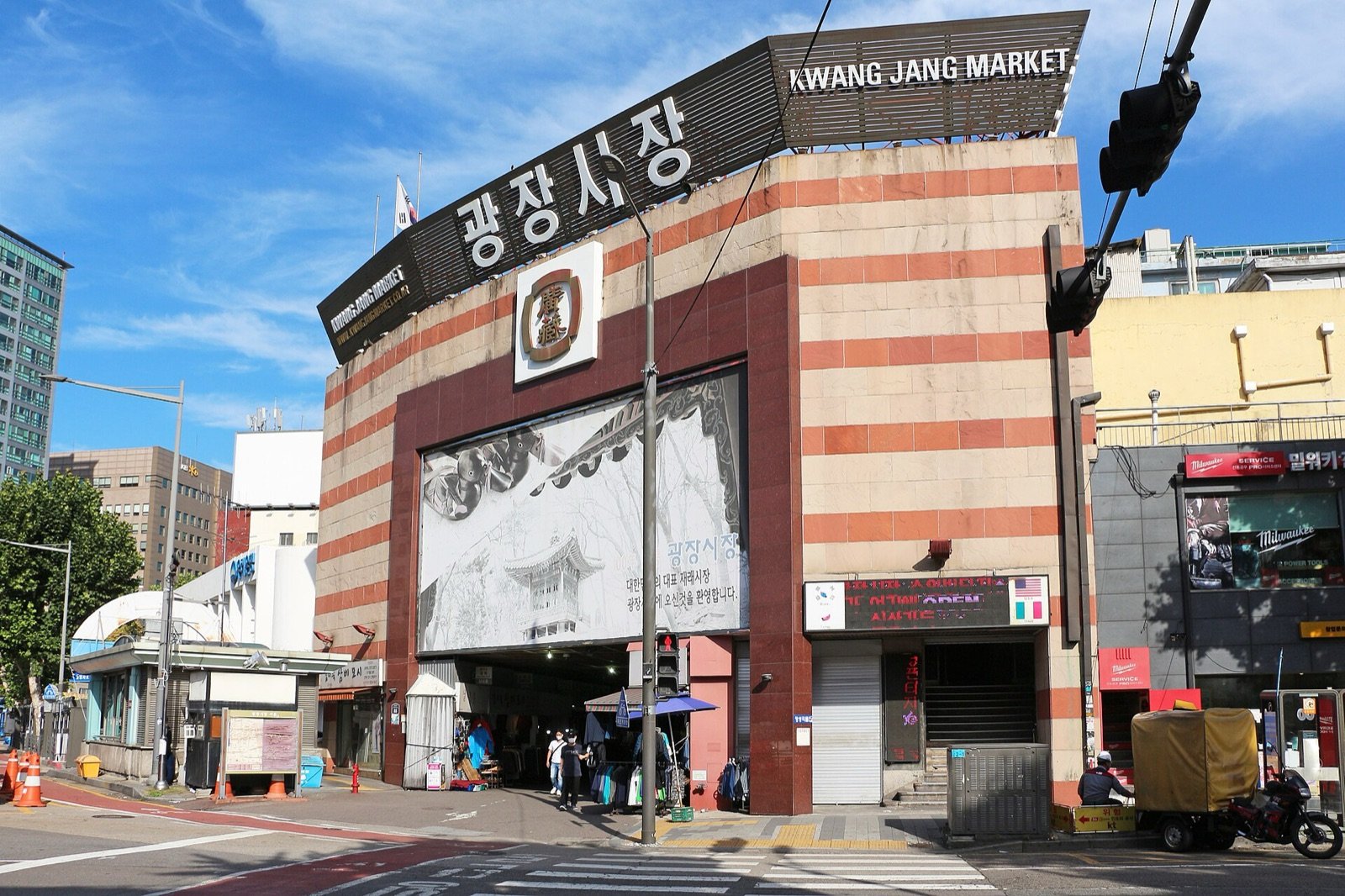
The food alley is the easy part, while the rest of the market keeps shorter hours:
| Part of the market | Hours | Closed |
|---|---|---|
| Food alley | 9 a.m. to 11 p.m. | Open all year |
| Main market | 9 a.m. to 6 p.m. | Sundays |
| Vintage clothing shops | 10 a.m. to 7 p.m. | Sundays |
Single stalls set their own hours, and Hyeongje Yukhoe Main closes on Wednesdays, so plan your raw beef accordingly.
Come Monday to Saturday before 6 p.m. if you want shopping and food together, and come on a Sunday if you only care about lunch.
For the subway, take Line 1 to Jongno 5-ga Station, where Exit 8 puts you about 60 meters away. Euljiro 4-ga Station (Lines 2 and 5) works too, about 100 meters from Exit 4.
The address is 88 Changgyeonggung-ro, Jongno-gu, and if you’re somehow driving, aim for the Jongno 4-ga Jongmyo parking lot.
How I’d spend two hours here
- Start at Exit 8: walk in and split one bindaetteok while it’s hot.
- Keep moving: grab small gimbap, then one spicy snack.
- Go upstairs: browse the hanbok and vintage shops on the 2nd floor.
- Finish slowly: sit down for noodle soup or a coffee.
If vintage clothes are on your list, shop before the second round of food, because jackets are harder to try on after pancakes.
FAQ
Is Gwangjang Market open on Sundays?
The food alley is. Official pages list the main market and vintage shops as closed on Sundays, so I’d plan on food only.
Is Gwangjang Market worth it?
On a first trip, yes. Go for the pancakes and the noise, and ask prices as you go. If you want a quiet sit-down dinner, this is the wrong address.
Can I pay by card at Gwangjang Market?
Sometimes. VISITKOREA lists cards as accepted, but a 2025 Seoul city article said many vendors still turned them down. I’d carry enough cash for your whole visit.
Are there English menus?
At some places, not all. Menus in English, Chinese, and Japanese depend on the restaurant, so pointing remains a fine strategy.
Ask the price, order the pancake, and leave room for one more dish than you think you can manage. If you find a menu or price that’s moved, the Contact page is the place to tell me, and I’ll check it against the official source.
Hwaiting!
Yuna
📌 Read next
- Seoul Climate Card for Tourists (2026): Prices, Foreign Cards & T-money: what to tap on your way to Jongno 5-ga
- Incheon Airport to Seoul (2026): AREX, Limousine Bus or Taxi?: if you haven’t landed yet
🎟️ Book it
Want it sorted before you fly? These are the ones I would look at on Klook:
Sources and last check
How I put this guide together: from Visit Seoul, VISITKOREA, the Seoul Metropolitan Government, and Korea.net, plus two news reports on prices, checked on October 31, 2026 and rechecked on November 1, 2026. Prices and hours come from those pages, not from a visit. Nothing here is sponsored (the booking links are affiliate links, as noted at the top), and no stall or shop paid for or reviewed it. More on how I research every guide is on the About page.
Last checked: November 1, 2026. Prices, hours, and payment rules change, so please check at the stall before you order. The market’s own website wouldn’t open securely when I checked, so I’ve used the pages below instead. This is an independent guide, not affiliated with Gwangjang Market or any shop named here.
Sources:
- Visit Seoul: Gwangjang Market (edited October 8, 2026)
- Visit Seoul: 2026 Seoul food guide (edited August 31, 2026)
- VISITKOREA: Gwangjang Market
- Seoul Metropolitan Government: Generation Z falls in love with Gwangjang Market (February 2025)
- Korea.net: Gwangjang Market entertains all five senses (April 2014)
- VISITKOREA: Meet the past and present of Seoul (December 2020)
- VISITKOREA: About Korean food (2023)
- Visit Seoul: Taste and enjoy Korean traditional markets (November 2019)
- Visit Seoul: Soonhee’s Bindaetteok (edited June 4, 2026)
- Visit Seoul: Mother and Daughter’s Gimbap (edited June 5, 2026)
- Visit Seoul: Hyeongje Yukhoe Main (edited June 30, 2026)
- Asia Business Daily: Gwangjang Market bottled water report (April 19, 2026)
- Kukinews: Gwangjang Market pricing dispute (November 7, 2025, in Korean)




Leave a Reply