Last checked: November 2, 2026
I’d send most first-time visitors to the Bugaksan center. It’s in Samcheong-dong, about 16 minutes on foot from Anguk Station, so a short hike fits into a palace day, and its shortest trail looks out over Cheong Wa Dae and Gyeongbokgung.
If you packed for the city and not the mountains, you can rent shoes, clothes, poles and a backpack there before you start.
The Seoul Tourism Organization runs three of these Seoul Hiking Tourism Centers, at Bugaksan, Bukhansan and Gwanaksan. They’re built for foreign visitors, and News1 counted 85,661 visitors from January to mid-November 2025, nearly double 2024’s 43,016.
Until November 15, 2026, rental is also free for foreign visitors who walk in, during an autumn event. If you’re in Seoul before then, I’d plan your hike for those dates.
Quick answer
- 🥾 What you can rent: hiking shoes, top and pants, backpack, gloves, trekking poles
- 💳 Price: free for foreign visitors on site from October 26 to November 15, 2026; paid at other times, with no official price list
- 📅 Closed: Bukhansan on Mondays, Bugaksan on Tuesdays, Gwanaksan on Wednesdays, all three on January 1
- ✅ Who can rent: foreign visitors, plus Koreans hiking with them
Who can rent, and what can you get?
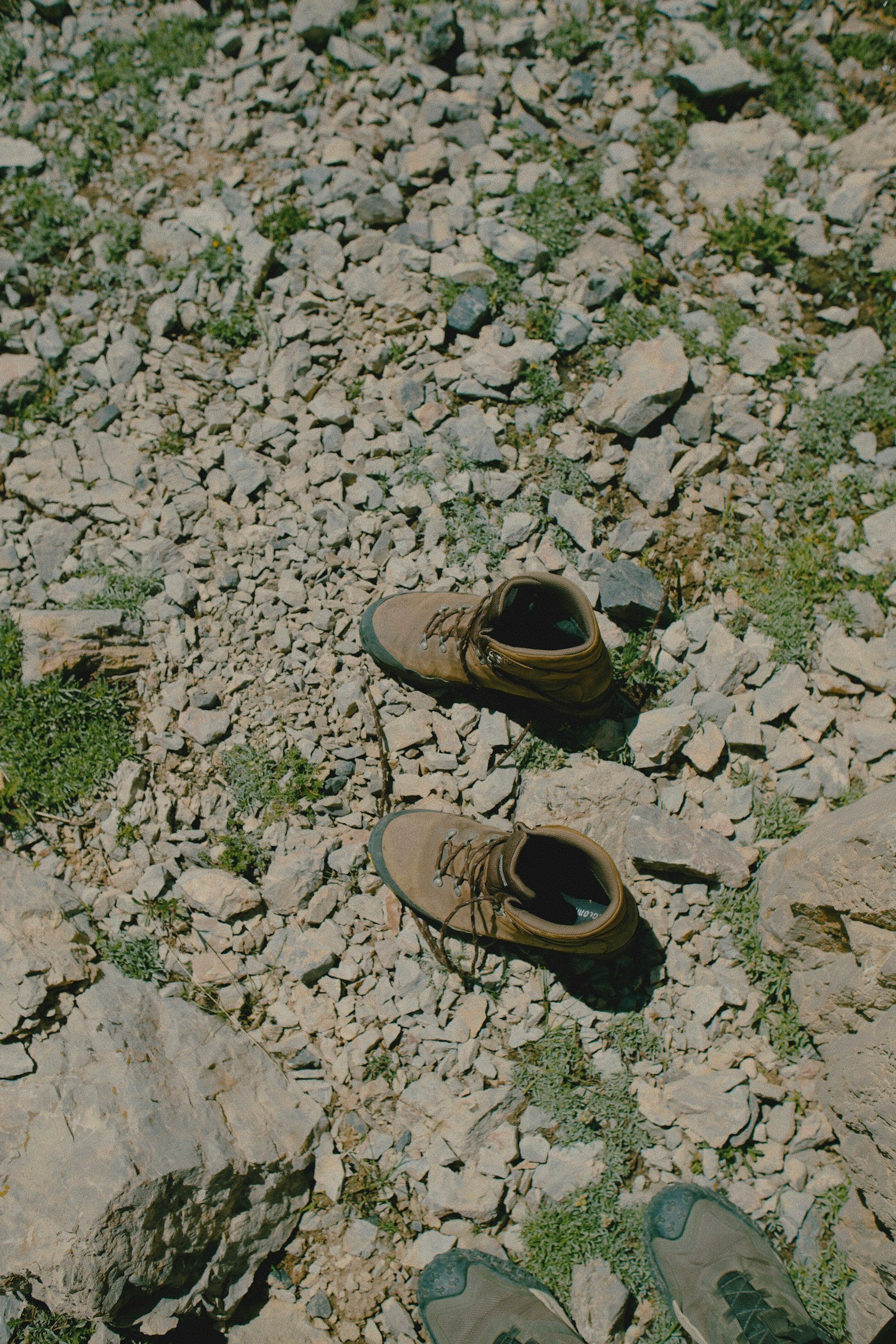
The official site says the rental is for foreign tourists and for Koreans who come with foreign friends. So if a Korean friend is taking you hiking, they can rent too, as long as you’re with them.
All three centers list the same basics: a backpack, hiking shoes, a top and pants, gloves, and trekking poles.
In a piece Time Out published in April 2026, its writer also found jackets, winter crampons, and summer sun hats and umbrellas at the Bukhansan center. If you’re hiking between December and February, I’d ask for crampons when you pick up your gear.
Each center has lockers and a dressing room, so you can change and leave your city bag behind. Service is offered in Korean, English, Chinese and Japanese, according to Time Out.
Bring your passport: a citizen reporter’s 2024 article on Seoul’s city news site says you’ll need ID such as a passport to rent at Bugaksan. Socks aren’t on any center’s list, so I’d bring a thick pair for rented boots.
What does it cost?
From October 26 to November 15, 2026, you pay nothing. The Seoul Tourism Organization’s October 19 press release says foreign visitors can rent gear free during its autumn event, and the Bukhansan center’s booking page shows free walk-in rental for the same dates.
I couldn’t confirm how much gear is set aside for it, so I’d arrive early on a weekend.
Outside those dates, you pay. Neither the official site nor the brochures print a price list; they only call the prices affordable. Each center’s booking button on the official site leads to its own Klook page, which is where you’ll see the price for your date.
I’d use older figures only as a rough guide. A citizen reporter for Seoul’s city news site listed 2,000 to 5,000 won per item for one day at Bugaksan in March 2024.
In the April 2026 Time Out piece, the writer rented a bag, pants, shoes and gloves at Bukhansan, where staff also suggested crampons, and paid less than 12 Singapore dollars for the day.
The brochures say booking is how you make sure your gear is there, and Time Out says you can also walk in for advice from staff.
When the Bukhansan center opened in 2022, a citizen reporter for Seoul’s news site wrote that gear ran out quickly on weekends. Outside the free period, I’d book a weekend rental a few days ahead.
⚠️ Heads-up
Each center closes on a different weekday: Bukhansan on Mondays, Bugaksan on Tuesdays, Gwanaksan on Wednesdays. The official site also lists January 1 as a closed day, and the brochures add Seollal and Chuseok. The centers are open from 9 a.m. to 6 p.m., but plan to return your gear by 4:30 p.m. the same day.
Bugaksan center: a short hike on a palace day

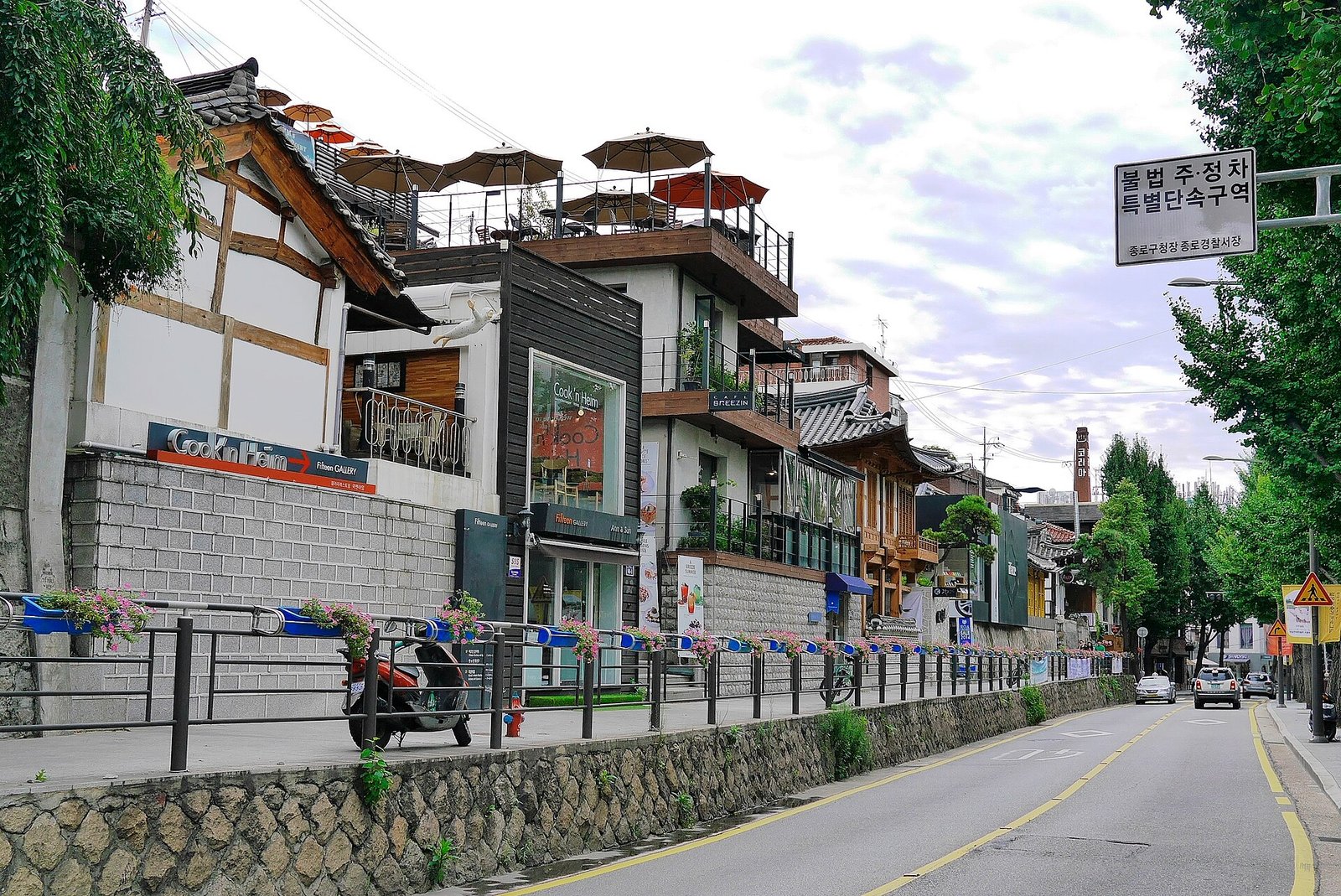
The Bugaksan center is at 88 Samcheong-ro, with a hanok lounge on site (phone 1533-2158). From Anguk Station (Line 3), take Exit 2 and walk about 16 minutes. From Gyeongbokgung Station, it’s Exit 4 and about 24 minutes, which makes it easy to pair with Gyeongbokgung Palace on the same day.
Of the three Bugaksan trails, I’d take the shortest, from the back road behind Chilgung Shrine to the back road by Chunchugwan. The brochure says the view takes in Cheong Wa Dae, Gyeongbokgung and City Hall, and that view is why I’d choose it on a palace day.
I’d count its 2.18 km and about 50 minutes as the trail alone, one way. The brochure doesn’t give directions from the center to the start, so ask the staff, and leave time for that walk and for the walk back to return your gear.
If you have a whole morning, take the City Wall trail instead, from Changuimun Gate over Baegakmaru Peak to the Chunchugwan back road, about an hour and a half. If you’d rather finish close to the center, the Changuimun to Samcheong Park trail ends in Samcheong Park, in the center’s own neighborhood, after about 1 hour 50 minutes.
Bukhansan center: for a real summit
Foreign hikers make up most of this center’s visitors: from January to mid-November 2025, 71% of its 10,280 visitors came from abroad. It’s on the 5th floor at 52 Samyang-ro 173-gil (phone 1533-2608), a 5-minute walk from Exit 2 of Bukhansan Ui Station on the Ui-Sinseol Line.
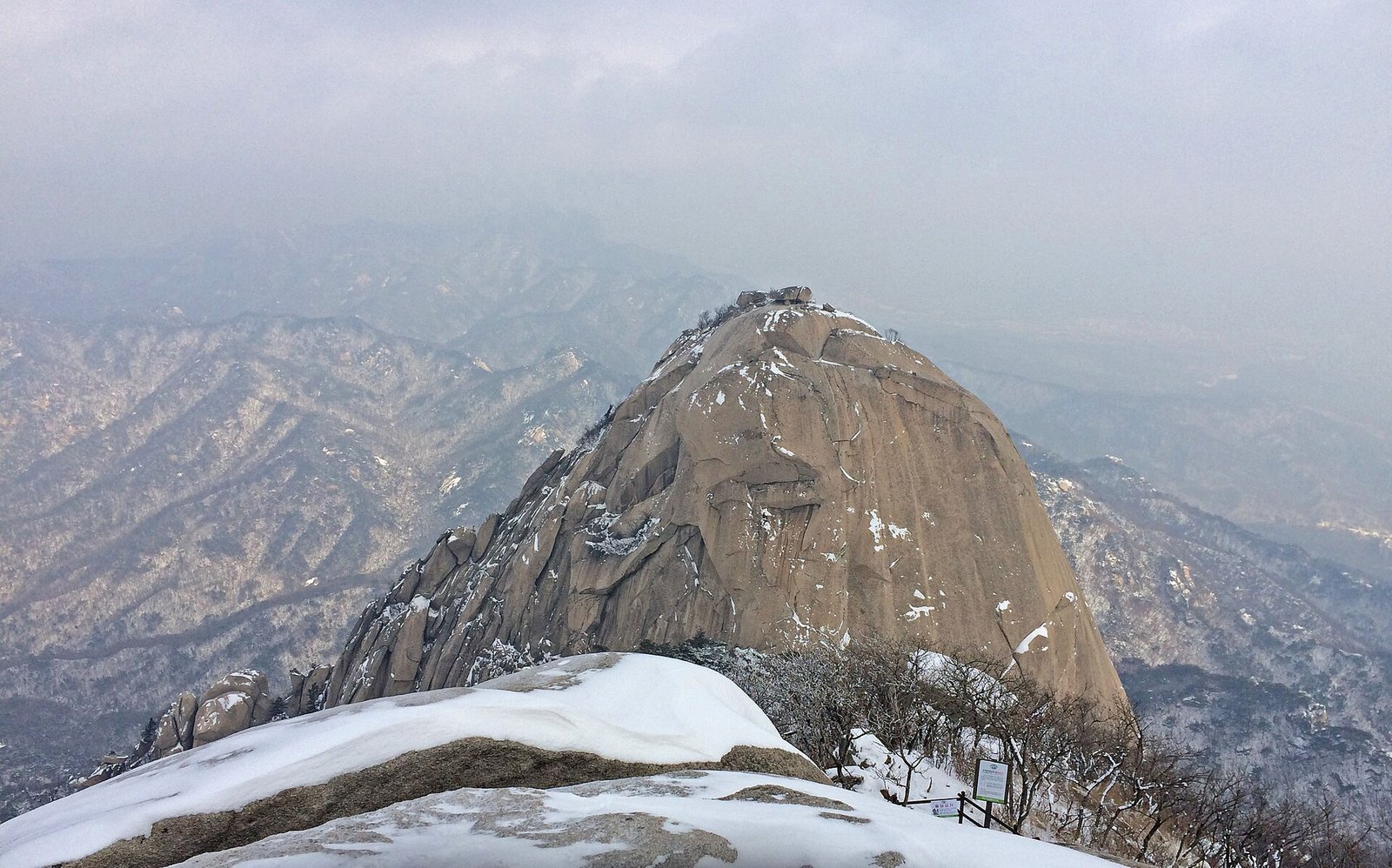
Here I’d do the loop that starts and ends at the center. The Baegundae loop is 9.98 km and takes about 4 hours 20 minutes, and the brochure calls it the quickest way to the top of Baegundae Peak, despite its difficulty.
The 4 hours 20 minutes is the brochure’s trail time, not a promise of when you’ll be back, so I’d start soon after the 9:00 opening. Bukhansan also has a shower in the basement, so pack a towel if you plan to use it.
If you’d rather walk than climb, I’d take the Uiryeong-gil route: about two hours on an unpaved path, one way, from the Ui entrance to the Gyohyeon-ri entrance. Since April 2026, the Korea National Park Service has required a reservation for Uiryeong on weekends and public holidays, separate from your gear booking. Weekdays need none.
Gwanaksan center: inside the subway station
The Gwanaksan center is underground, on the B1 level of Gwanaksan Station on the Sillim Line, by Exit 1 (phone 1533-2162). You can rent your gear and change before you even leave the station, and its brochure lists a lounge for resting after your hike.
The brochure says it’s closed once a week, and the official site lists that day as Wednesday. This center’s Klook page shows Tuesday, so I’d go by the official site.
For an easy walk, I’d choose the Dorimcheon valley trail, about 1 hour 15 minutes, which the brochure calls suitable for everyone. It passes Gwanaksan Lake Park and finishes at Samgeori Mineral Spring, so the time is one way, and you’ll need to allow for the walk back down.
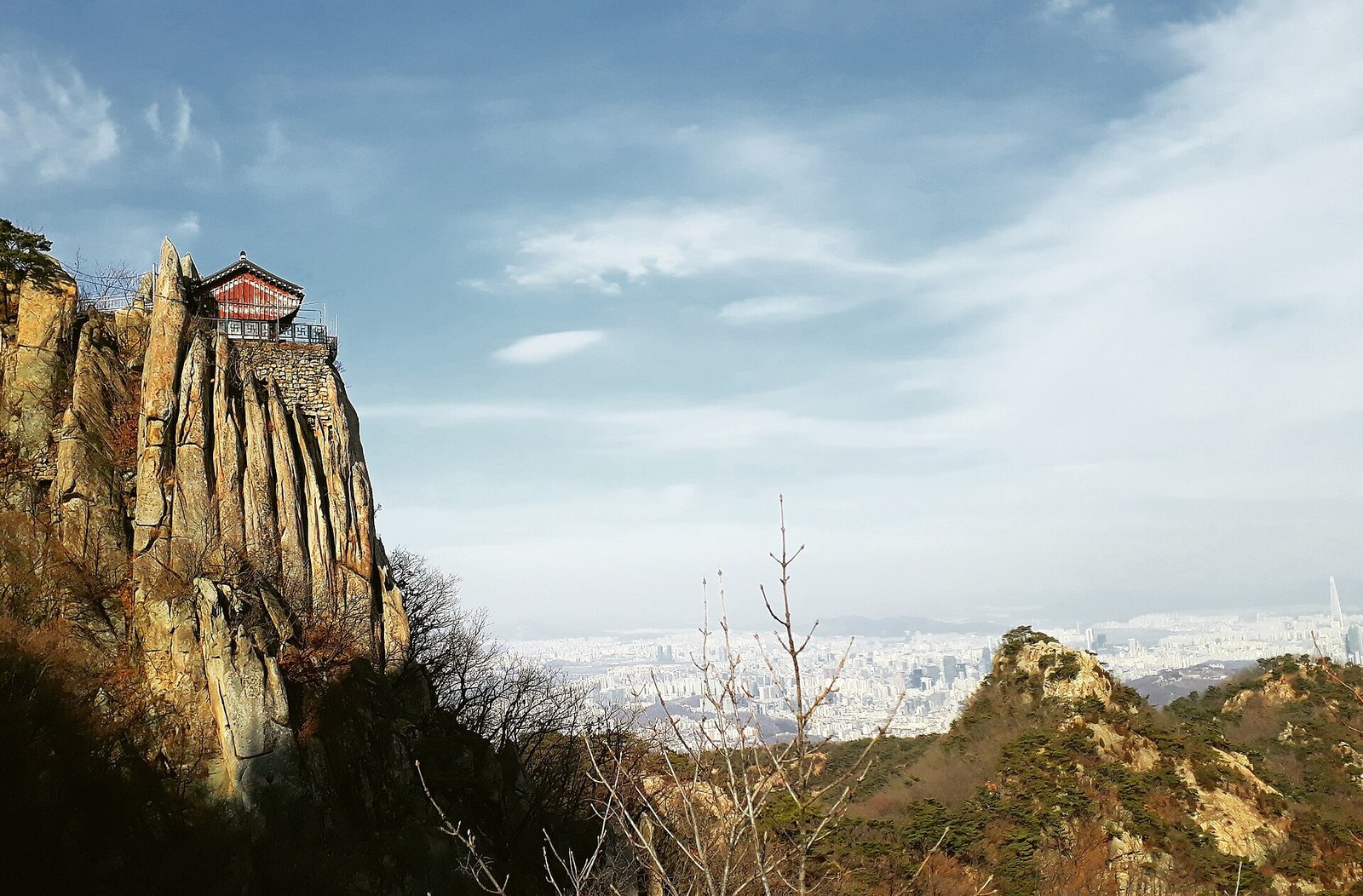
If you want the summit instead, two routes of about 2 hours 30 minutes end at Yeonjudae. The brochure describes the Jaunam ridge route as one for adventurers, with rocky ridges and city views.
The Yeonjudae valley route mixes forest paths, rocky sections and a valley, so it’s the summit route I’d choose on a first visit. The 2 hours 30 minutes gets you to the top, and the way down comes on top of that.
All nine trails: where each one starts and ends
| Center | Trail | Starts and ends | Length and time |
|---|---|---|---|
| Bugaksan | Chilgung back road to Chunchugwan | Chilgung Shrine back road to Chunchugwan back road | 2.18 km, 50 min one way |
| Bugaksan | City Wall, over Baegakmaru | Changuimun Gate to Chunchugwan back road | 3.32 km, 1 hr 30 min one way |
| Bugaksan | Changuimun to Malbawi | Changuimun Gate to Samcheong Park | 4 km, 1 hr 50 min one way |
| Bukhansan | Baegundae loop | The center, back to the center | 9.98 km, 4 hr 20 min loop |
| Bukhansan | Uiryeong-gil | Ui entrance to Gyohyeon-ri entrance (weekend booking) | 6.42 km, 2 hr one way |
| Bukhansan | Samobawi to Bibong | Gugi Visitor Center to Bibong Visitor Center | 6 km, 3 hr one way |
| Gwanaksan | Dorimcheon valley | Gwanaksan Station to Samgeori Mineral Spring | 3.4 km, 1 hr 15 min one way |
| Gwanaksan | Yeonjudae valley | Gwanaksan Station to the Yeonjudae summit | 4.7 km, 2 hr 30 min one way |
| Gwanaksan | Jaunam ridge | Gwanaksan Station to the Yeonjudae summit | 4.3 km, 2 hr 30 min one way |
Yuna’s pick
A palace day: Bugaksan, the 50-minute trail from Chilgung, plus the walk to its start.
A full day and good legs: Bukhansan, the Baegundae loop, starting soon after 9:00.
Staying south of the river: Gwanaksan, the Dorimcheon valley trail, with time to walk back down.
Programs and Seoul Hiking Week
The brochures list climbing and night hiking among the centers’ programs for foreign hikers. In November 2025, News1 reported that a monthly Seoul Hiking Week had been added, and that about 975 people had joined the centers’ programs that year by mid-November, up from 470 in 2023.
For 2026, the Seoul Tourism Organization’s October press release says its main events now run in spring and autumn, and this autumn’s runs for three weeks, from October 26 to November 15. Program sign-ups go through a link on the official site, and the brochures point to the centers’ Instagram account for event news.
Honest take
Pick your trail first, then rent at the center next to it. Only the Baegundae loop brings you back to its center, so on any other trail, leave time to get back before the 4:30 return.
FAQ
Is the gear rental free?
From October 26 to November 15, 2026, yes, for foreign visitors who rent on site. After that, plan on paying. Bukhansan’s rental was also free when the center opened in 2022, and Gwanaksan’s was free for foreign visitors until June 30, 2025, so older articles still mention those offers.
Can I keep the gear overnight?
Plan on the same day. The Klook pages for all three centers ask for returns before 4:30 p.m., and Time Out was given the same time at Bukhansan. A citizen reporter described a next-day return at Bugaksan in February 2024, but the current booking pages don’t offer that.
Can I rent shoes in large sizes?
I couldn’t find a current size list. Put your size in the booking, or call the center before a walk-in.
Bring your passport, and check which weekday your center closes. If something has changed at the counter, please tell me through the Contact page.
Hwaiting!
Yuna
📌 Read next
- Seoul Climate Card for Tourists (2026): Prices, Foreign Cards & T-money: unlimited subway rides to all three trailheads
- Gyeongbokgung Palace Guide (2026): Tickets, Hours & Guard Times: pair it with the Bugaksan hike
- Seoul Fall Foliage in November (2026): Ginkgo, Palaces & Parks: what’s still red in the city this month
Sources and last check
How I put this guide together: from the Seoul Hiking Tourism Center’s official site and the three center brochures by the Seoul Tourism Organization, the Korea National Park Service, the centers’ booking pages, Seoul’s city news site, and reporting by News1 and Time Out, all checked on November 1 and 2, 2026. Which center suits you is my own read. Nothing here is sponsored. More on how I research every guide is on the About page.
Last checked: November 2, 2026. Prices, hours and programs change, so please confirm before you go. This is an independent guide, not affiliated with the Seoul Tourism Organization.
Sources:
- Seoul Hiking Tourism Center: Official site
- Seoul Hiking Tourism Center: Korean site (in Korean)
- Seoul Tourism Organization: Bugaksan Center brochure (PDF)
- Seoul Tourism Organization: Bukhansan Center brochure (PDF)
- Seoul Tourism Organization: Gwanaksan Center brochure (PDF)
- Seoul Tourism Organization: Press release on the autumn event and free rental (October 2026, in Korean)
- Korea National Park Service: Uiryeong reservations (in Korean)
- Seoul city news, citizen reporter: Bugaksan center rental (March 2024, in Korean)
- News1 via Financial News: Visitors to the hiking centers (November 2025, in Korean)
- News1 via Financial News: Gwanaksan center opening (April 2025, in Korean)
- Seoul city news, citizen reporter: Bugaksan center (February 2024, in Korean)
- Seoul city news, citizen reporter: Bukhansan center opening (October 2022, in Korean)
- Time Out: Renting hiking gear in Seoul (April 2026)
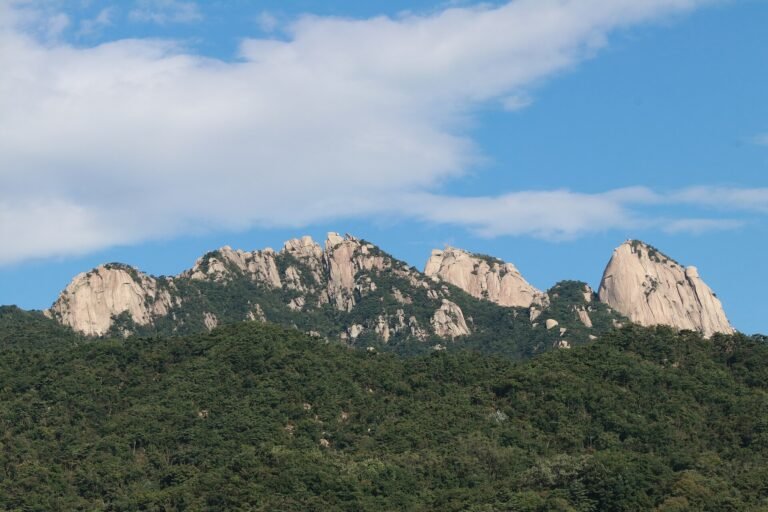
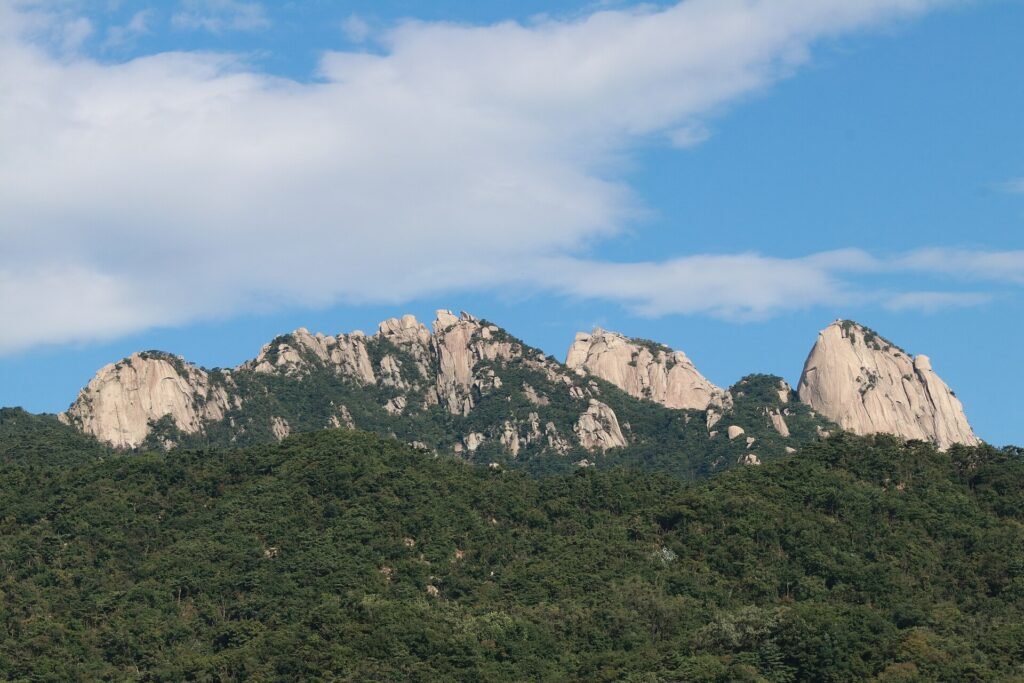
Cover image: The peaks of Bukhansan National Park. Photo: Jo Hanshin, CC0, via Wikimedia Commons