Last checked: October 31, 2026
Most etiquette lists make Korea sound like an exam you can fail. It isn’t. Short version: use two hands, keep your chopsticks out of the rice, and don’t tip. Only one rule below can cost you real money, and it comes at the end.
Quick answer
- 🍜 At the table: wait for the eldest to start, never stand chopsticks in rice, and skip the tip
- 🚇 On the subway: leave the pink seats empty and keep your voice down
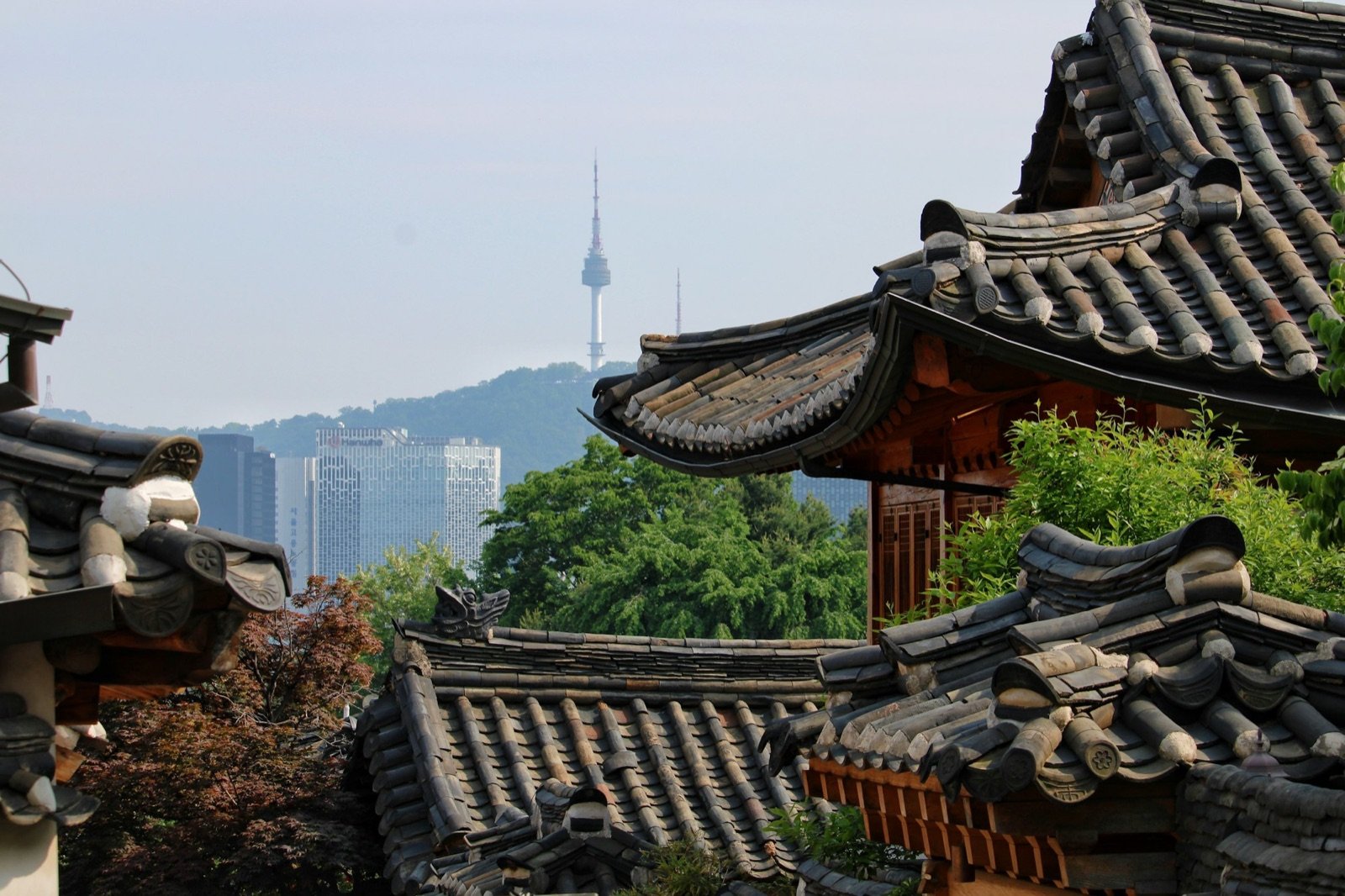
- 📍 In Bukchon: tourists are limited to 10 a.m. to 5 p.m. on Bukchon-ro 11-gil, with a 100,000-won fine
Etiquette guides love a long list, and mine is short on purpose. I wouldn’t stress about getting all of this right. Nearly every rule comes back to one idea, that older people go first, and a little effort goes a long way.
At the table: the rules that actually come up
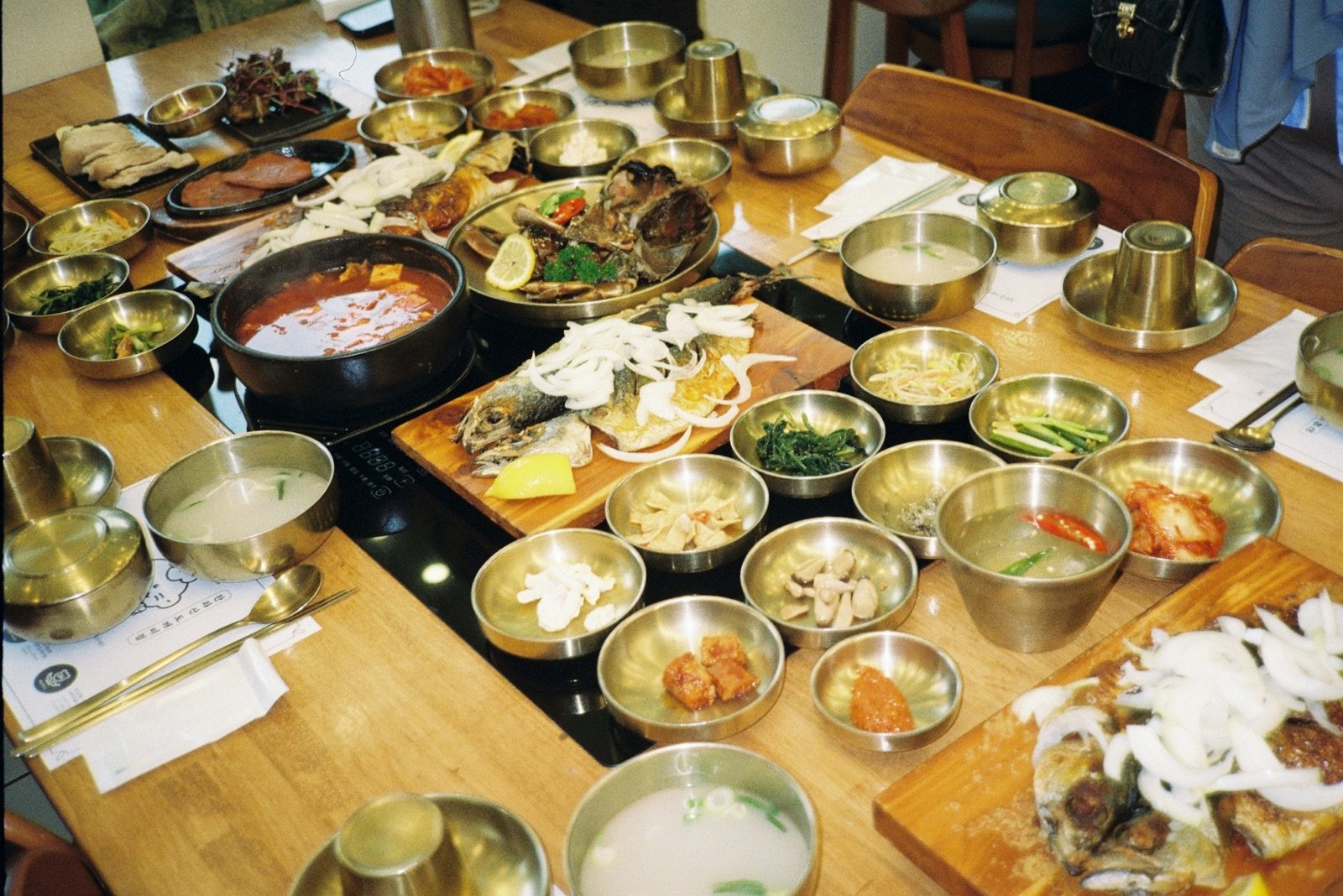
Most of this comes up over food, because Korean meals are built around sharing, which is half the fun. Soups, stews, and side dishes usually arrive in communal dishes, and picking through one for the best bits is a small but real no.
It comes down to a few habits:
- Wait a beat: start once the eldest person at the table begins eating.
- Leave the bowl down: the rice bowl usually stays on the table, with rice on the left and soup on the right.
- Use the spoon for rice: that’s its job here.
- Hands off, mostly: avoid touching food with fingers, except when wrapping something in lettuce or cabbage.
- Tidy up: put the chopsticks and spoon back where they started at the end.
Eating with an older Korean friend or a colleague? This is where I’d pay the most attention. Out with people your own age at a noisy barbecue place, you can relax a lot more.
The one chopstick rule I’d never break
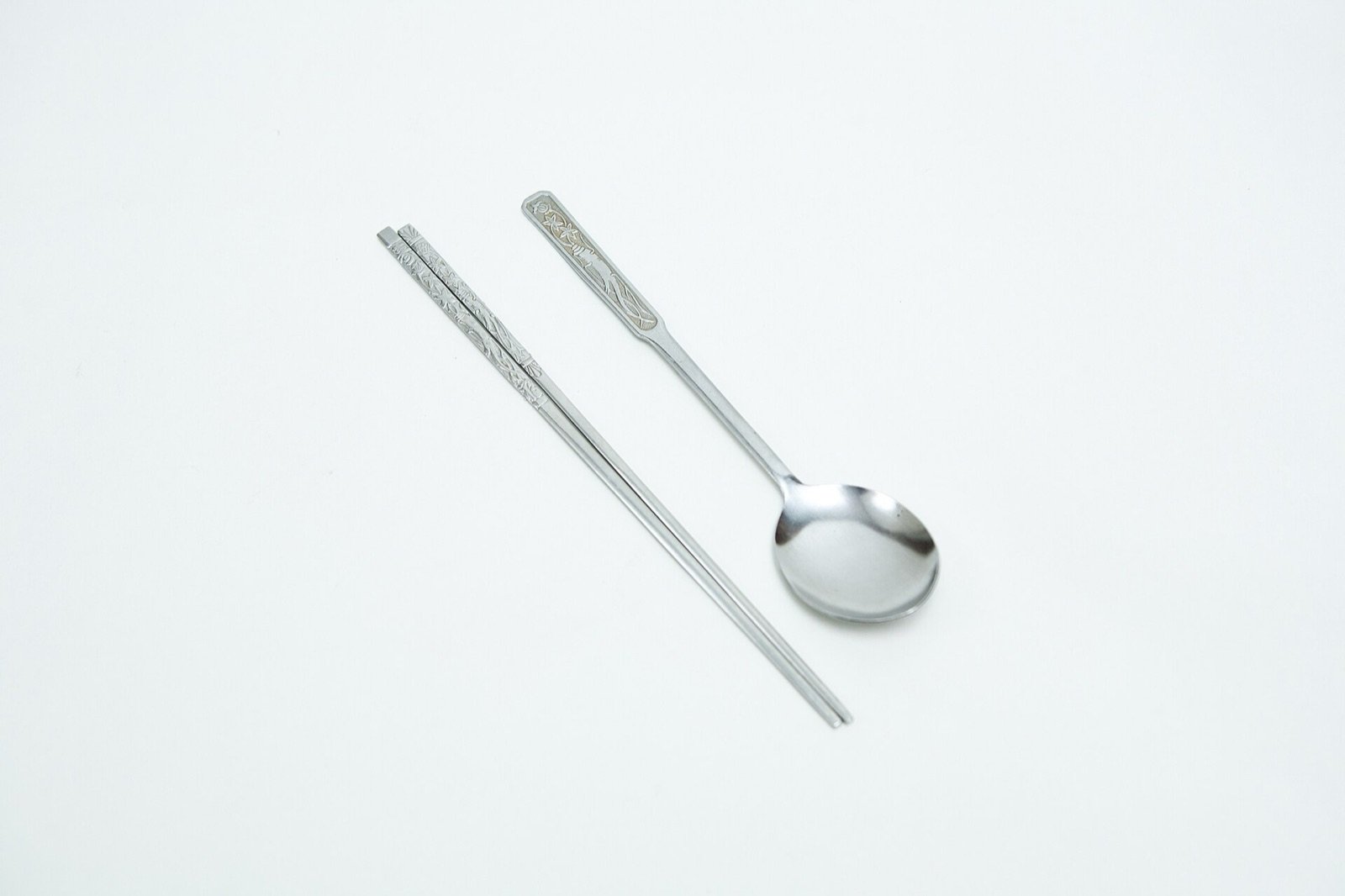

Never leave your chopsticks or spoon standing up in a bowl of rice. Chopsticks in rice belong to rituals for the dead, the kind of thing that makes a whole table go quiet. I think it’s the only table rule worth real worry, because everything else here gets a kind smile.
Rest them beside your bowl instead, and your neighbors can go back to eating. The set is called sujeo, by the way, and the spoon does more of the work than most first-timers expect.
💡 Yuna’s tip
Need to blow your nose at dinner? Step away from the table first. That one and picking your teeth are both on the don’t list.
Do you tip in Korea? No, and here’s what to do instead
You can stop doing the math. Tipping is not required or expected in Korea, and that goes for the fancy barbecue place too. Some people may accept a tip and others will refuse it, so skip it and spare you both the awkward moment.
While you’re enjoying not tipping: water and side dish refills are free, and tables have a call button, so you can retire the big wave. No button at yours? This word does the job:
💬 Say it in Korean
저기요
jeogiyo
“Excuse me.” This gets someone’s attention in a restaurant or a shop. Say it a little louder than feels polite!
Pouring drinks: the short version
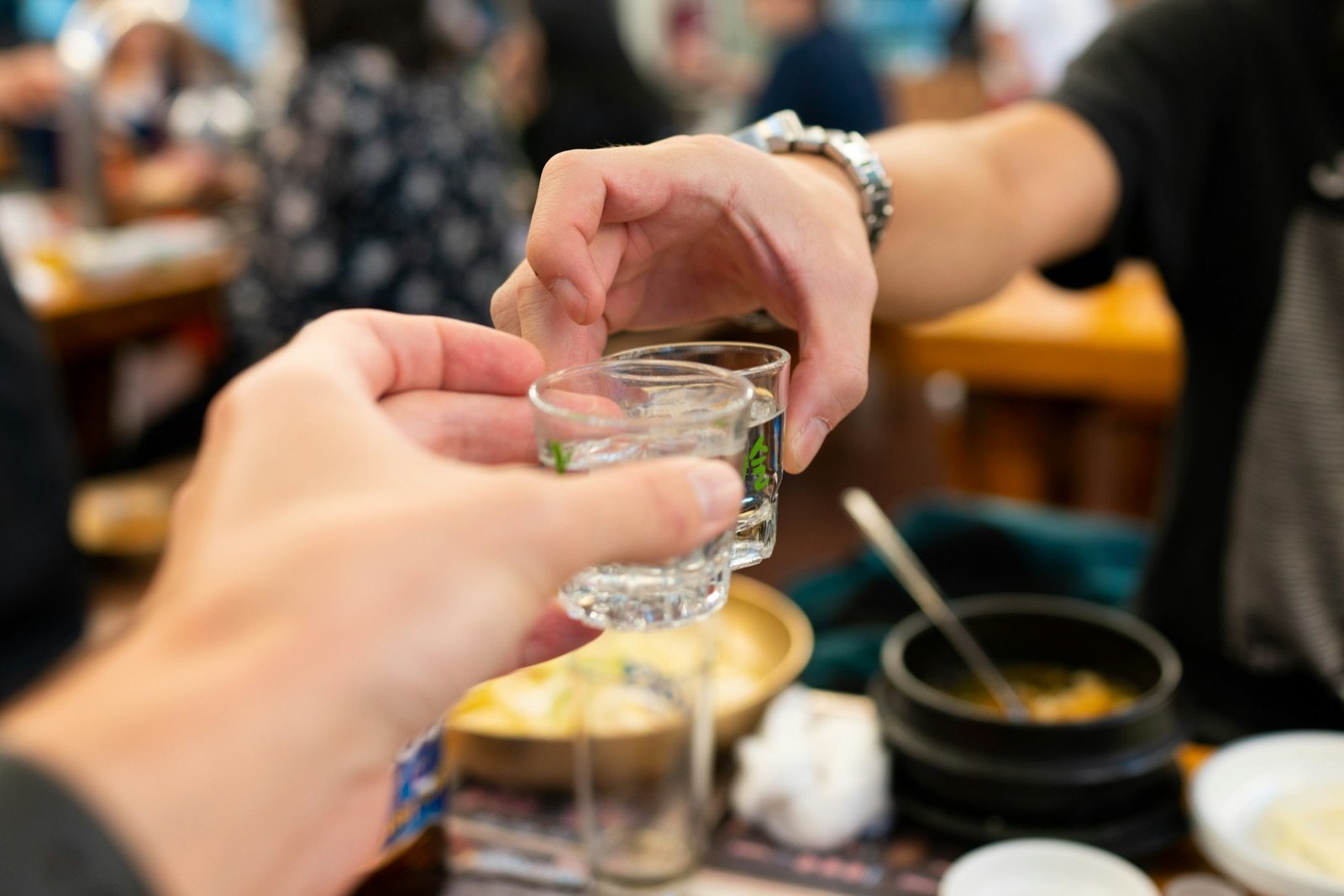
Drinking has the most rules, and most of them only matter with someone older than you. Never pour your own drink, fill the older person’s glass first, use two hands for pouring and receiving, and turn your head to the side when you sip.
One hand is fine, by the way, when the age gap is under five years. And since nobody pours their own glass, watch your neighbor’s, and someone will watch yours.
Honest take
With friends, skip nearly all of this. With someone’s parents, use two hands and turn your head, and you’ll be the favorite guest at that table.
Bows, two hands, and shoes
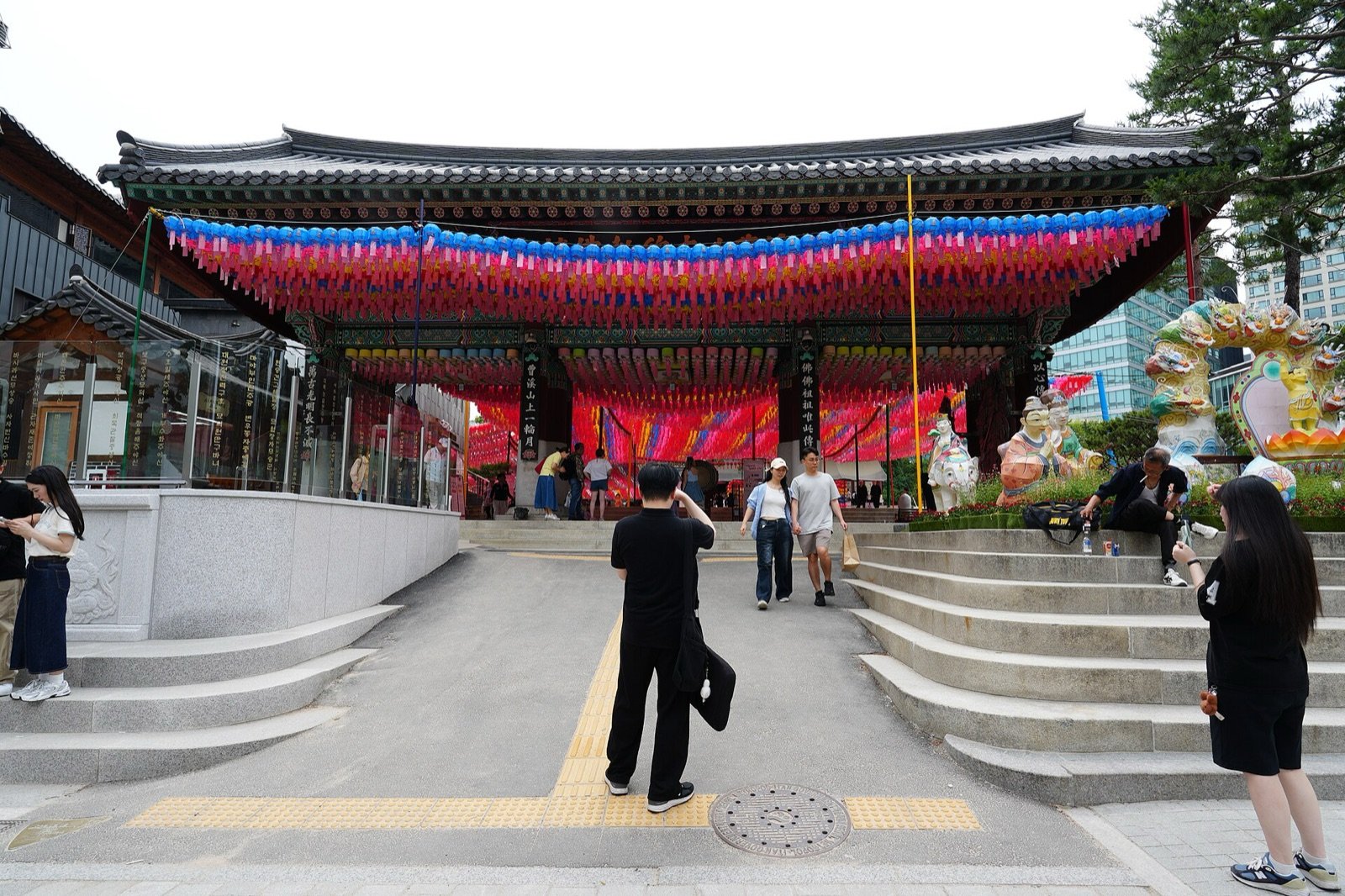

For hello, a short bow does it, and that’s essentially a nod. The older or more senior the person, the deeper the bow, but a visitor’s nod is plenty. It works for shopkeepers, hotel staff, and the grandmother who just moved her bag for a stranger. If a handshake follows, support your right hand with your left.
Pick up the two-hands habit first, because it fits everywhere: give and receive anything with both hands, whether that’s your card at a shop, a gift, or a business card.
Shoes come off at the door of a home, temple, or guesthouse, and at some restaurants with low tables. At a Buddhist temple, that means every building, not only the main hall. A rack of shoes at the door is your answer, so I’d pack socks you’re happy for strangers to see.
A few easy ones to finish. Family names come first, and given names wait until someone invites you to use them, so a title is safer with older people. Don’t point. It’s rude, and the habit is easy to drop. Big public kisses tend to get frowned upon. And if you’re trying out your Korean, stay formal at first and don’t call anyone “you.”
Yuna’s pick
My three, if you only keep three: two hands, a small nod, and the spoon for rice.
Add waiting for the first bite and pouring with two hands when you’re eating with older people.
Street food with friends? None of this will come up.
Invited to a wedding or a funeral?
Unlikely on a short trip, but if it happens: no white dress at a wedding, shoes off at the funeral hall, and never a toast at the meal after a funeral. Toasts are only for happy occasions.
On the subway: pink seats and quiet voices
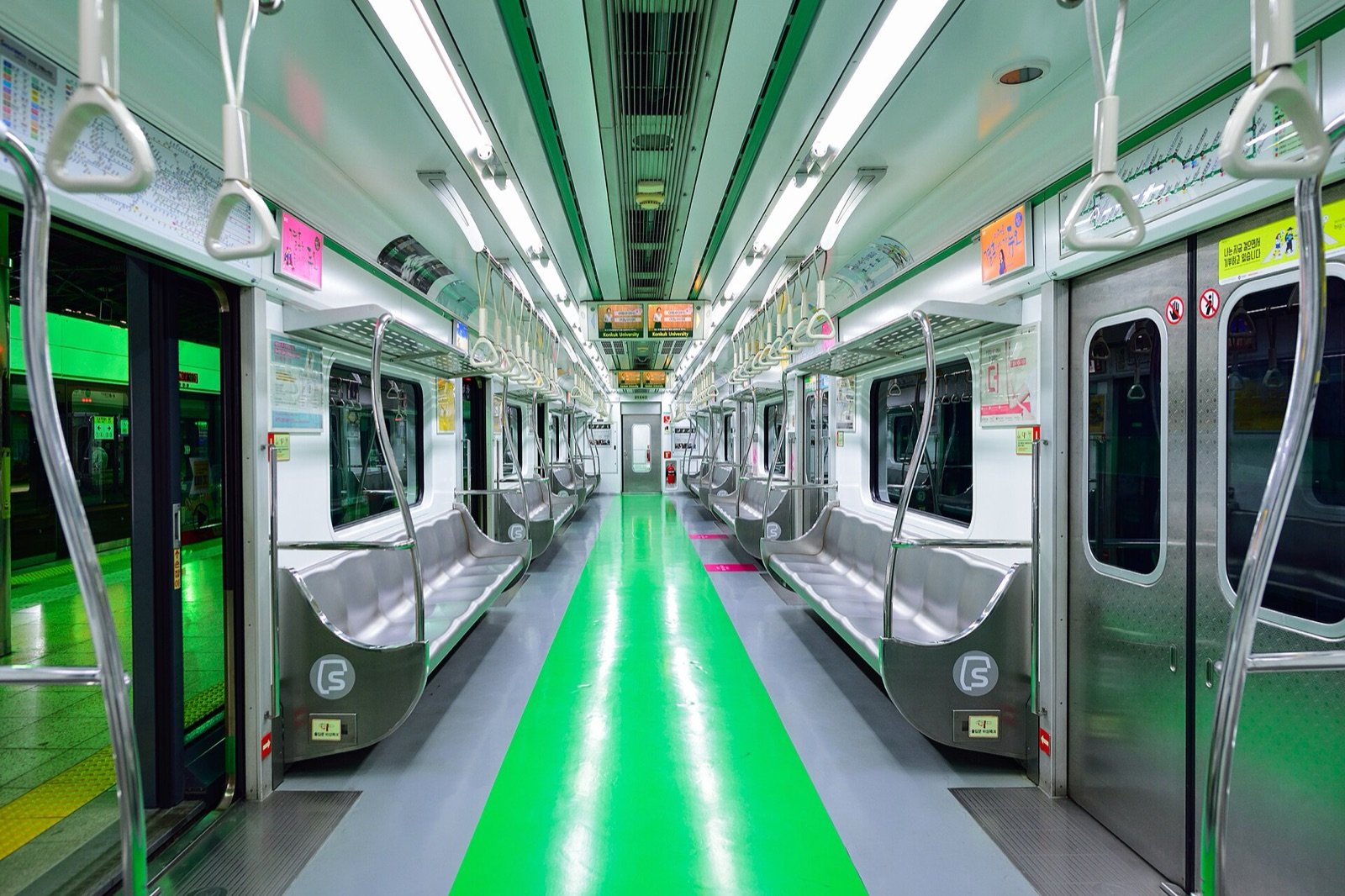

Seoul’s subway has pink seats for pregnant riders, plus priority seats for older riders and people with disabilities. The pink seats run on voluntary consideration, not law. So nobody will fine you, but you would be that person in the pink seat.
My rule of thumb: take an empty regular seat if there is one, and stand if there is not.
Keep your voice down, too, especially if you’re speaking your own language. I think that’s the fairest note in any etiquette guide, because you’re easier to hear than you realize.
The rule that can actually cost you: Bukchon after 5 p.m.
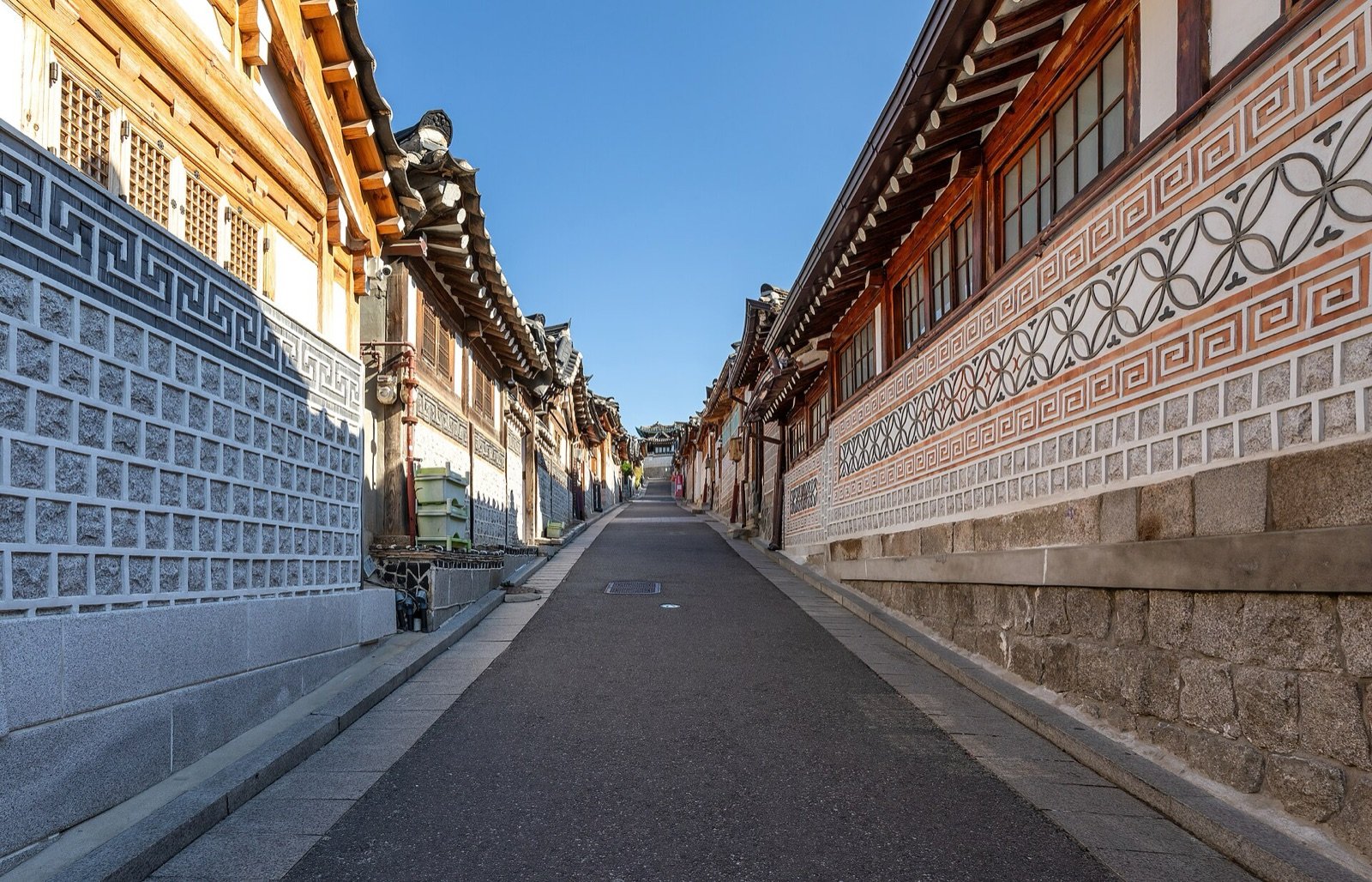

This one is a rule with a fine, not a matter of manners, and it’s the part of this guide I’d read twice. Bukchon is a real neighborhood, and in 2024 Jongno District made part of it a special management area to protect residents from tourist crowds. In the Red Zone around Bukchon-ro 11-gil, behind Jeongdok Library, tourists may visit only from 10 a.m. to 5 p.m.
- The fine: 100,000 won if you ignore the warning. An officer warns you first, and the rule covers Korean and foreign tourists alike.
- Not you if: you live there, you’re visiting someone who does, you’re shopping or selling there, you’re staying there, or you’re just passing through.
- Since when: March 1, 2025, and a June 2026 news report described it as still in place.
Being exempt is not a free pass. Anyone caught doing tourist things, such as taking photos or videos, can still be fined, so put the camera away after 5 p.m.
The district also announced limits on charter buses from January 2026, along with new drop-off points, so on a group tour you may be walking in from the edge of the area.
The reason is simple enough: the crowds were disrupting daily life for the people who live here. The Red Zone covers about 34,000 square meters of real homes, so think neighborhood, not theme park.
Signs on the street beat anything I’ve written here, so follow those first.
My pick is a morning visit, soon after 10 a.m., with your voice low and your phone mostly in your pocket. You’re walking past people’s bedrooms, after all.
FAQ
Is it rude to tip in Korea?
It isn’t rude, but it isn’t expected. Some people will accept and some will refuse, so I’d keep it simple and skip it.
Do I have to bow?
No, but a small nod is friendly and easy, and it’s all a visitor needs.
Do I need to take my shoes off in restaurants?
Only at some, usually the ones with low tables, so copy the other diners.
What if I get something wrong?
Then a small nod and a smile will cover most of it. These are habits, not laws, and Bukchon is the one exception on this page.
Can I eat rice with chopsticks?
Use the spoon. Nobody will mind the chopsticks, but the spoon is the easier tool anyway.
Two hands, one nod, no tip, and out of the Red Zone by 5 p.m. That covers most of it. If a rule has changed, tell me on the Contact page and I’ll check it. Enjoy your trip!
Hwaiting!
Yuna
📌 Read next
- Seoul Climate Card for Tourists (2026): Prices, Foreign Cards & T-money: what to tap before you find that seat
- Korea eSIM, SIM Card, or Pocket Wi-Fi (2026): How to Choose: so your maps work in Bukchon’s side streets
Sources and last check
How I put this guide together: from Visit Seoul, VISITKOREA, Korea.net, and Seoul city pages, plus news reports quoting Jongno District, all checked on October 31, 2026. Several of the manners pages are years old, so I’ve kept to the habits they agree on. Nothing here is sponsored. More on how I research every guide is on the About page.
Last checked: October 31, 2026. Jongno District’s own website wouldn’t open when I checked, so the Bukchon details come from Seoul’s city news site and reports quoting the district. Local rules change, so please follow any signs you see on the street. This is general information, not legal advice, and this is an independent guide, not affiliated with any office named here.
Sources:
- Visit Seoul: The basics of Korean etiquette
- Visit Seoul: Korean etiquette (edited February 2019)
- VISITKOREA: About Korean food (last updated March 2023)
- Korea.net: While in Korea, Episode 7 (September 2019)
- Korea.net: Alcohol in Korean life (January 2014)
- Seoul Metropolitan Government: Reply on pregnancy seats (October 2023, in Korean)
- Seoul city news: Bukchon visiting hours (November 2024, in Korean)
- Korea JoongAng Daily: Bukchon tourism curfew (February 28, 2025)
- Yonhap via Financial News: Bukchon Red Zone rules (February 28, 2025, in Korean)
- Yonhap via Financial News: Bukchon hanok stays (June 1, 2026, in Korean)
- Seoul Shinmun: Charter bus drop-off points in Bukchon (November 28, 2025, in Korean)
- Korea.net: While in Korea, Episode 6 (August 2019)
- The Korea Herald: Pregnancy seats on the subway