Author: YUNA

  • Seoul Fall Foliage in November (2026): Ginkgo, Palaces & Parks

    Seoul Fall Foliage in November (2026): Ginkgo, Palaces & Parks

    Some links in this guide are affiliate links. If you book through them, Hello Korea Tips may earn a small commission at no extra cost to you.

    Last checked: October 31, 2026

    Most of the official info on autumn leaves in Seoul is only in Korean: the peak map from the Korea Forest Service and the city’s own list of foliage roads. So I read through them, plus the palace notices, and pulled out what actually matters if you’re in Seoul this November. Short version: early November is your window, and the Secret Garden is the one ticket I’d book ahead.

    Quick answer

    • 🗓️ Peak: early November; maples at Seoul Botanic Park are forecast for November 2
    • 📍 Best bets: the Secret Garden at Changdeokgung, the Deoksugung stone-wall road, the ginkgo at Seoul Forest
    • 💰 Palace tickets: 1,000 to 3,000 won; the Secret Garden adds 5,000 won
    • ✅ Book ahead if: you want the Secret Garden: online tickets open 6 days before

    Leaves don’t follow your calendar, of course. But the forecasts give you a good starting point, and the rest of this guide is about where you’ll want to be once the color shows up.

    When do the leaves peak in Seoul in 2026?

    Deoksugung palace seen from above in autumn with yellow trees and Seoul office towers
    Deoksugung from above in autumn, with yellow trees along the wall. Photo: 라성민, CC BY-SA 3.0, via Wikimedia Commons

    The Korea Forest Service publishes a peak map, and the 2026 one came out on September 22. On that map, “peak” means half the leaves have turned.

    Inside Seoul, the map has one point: Seoul Botanic Park, where maples are forecast to peak on November 2. If you’re staying a few days, these points just outside the city help you read the timing:

    Place Where Maples Ginkgo
    Seoul Botanic Park Gangseo-gu, Seoul November 2 Not on the map
    Surisan Gunpo, Gyeonggi November 2 November 4
    Korea National Arboretum Pocheon, Gyeonggi October 29 October 31
    Mulhyanggi Arboretum Osan, Gyeonggi November 6 November 6

    If your dates are flexible, I’d aim for the first week of November and plan the rest of your trip around it.

    Here’s the catch: ginkgo don’t hang around.

    In a Seoul Forest feature from November 27, 2025, the Seoul city news site warned that once ginkgo start dropping leaves, the branches go bare within days. It called that weekend the end of the season.

    One honest warning about ginkgo season: the fallen berries smell, let’s say, memorable. Watch where you step, and maybe skip the suede shoes.

    The Korea Meteorological Administration uses its own yardstick for mountains. It counts the first color when about 20% of a mountain has turned from the top down, and the peak at about 80%. Both agencies post their updates in Korean, so I’d run the pages through a translation app the night before you go.

    The Secret Garden at Changdeokgung: the one I’d book
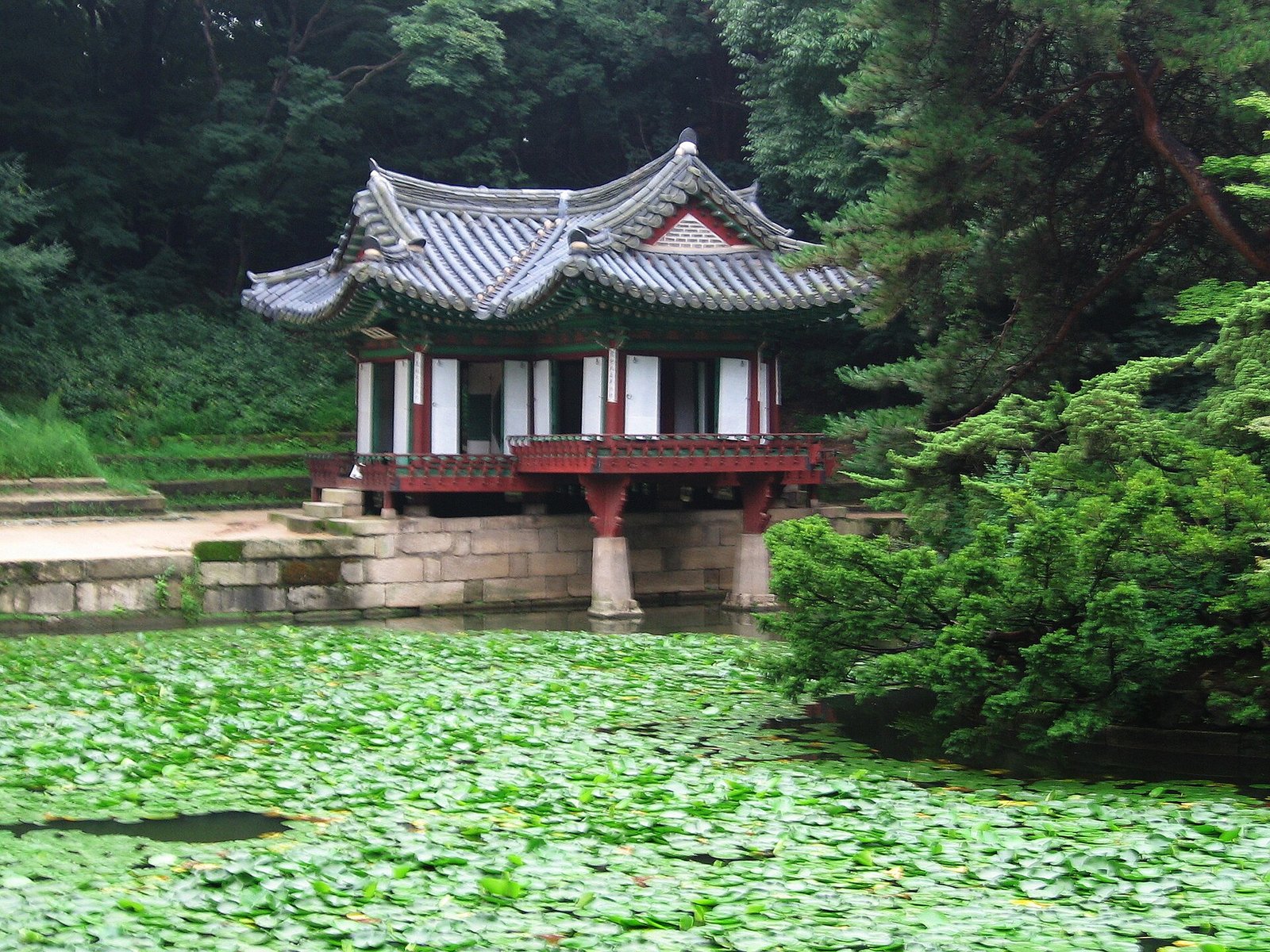
    Buyongjeong pavilion over a lotus pond in the Secret Garden at Changdeokgung
    Buyongjeong in the Secret Garden, shown in September. Entry is by guided tour only. Photo: Johannes Barre (iGEL), CC BY-SA 3.0, via Wikimedia Commons

    If you only have time for one palace in November, I’d pick Changdeokgung and its Secret Garden, called Huwon in Korean. You can only walk the garden on a guided tour, so you won’t be fighting a crowd for every photo.

    The palace itself is open 9 a.m. to 5:30 p.m. from November to January, with ticket sales ending at 4:30 p.m. Adults (19 to 64) pay 3,000 won, and it’s closed on Mondays. The Secret Garden costs you 5,000 won more, on top of that palace ticket.

    Here’s how the garden tickets work, from the English site of Changdeokgung:

    • Online: 50 tickets per tour, from 10 a.m. six days before until the day before.
    • On the day: the other 50 sell at the ticket office.
    • English tours: 10:30 a.m., 11:30 a.m., 2:30 p.m., and 3:30 p.m., from March to November.

    With 100 tickets per tour and only half of them online, I would set an alarm for 10 a.m. Korea time, six days before your date. I wouldn’t gamble a November trip on the walk-up half.

    ⚠️ Heads-up

    Foreign-language tours are for foreigners only. And the 6,000-won Royal Palace Pass (the four palaces plus Jongmyo Shrine) does not cover the Secret Garden at all, so you will still need to book the garden separately.

    Gyeongbokgung and Deoksugung: no booking needed
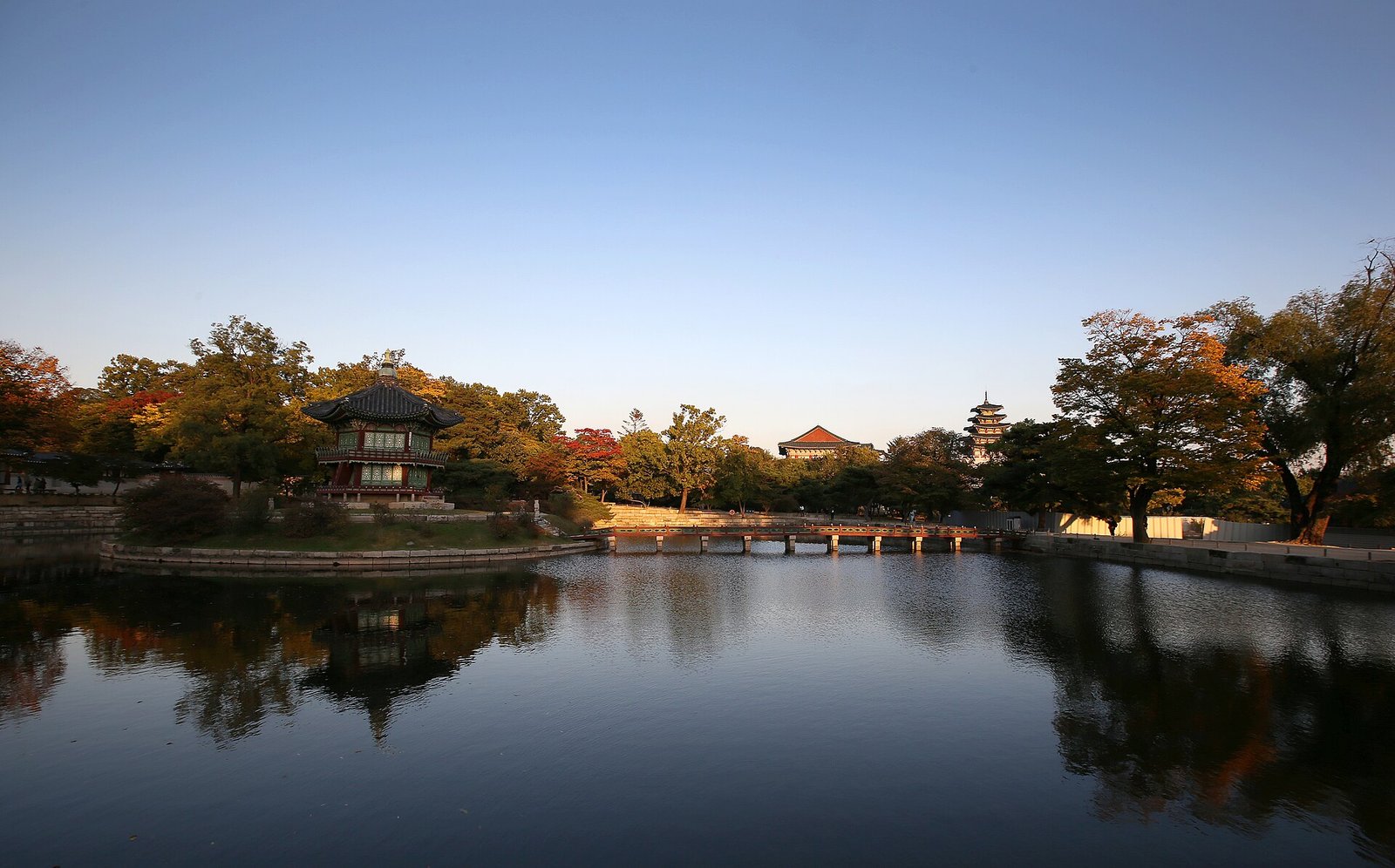
    Hyangwonjeong pavilion and its pond at Gyeongbokgung with autumn trees at dusk
    Hyangwonjeong pond at Gyeongbokgung in mid-October 2014. The palace closes on Tuesdays. Photo: Republic of Korea, CC BY-SA 2.0, via Wikimedia Commons

    You can just walk up to the ticket booth at these two, which makes them easy to slot into your day.

    From November to February, Gyeongbokgung opens 9 a.m. to 5 p.m., with the last entry at 4 p.m. It closes on Tuesdays, and adult tickets are 3,000 won. If you want the courtyards before the tour groups arrive, I’d go right at opening.

    Deoksugung keeps much longer hours: 9 a.m. to 9 p.m., last entry 8 p.m., closed on Mondays. Foreign adults (19 to 64) pay just 1,000 won.
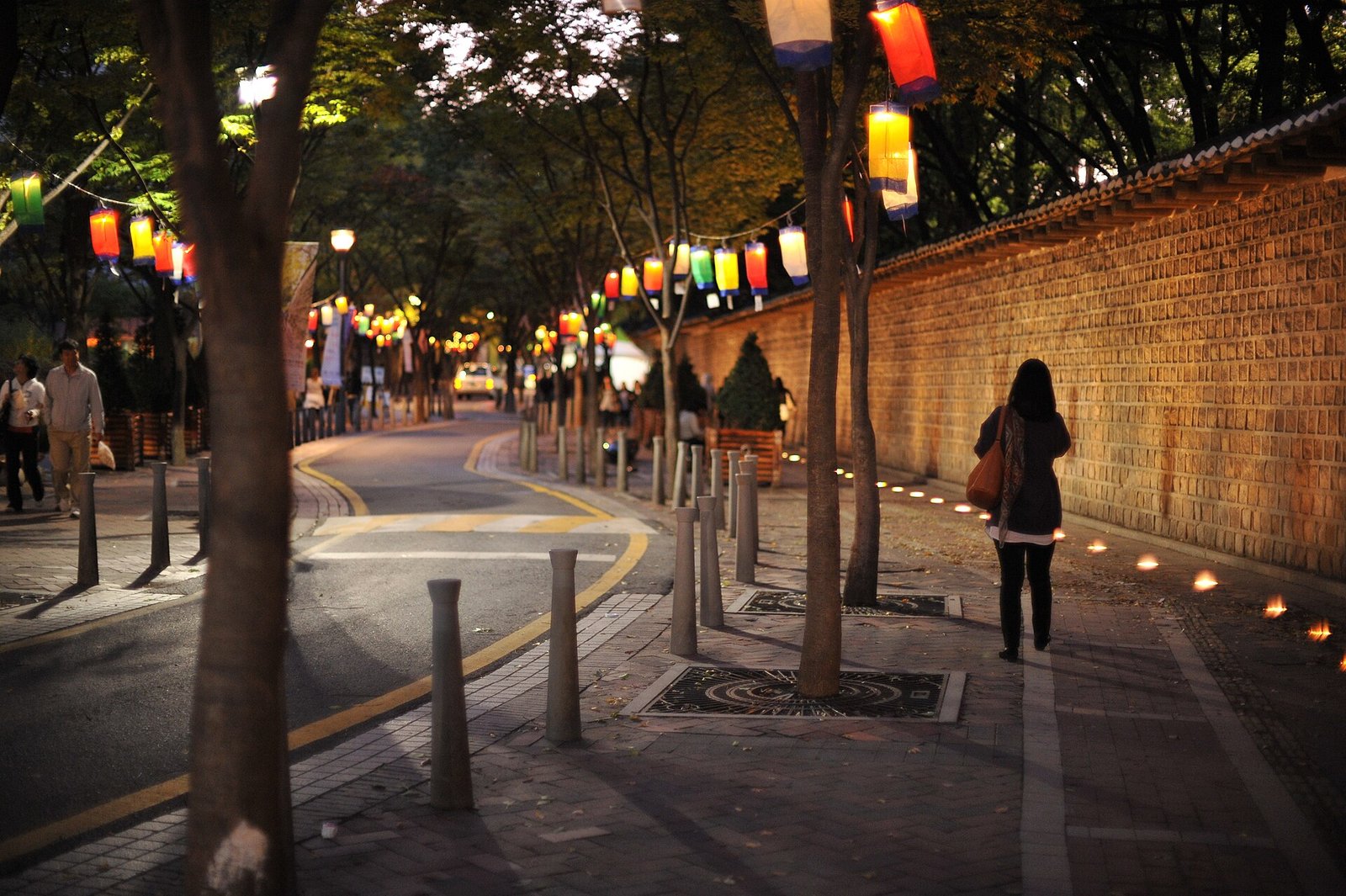
    Lanterns and lit paving along the Deoksugung stone-wall road on an autumn evening
    The Deoksugung stone-wall road on an autumn evening in 2009. Photo: Sungslim, CC BY-SA 4.0, via Wikimedia Commons

    Visit Seoul, the city’s official tourism site, points out the stone-wall walkway along Deoksugung and the autumn night views inside. Put those two together and you have a lovely evening.

    Honestly, I’d save Deoksugung for the late afternoon.

    Walk the stone-wall road while there is still a little light, then step inside after dark. You have until 8 p.m. to get in.

    Wearing a full hanbok? Visit Seoul says it gets you into Gyeongbokgung free, and the same goes at Deoksugung. That’s a fun excuse to rent one for a day! If you’re here at the end of the month, Visit Seoul also lists free entry to Gyeongbokgung on Culture Day, the last Wednesday of each month.

    Where are the best ginkgo spots? Start at Seoul Forest
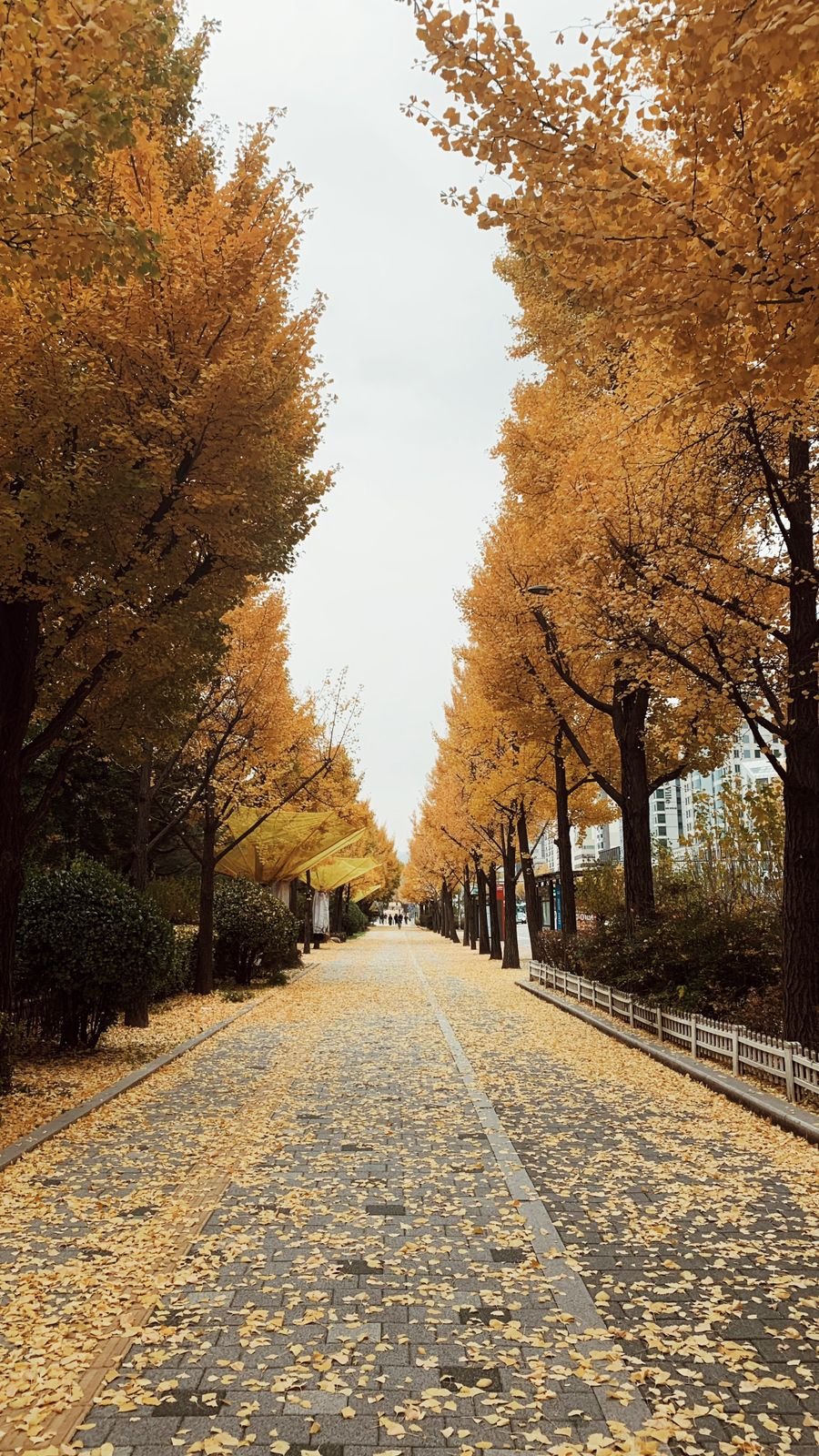
    A paved path under yellow ginkgo trees with fallen leaves in Olympic Park, Seoul
    A ginkgo-lined path in Olympic Park, Seoul, in November 2022. Photo: Firadrn, CC BY-SA 4.0, via Wikimedia Commons

    The Seoul city government keeps a list of foliage roads. Its 2025 list has 110 roads, about 167 km in total, lined with roughly 72,000 trees such as ginkgo, zelkova, cherry, and metasequoia. The roads are on the Smart Seoul Map, in Korean.

    If you only pick one from that list, I’d make it the ginkgo forest at Seoul Forest. The city news site counts about 600 ginkgo trees there, and people call the fallen leaves the “golden carpet.” Here’s how you get there:

    • Fastest way in: Seoul Forest Station on the Suin-Bundang Line, exits 3, 4, or 5, then under 5 minutes on foot.
    • From Line 2: Ttukseom Station, exit 8, then 10 to 15 minutes on foot.
    • Inside the park: enter at Gate 9, where the ginkgo path starts.

    Honestly, I think the fallen leaves are the best part, so don’t worry if you arrive a little late in the season. If you can, go on a weekday morning. You’ll have more of that golden carpet to yourself.

    Yuna’s pick

    Short on time and all about the yellow? I’d do the Seoul Forest ginkgo in the morning and the Deoksugung stone-wall road at dusk.

    Here for red maples more than ginkgo? I’d head to Seoul Botanic Park around November 2, when its forecast peak lands.

    The giant ginkgo trees at Sungkyunkwan

    In the courtyard of Myeongnyundang, the old lecture hall of Sungkyunkwan, you’ll find the Seoul Munmyo Ginkgo Trees, Natural Monument No. 59. Like the rest of Seoul’s ginkgo, they are forecast to peak in early November.

    Take Line 4 to Hyehwa Station, leave by exit 4, and walk about 10 minutes to the Sungkyunkwan University entrance. I’d pick a sunny day if you can, since yellow leaves against a blue sky are hard to beat.

    Honest take

    This isn’t a whole afternoon. It’s one courtyard and its old trees, so I would treat it as a 30-minute stop on a day around Jongno rather than a trip of its own.

    Seoul Botanic Park: maples on the forecast map
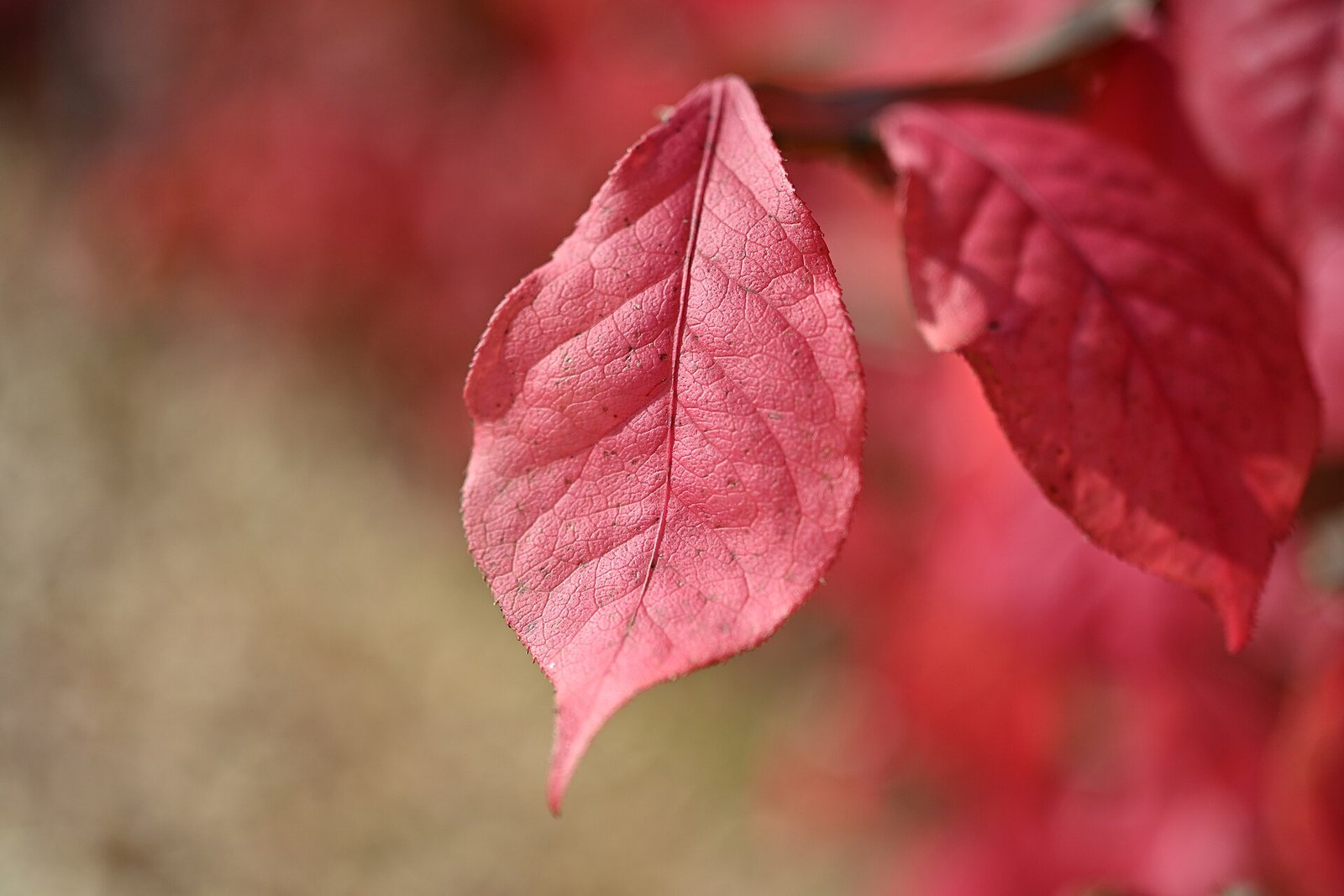
    Close-up of a red burning bush leaf in autumn at Seoul Botanic Park
    A burning bush leaf at Seoul Botanic Park. The outdoor gardens are free. Photo: Kjoonlee, CC BY 4.0, via Wikimedia Commons

    This is the only Seoul spot on the maple map from the Forest Service, and you can see much of it for free. The Open Forest, Lake Garden, and Wetland Garden are free and open all year.

    • Theme Garden: the greenhouse and themed gardens cost 5,000 won for adults.
    • Winter hours (November to February): 9:30 a.m. to 5 p.m., last entry 4 p.m., closed on Mondays.
    • Getting there: Magongnaru Station (Line 9 and the Airport Railroad), exits 3 and 4 lead into the Open Forest.

    That last line is the useful one.

    Magongnaru is on the Airport Railroad, so the park can fit into your arrival or departure day if you have a few spare hours and light bags. I’m a big believer in a slow first morning, and a free garden walk is my kind of slow.

    💬 Say it in Korean

    단풍 구경

    danpung gugyeong

    “Leaf-peeping.” This is what Koreans call an autumn outing to see the colors. If you spot it in a Korean post, you’ll know it’s about where the leaves are right now.

    FAQ

    Is mid-November too late for leaves in Seoul?

    Not necessarily. The maple forecast for Mulhyanggi Arboretum, south of Seoul, is November 6. And in 2025, the Seoul city news site still pointed people to the fallen ginkgo at Seoul Forest on November 27. I’d still go, and I’d check the latest updates the night before.

    Which palaces close on which day?

    Gyeongbokgung closes on Tuesdays. Changdeokgung and Deoksugung close on Mondays, so if you’re free on a Monday, make it your Gyeongbokgung day.

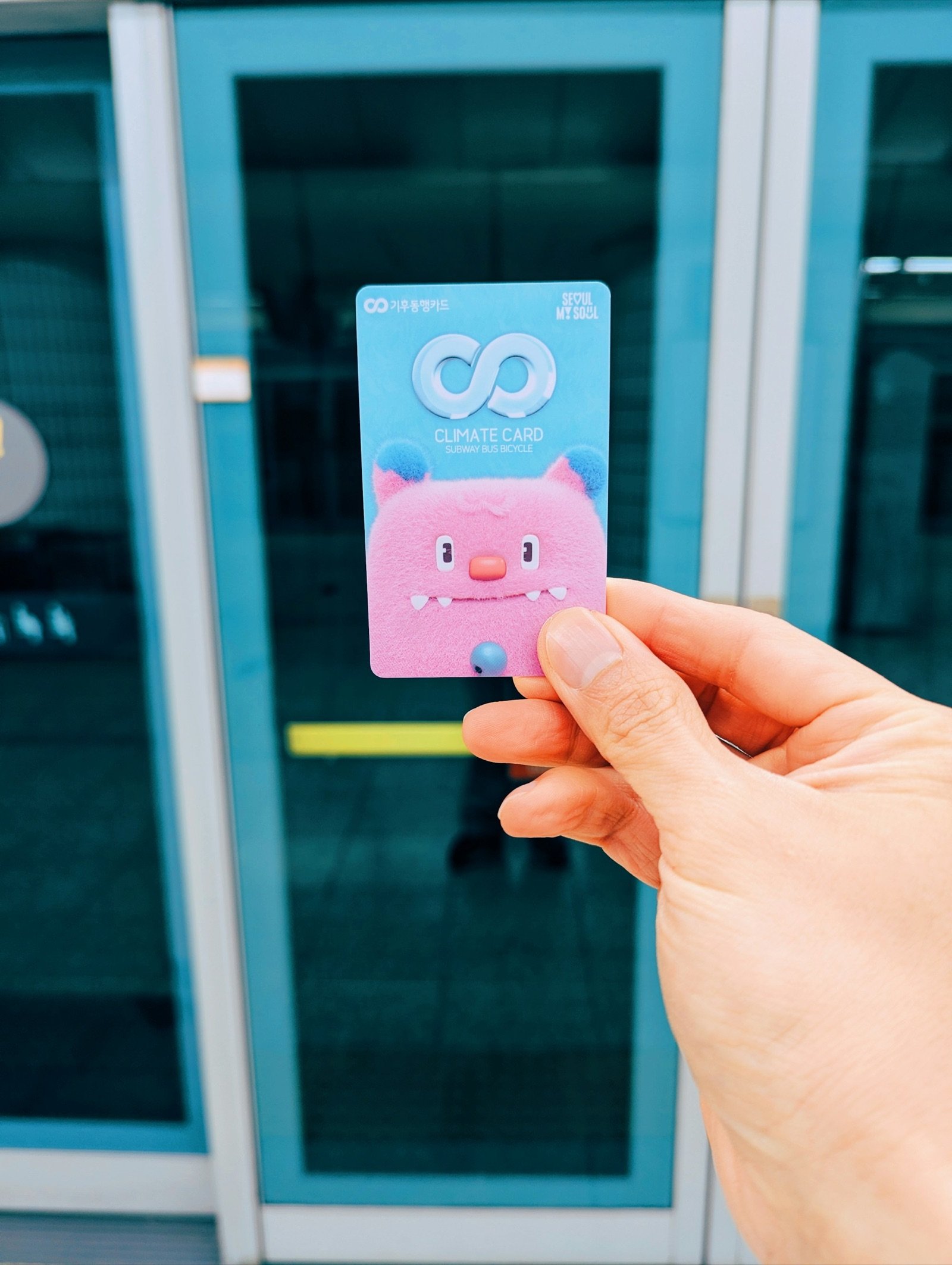
    Next, you’ll probably want to sort out how to get between all these spots. My Climate Card guide covers exactly that. Happy leaf-peeping!

    Hwaiting!

    Yuna

    📌 Read next

    🎟️ Book it

    Want it sorted before you fly? These are the ones I would look at on Klook:

    Sources and last check

    How I put this guide together: from the Korea Forest Service’s 2026 peak forecast and maps, the Korea Meteorological Administration, the Korea National Arboretum, Changdeokgung’s English site, VISITKOREA, Visit Seoul, Seoul Botanic Park, and the Seoul city government’s open data and news site, all checked on October 31, 2026. Nothing here is sponsored (the booking links are affiliate links, as noted at the top). More on how I research every guide is on the About page.

    Last checked: October 31, 2026. Forecasts change with the weather, and palace hours and tour times can change too, so please confirm on the official pages before you go. This is an independent guide, not affiliated with any palace, park, or agency named here.

    Official sources:

  • Korea Tax Refund for Tourists (2026): K-Beauty, Limits & Airport

    Korea Tax Refund for Tourists (2026): K-Beauty, Limits & Airport

    Last checked: October 31, 2026

    Short version: spend 15,000 won or more on one receipt, show your physical passport, and at many shops the tax comes off right at the till. Bigger haul, or no passport on you? I’d claim at the airport before you fly. Below, I’ll walk you through the limits, what the Olive Young FAQ says, and the airport step I’d hate for you to miss.

    Quick answer

    • 🛍️ Minimum: 15,000 won or more on one receipt, passport in hand
    • 💳 Instant refund: under 1,000,000 won per payment, up to 5,000,000 won per trip
    • 🧳 Deadline: take the items out of Korea within 3 months of buying them

    Two different things hide behind the words “tax-free” in Korea, and I think the rules only click once you know which counter you are standing at. So I’ll start with who gets the money back.

    Who can get the tax back?

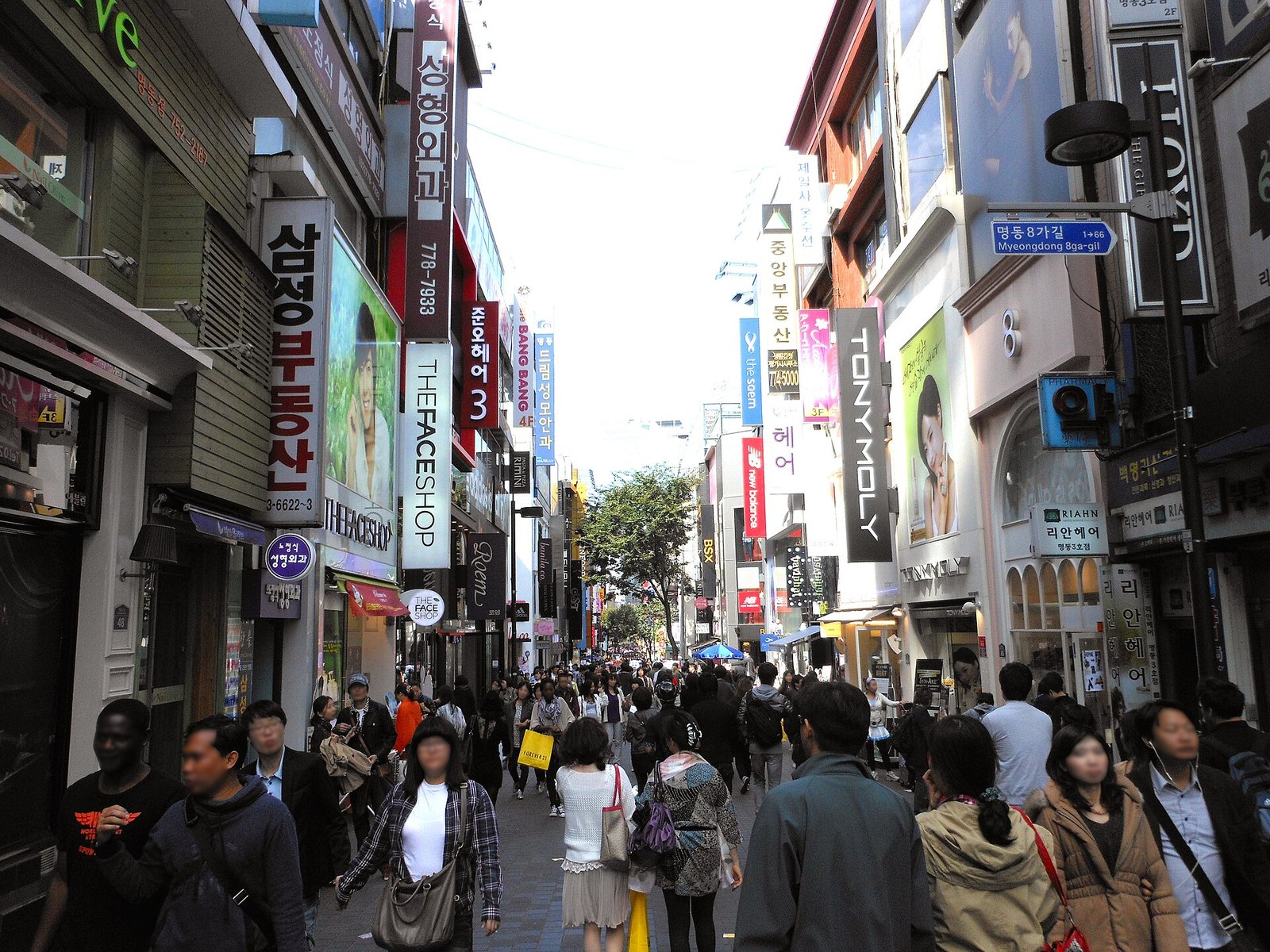
    Shoppers walking down a Myeongdong street lined with cosmetics shop signs in daytime
    Cosmetics shops along a Myeongdong street. Most visitors can claim the tax back. Photo: Whity, CC BY-SA 3.0, via Wikimedia Commons

    Good news: most visitors qualify.

    VISITKOREA, the official site of the Korea Tourism Organization, says foreigners staying in Korea less than 6 months can claim a refund on goods.

    Overseas Koreans can too, if they have lived abroad for more than 2 years and are staying in Korea 3 months or less.

    Who’s left out: people staying 6 months or more, diplomats, US military, and people employed in Korea. Purchases made under a company name, or by someone else for you, do not count either.

    What comes back is the value-added tax, plus the individual consumption tax on the goods that carry it. Just don’t expect every won of it. The refund company handles the paperwork and keeps a share, so you get back less than the full tax. Olive Young, for example, quotes 5 to 8% of the purchase amount.

    Honest take

    On a 20,000-won tint-and-toner run, the refund is around 1,000 won. Coffee money, honestly. On a 300,000-won skincare haul, the 5 to 8% that Olive Young quotes works out to 15,000 to 24,000 won. For that, I’d happily dig out my passport at the till.

    Instant refund at the till: how it works

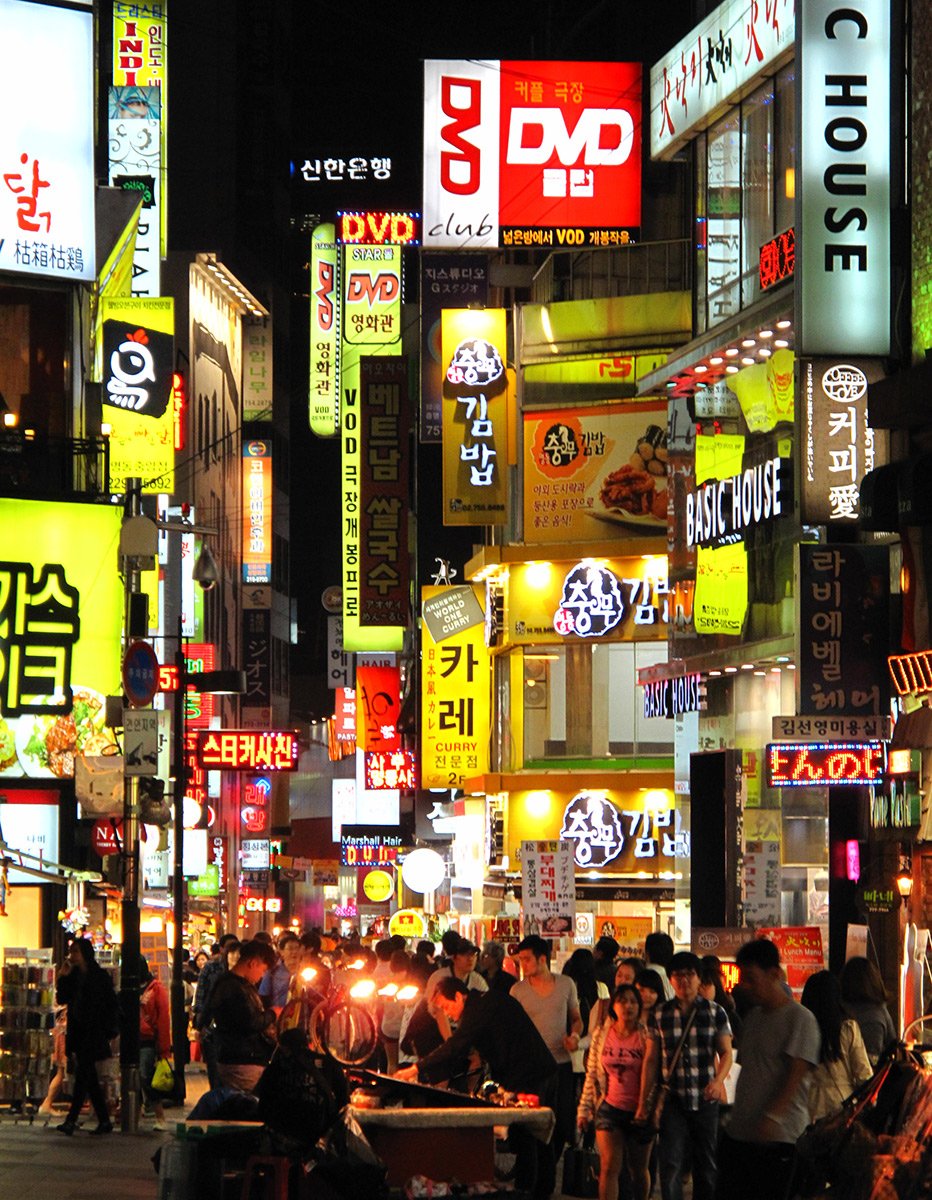
    Neon shop and restaurant signs above a crowded Myeongdong street at night
    Myeongdong after dark, lit up with shop signs. Ask before you pay. Photo: Ken Eckert, CC BY-SA 4.0, via Wikimedia Commons

    This is the easy version, and I’d use it whenever a shop offers it. At a store that does the immediate refund, you show your passport and pay a price with the tax already taken off. The shop handles the paperwork, so there is no money to chase later.

    The rules, as VISITKOREA lists them on October 31, 2026:

    • Minimum: 15,000 won or more on one receipt.
    • Per payment: under 1,000,000 won.
    • Whole trip: 5,000,000 won or less in total.
    • Bring: your passport. The Olive Young FAQ asks for the physical one.

    Over either limit, you would claim at the airport instead, where the official guide lists no purchase limit. And the goods still have to leave Korea with you within 3 months of buying them, whichever way you claim.

    💡 Yuna’s tip

    The 15,000-won minimum counts per receipt, not per day. A 9,000-won lip tint and an 8,000-won mask pack on two payments do not qualify. Pay for them together, and that one 17,000-won receipt does.

    One more thing before you trust a screenshot from a friend. The instant cap was lower before 2024: Korea JoongAng Daily reported that it doubled from 500,000 won per purchase starting January 1, 2024. Older posts online may still show the old numbers.

    Shopping at Olive Young? Here’s what its FAQ says

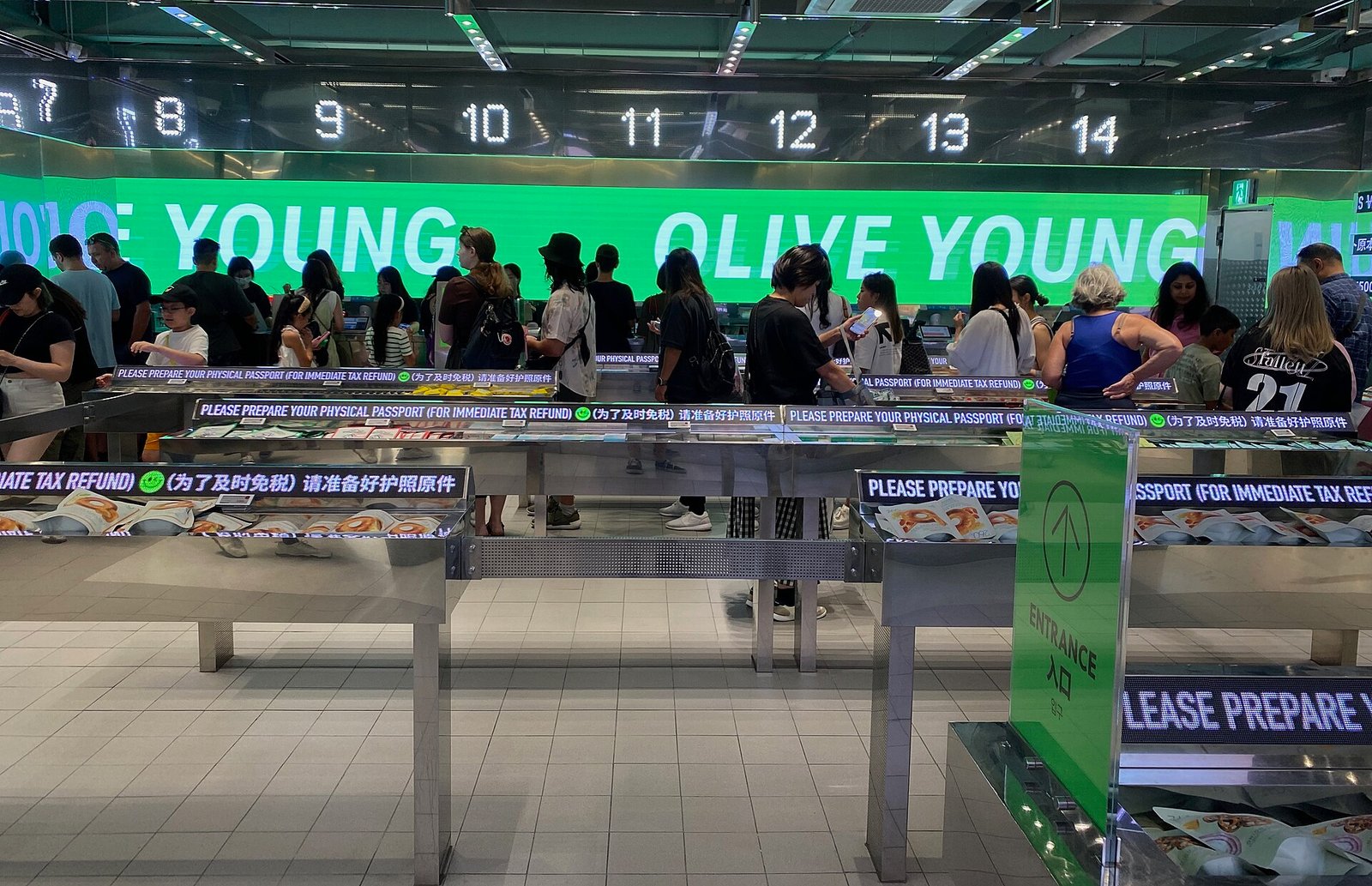
    Shoppers lining up at Olive Young checkout counters under passport signs for tax refunds
    Checkout lanes at Olive Young Myeongdong. The signs ask for your physical passport. Photo: Sgroey, CC BY-SA 4.0, via Wikimedia Commons

    If K-beauty is the reason you packed a half-empty suitcase (no judgment, I would too), Olive Young is probably on your list. The English FAQ for its Myeongdong flagship store spells out the refund like this:

    • Instant refund: buy 15,000 won or more and show your physical passport at the store.
    • No passport on you: you get a refund receipt instead and claim it at the airport refund counter. The same goes if you have stayed more than 6 months.
    • How much: 5 to 8% of the purchase amount, in 1,000-won steps.

    That FAQ belongs to one flagship store, so I’d still ask at the till before you pay at other branches. A quick question costs you nothing.

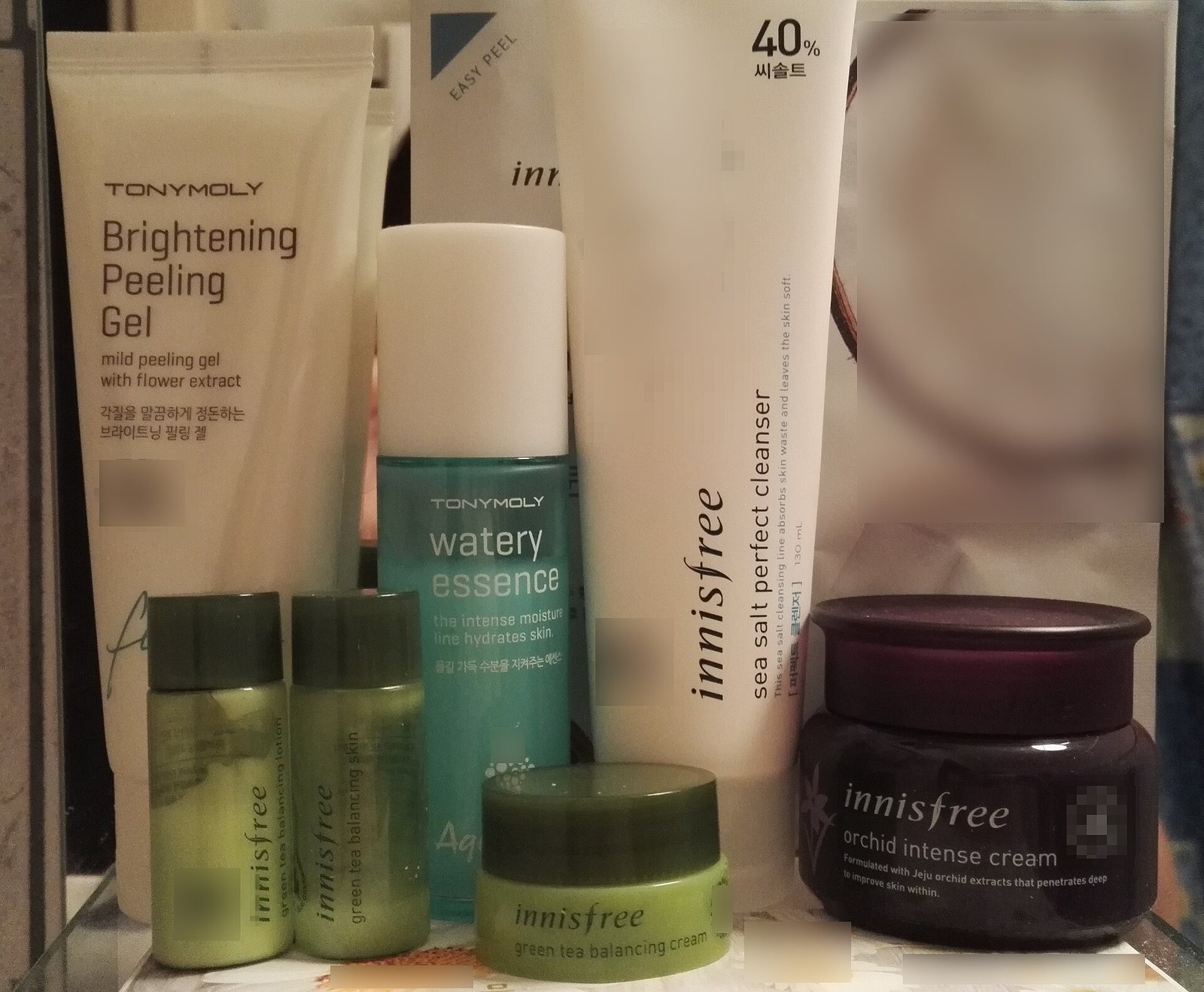
    Korean skincare bottles and jars from two brands lined up on a shelf
    Korean skincare on a shelf. Keep yours sealed until you’re home. Photo: Teemeah, CC BY-SA 4.0, via Wikimedia Commons

    Yuna’s pick

    One big skincare stop at a large store? I’d bring the passport and take the instant refund on the spot.

    Picking things up all over town? I’d keep every refund receipt in one envelope and claim them together at the airport.

    Either way, keep the boxes sealed until you get home. Opened or used items do not qualify, which feels a little cruel when you have just bought twelve sheet masks!

    Claiming at the airport: customs first, then the refund counter

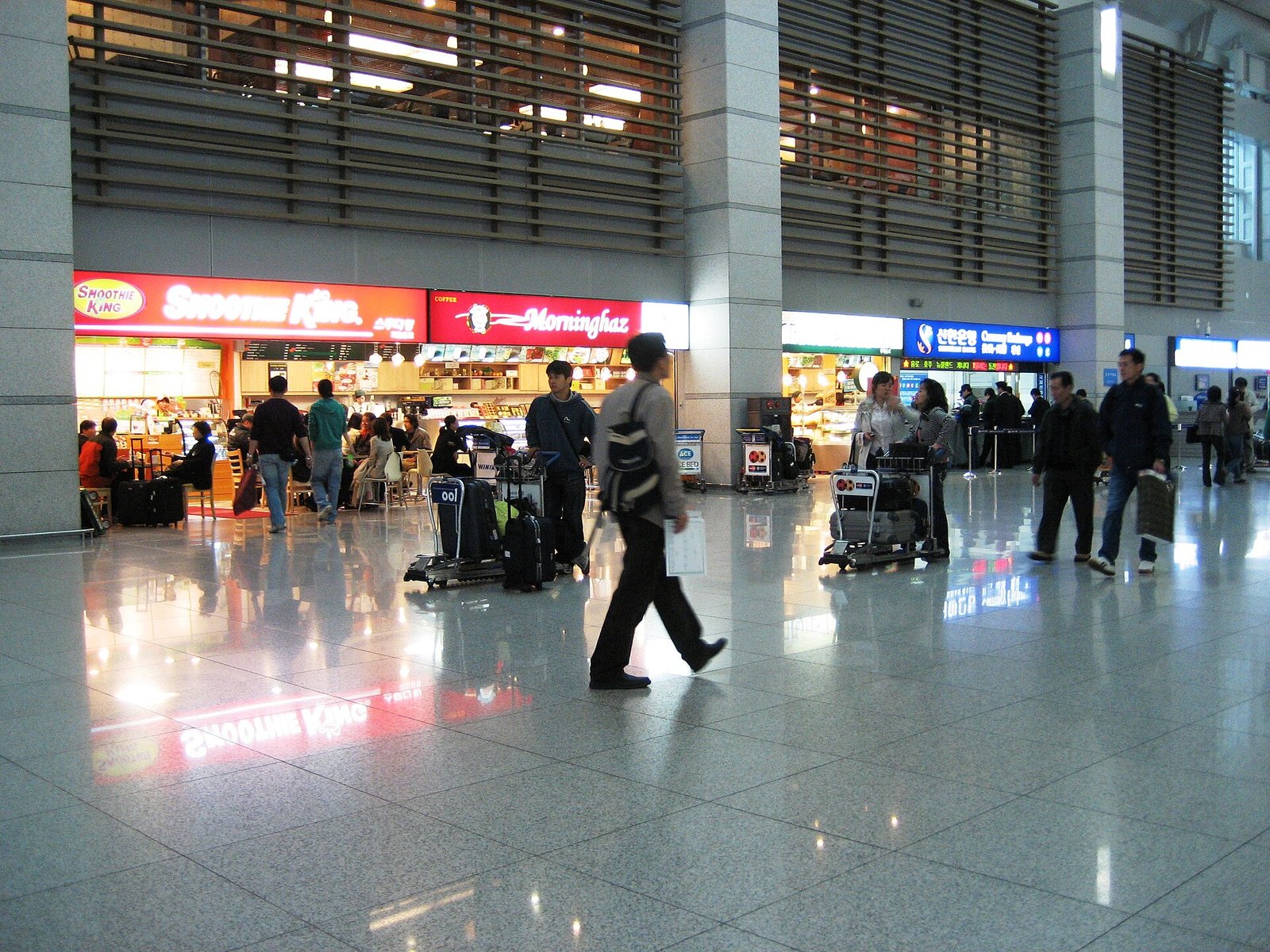
    Travelers with luggage carts walking through the departure lobby at Incheon Airport
    The departure lobby at Incheon Airport. Customs comes before the bag drop. Photo: Kanchi1979, CC BY 2.5, via Wikimedia Commons

    If you’re holding refund receipts instead of an instant discount, the airport is where you cash them in. I’d keep this order in mind:

    1. Customs first: show the goods, your refund receipts, and your passport to the customs desk to get the export confirmation.
    2. Then check in: drop your bags and go through security.
    3. Refund counter or kiosk: claim the money near the gates (after security, not before).

    Here’s where VISITKOREA puts each stop, checked on October 31, 2026:

    Airport Customs check Refund counter Staffed hours
    Incheon T1 3F, near check-in counters E and J 3F, near Gate 28 7 a.m. to 10 p.m.
    Incheon T2 3F, near check-in counters F and G 3F, near several gates 7:30 a.m. to 9:30 p.m.
    Gimpo 2F, near Gate 1 3F, near Gate 36 6:30 a.m. to 8 p.m.

    Unstaffed kiosks run 24 hours at all three. For Terminal 2, the two official guides give different gate numbers, so I’d follow the airport’s Tax Refund signs once you’re through security.

    ⚠️ Heads-up

    Do the customs stop before you check your suitcase. Customs confirms the goods you show them, and once the bag is on the belt, your skincare is out of reach.

    If you pick a refund to a card, Alipay, or WeChat Pay, expect it within 1 to 2 months.

    I’d give yourself extra time at the airport, too. A refund line on a busy evening is nobody’s idea of a relaxed last hour.

    Other ways to claim: downtown, by mail, or in an app

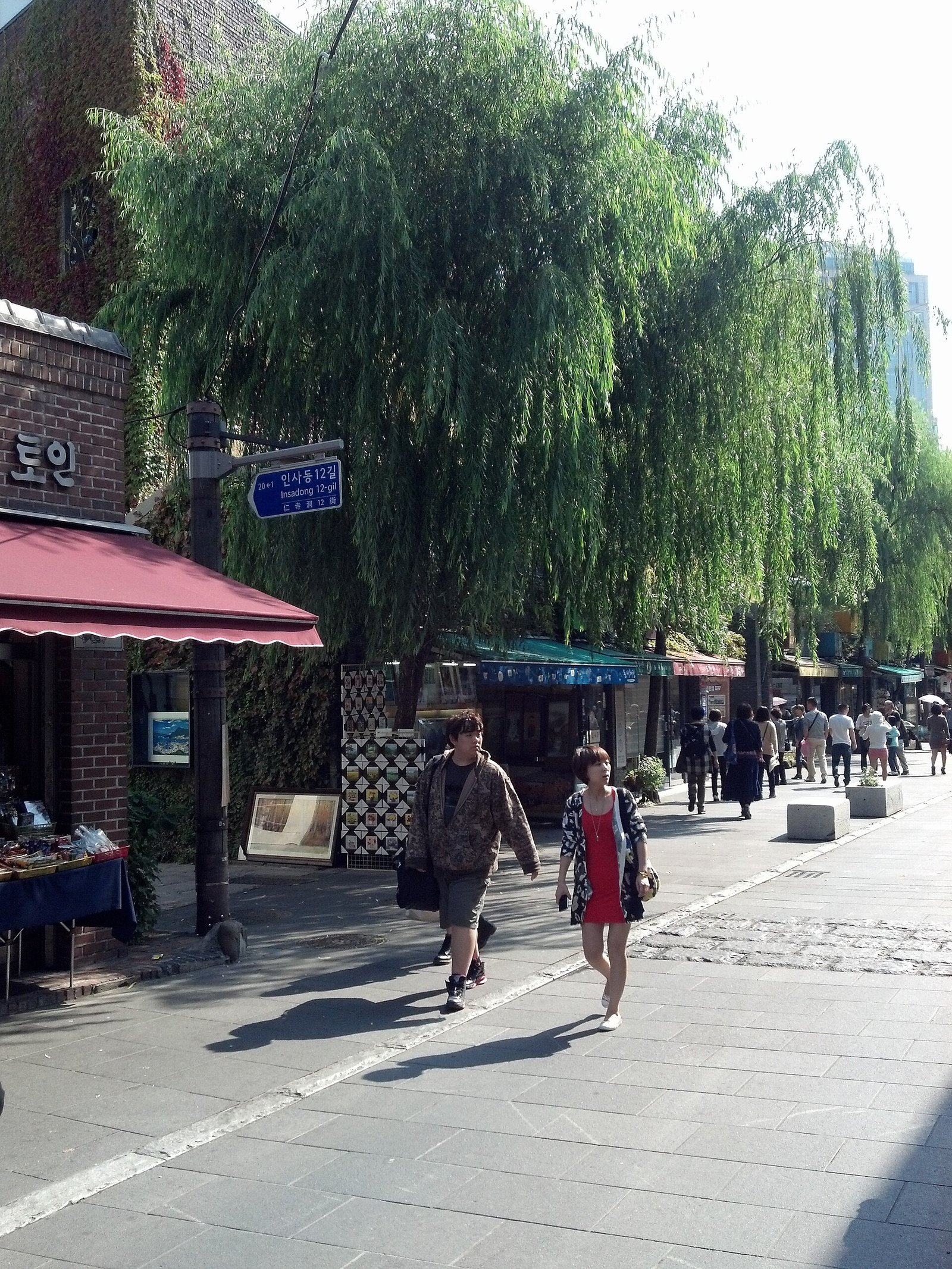
    Pedestrians on Insadong-gil in Seoul under willow trees beside small shops
    Insadong-gil, a shopping street in Seoul. Some refunds can happen downtown. Photo: Choi2451, CC BY-SA 3.0, via Wikimedia Commons

    The airport isn’t your only option. There are three others:

    • Downtown refund: at a staffed refund center or an unmanned kiosk in the city, for receipts of 6,000,000 won or less. Bring your passport, the refund receipt, and a credit card.
    • Mailbox: after the customs confirmation, drop the receipt in the refund operator’s mailbox and write down how you want to be paid.
    • Mobile: after the customs confirmation, claim through the operator’s website or app.

    See the pattern: the mailbox and app routes still need that customs confirmation first. My rule of thumb: whichever route you pick, keep the refund receipts and the goods together until you’ve left Korea.

    💬 Say it in Korean

    즉시 환급 되나요?

    jeuksi hwangeup doenayo?

    “Can I get the instant tax refund?” Say it at the till before the cashier rings you up, and have your passport ready in your other hand.

    Duty-free or tax refund: what’s the difference?

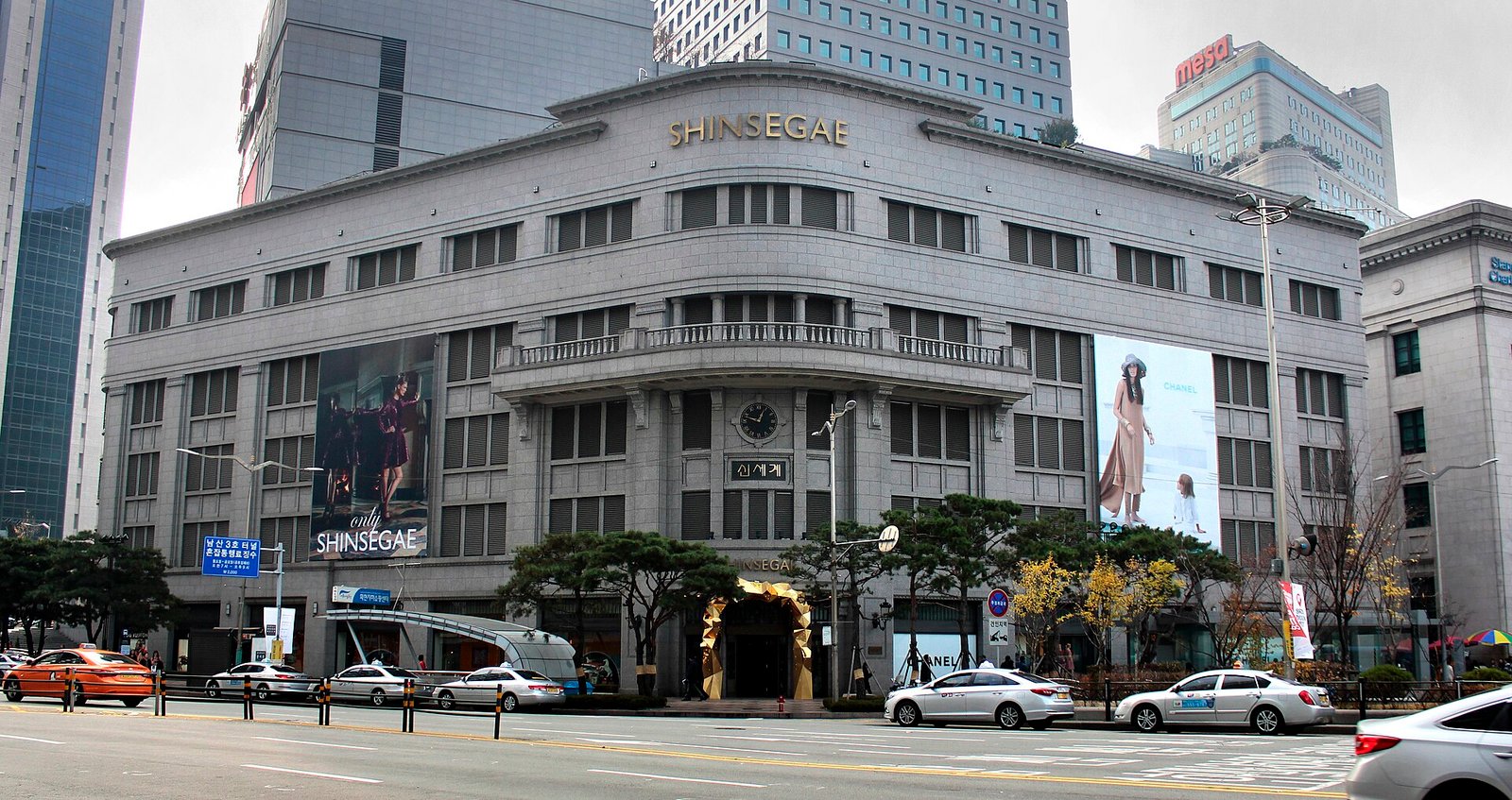
    The stone front of a department store main building in central Seoul with taxis
    A department store in central Seoul. Duty-free shops follow different rules. Photo: Minseong Kim, CC BY-SA 4.0, via Wikimedia Commons

    They sound alike, but they work in opposite directions.

    A duty-free shop sells goods with customs duties and consumption tax already left out of the price. A tax refund shop charges the tax first, and you claim it back, either at the till or later.

    So a lipstick from a duty-free shop can’t get a second refund. Services that customs can’t see when you leave, such as cooked food and massages, do not count either. Your Korean barbecue dinner and that spa afternoon don’t count, sadly.

    If you are choosing between a duty-free shop and a regular store for the same cream, I’d compare the final prices myself. The refund at a regular store is a share of the tax, not the whole tax, so the cheaper sticker is not always where you’d expect.

    FAQ

    Do I need my physical passport?

    For the instant refund, yes. VISITKOREA says the shop checks your passport, and Olive Young’s FAQ asks for the physical one, so I wouldn’t count on a photo of it.

    What if I miss the airport refund counter?

    If you already have the customs confirmation, VISITKOREA says you can still post the receipt in the operator’s mailbox or claim through its website or app. Without that confirmation, those routes are closed.

    Is the VAT refund for beauty clinics back in 2026?

    Not as of October 31, 2026, as far as I can find. News reports say the special VAT refund for foreigners’ cosmetic surgery and dermatology ended on December 31, 2025. Bills to bring it back were still under debate in October 2026, so I’d ask the clinic before you count on it.

    If you remember one thing, make it this: carry your physical passport every time you go shopping. Happy hauling!

    Hwaiting!

    Yuna

    📌 Read next

    Sources and last check

    How I put this guide together: from VISITKOREA’s two English tax refund guides, the English FAQ of Olive Young’s Myeongdong flagship, the Korea Customs Service, Korea’s tax refund regulation, and news reports for the clinic refund and the 2024 limit change, all checked on October 31, 2026. Nothing here is sponsored, and no store or refund company paid for or reviewed it. More on how I research every guide is on the About page.

    Last checked: October 31, 2026. Refund limits, counter locations, and hours change, so please confirm on the official pages before you shop. This is an independent guide, not affiliated with Olive Young, Incheon International Airport, Korea Airports Corporation, or any refund company.

    Official sources:

    News reports:

  • Gyeongbokgung Palace Guide (2026): Tickets, Hours & Guard Times

    Gyeongbokgung Palace Guide (2026): Tickets, Hours & Guard Times

    Some links in this guide are affiliate links. If you book through them, Hello Korea Tips may earn a small commission at no extra cost to you.

    Last checked: October 31, 2026

    Picture it: your one free morning in Seoul, and the palace gates are shut because it’s Tuesday. Let’s not do that. Come any other day, aim for the 10 a.m. guards, and give yourself about two hours. And if you’re here by November 15, 2026, you get in free, which makes you very lucky.

    Quick answer

    • 🗓️ Open: 9 a.m. to 5 p.m. in November, last entry 4 p.m., closed every Tuesday
    • 💰 Ticket: 3,000 won for foreign adults, free from October 29 to November 15, 2026
    • 🚇 Get there: Gyeongbokgung Station (Line 3), Exit 5, a 2-minute walk

    Is it free right now? Here’s who pays

    Gwanghwamun gate of Gyeongbokgung Palace beyond a wide crosswalk under a clear blue sky
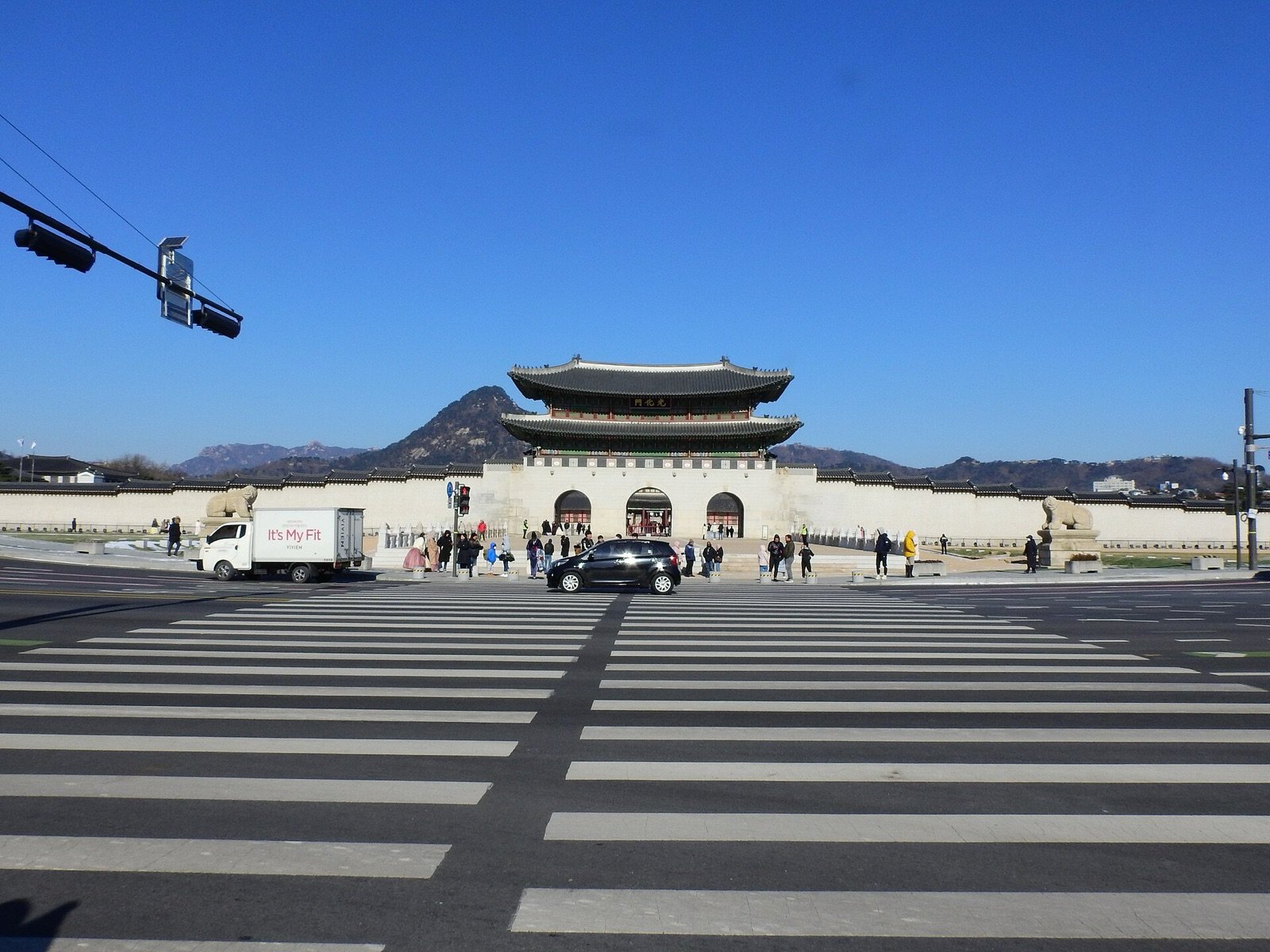
    Gwanghwamun, the palace’s front gate, seen from across the road.

    Right now, nobody does. The four main palaces, Jongmyo Shrine, and the royal tombs are all free from October 29 to November 15, 2026, for the Korea Grand Festival. Closed days still count, though, so the gates stay shut on Tuesday, November 3, and Tuesday, November 10.

    Outside those dates, here’s the damage:

    Who Price
    Foreign adults, 19 to 64 3,000 won
    Foreign visitors 18 and under, or 65 and over Free
    Groups of 10 or more 2,400 won each
    Anyone wearing hanbok Free

    Planning more than one palace? The 6,000-won combined ticket covers the four main palaces plus Jongmyo for 6 months, just not the Secret Garden at Changdeokgung. It pays off only if you plan both big palaces, Gyeongbokgung and Changdeokgung, plus one more. For Gyeongbokgung alone, I’d skip it.

    ⚠️ Heads-up

    Other palaces now have free Wednesdays, but Gyeongbokgung is still waiting its turn. A May 2026 notice says it will join later, once safety and crowds have been looked at. The 3,000-won price may move too, but nobody has set a date yet.

    Does your hanbok count? What the palace accepts

    Visitors in hanbok walking in front of the five-tiered National Folk Museum of Korea
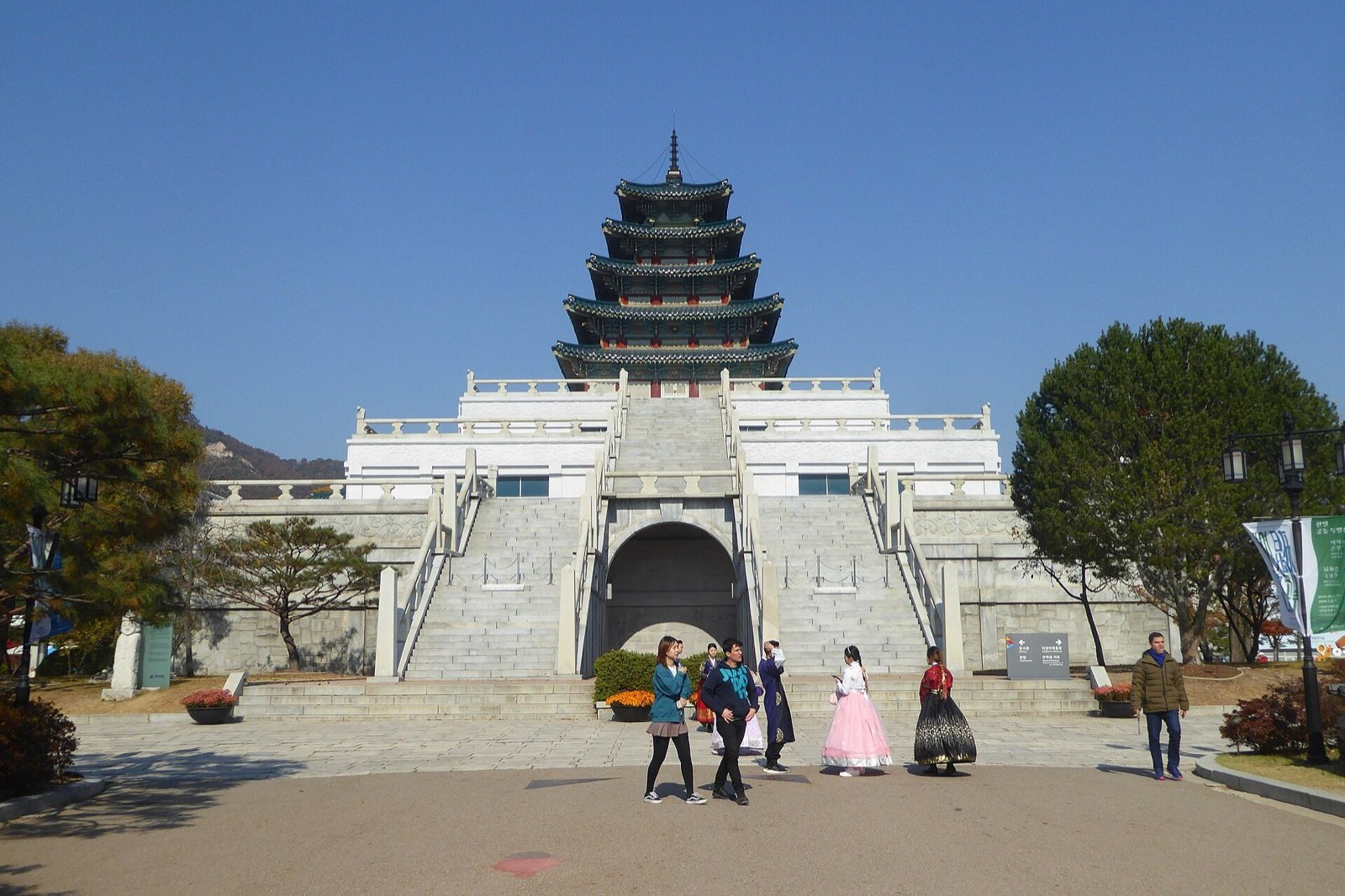
    Visitors in hanbok outside the National Folk Museum, on the palace grounds. Photo: Ethan Doyle White, CC BY-SA 4.0, via Wikimedia Commons

    Wear hanbok and you walk in free, whether you’re Korean or not. Traditional and modernized styles both count, but the one firm rule is the full outfit, top and bottom, and half an outfit won’t get you through the gate.

    • Accepted: a jeogori (the hanbok top) with a hanbok skirt or pants.
    • Not accepted: jeans with a jeogori, or hanbok bottoms with a T-shirt.
    • Also not accepted: a T-shirt-style top, or a one-piece hanbok dress with no jeogori.

    They can turn you away at the gate, so don’t get creative.

    Honest take

    Rent a hanbok for the photos, not the savings. I mean that kindly: the most you can save is 3,000 won, and until November 15, the saving is exactly zero!

    When is the Royal Guard Changing Ceremony?

    Palace guards in blue and green uniforms with flags at a stone gate of Gyeongbokgung
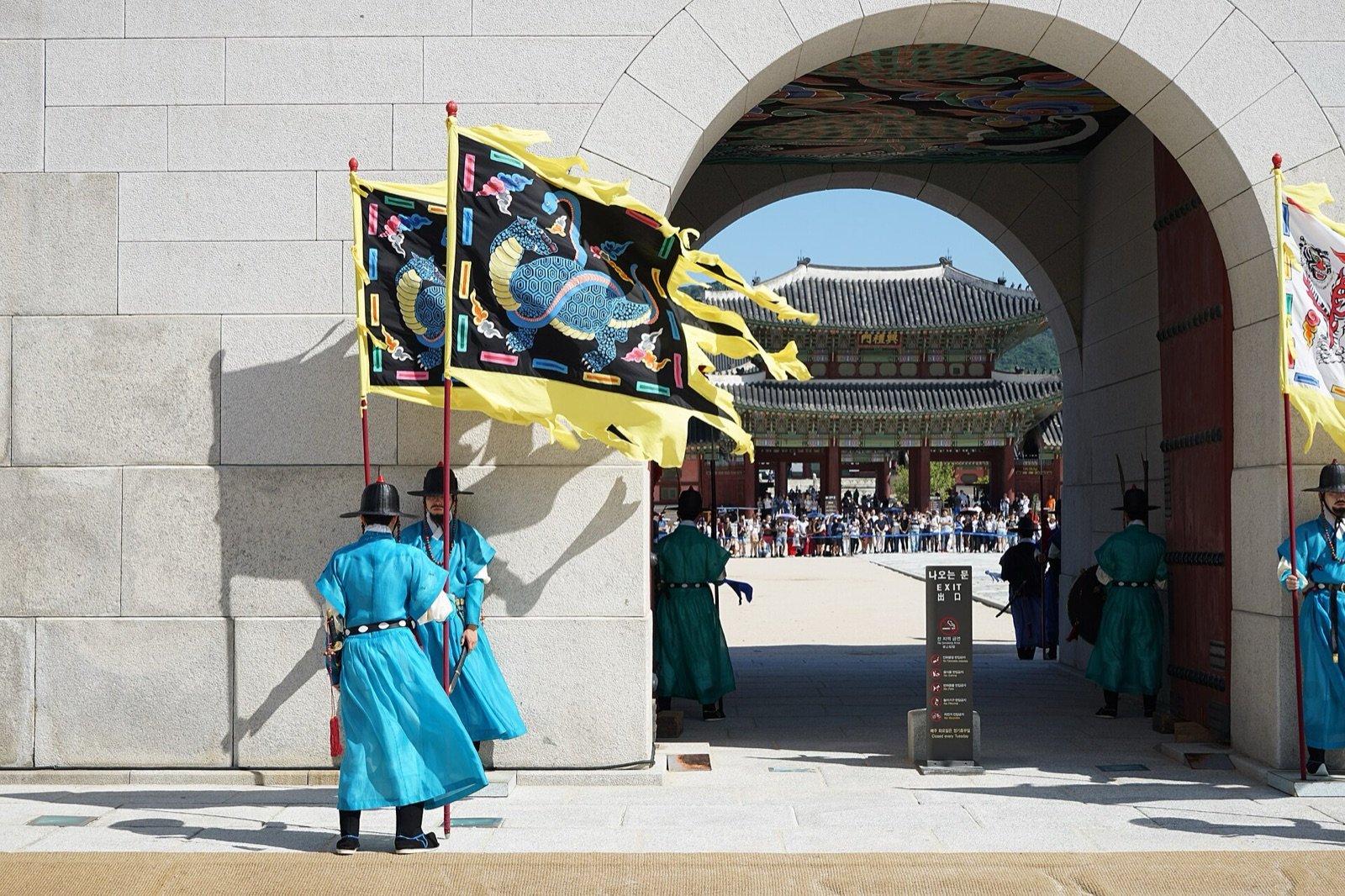
    Palace guards at a Gyeongbokgung gate during the changing ceremony. Photo: De-Shao Liu (Terry850324), CC BY-SA 4.0, via Wikimedia Commons

    Twice a day: 10 a.m. and 2 p.m., about 20 minutes each, every day of the year except closed days. So no guards on a Tuesday, because there’s no palace on a Tuesday.

    Look for it in front of Heungnyemun, the gate just inside Gwanghwamun, though the official site doesn’t spell out the spot. Bad weather can reportedly shorten or cancel it, so check the sky first. Don’t rearrange your whole day around it.

    💡 Yuna’s tip

    I’d take the 10 a.m. ceremony. You’re at the gate an hour after opening, the whole palace is ahead of you, and an English tour leaves at 11 a.m.

    What should you see first? The route I’d walk

    Quick history so the dates make sense: built in 1395, destroyed in 1592, rebuilt by 1867. Most of what you see is from the 1800s, and it’s still being put back together. The Japanese Government-General Building only came down in 1996, and Gyejodang was restored in 2023. I find that oddly moving.

    I’d keep your route simple, since you just keep going deeper: Geunjeongjeon, then Gyeonghoeru, then on to Hyangwonjeong at the very back. Tired already? Do the throne hall and Hyangwonjeong, and skip the rest.

    Geunjeongjeon: the throne hall

    This is the big one, a National Treasure where kings ran state affairs, held national ceremonies, and received foreign envoys. Everyone crowds in for the throne photo, and I don’t blame them, but the painted ceiling is the better view.

    One more for your head: 1446, the year Hunminjeongeum went out, is on this palace’s timeline. That marks the start of Hangul, the alphabet on every sign you’ve been squinting at.

    Gyeonghoeru: the party pavilion

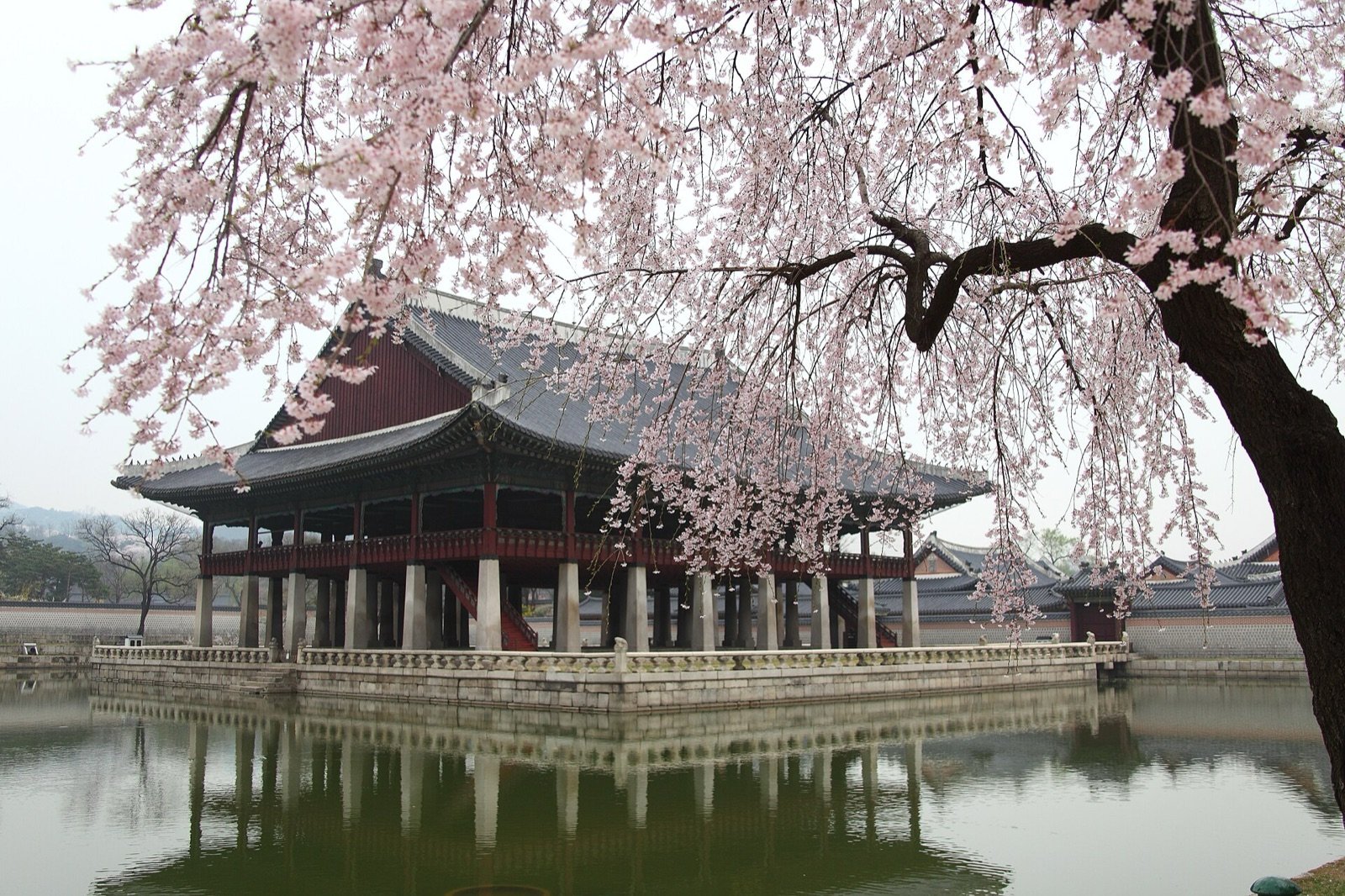
    Gyeonghoeru Pavilion on its pond framed by a blossoming cherry tree in spring
    Gyeonghoeru Pavilion in cherry blossom season, reflected in its pond.

    Yes, the kings had a party building, and I think that’s my favorite fact about this palace. In 1412, King Taejong enlarged the pond and put up a two-story pavilion for banquets and foreign officials, and today’s version dates from 1867. Admire it from the outside, because the special inside viewing for the second half of 2026 ended on October 30 and ran in Korean only.

    Gangnyeongjeon: the king’s quarters

    After all that ceremony, this is the part that feels lived in. These were the King’s Quarters, with Gyotaejeon Hall and Amisan Garden close by, so slow down here and let your feet rest.

    The palace’s story turns dark after this. King Gojong built Geoncheonggung in 1873, and Empress Myeongseong was assassinated in 1895. I’d go quiet for a minute back here.

    Hyangwonjeong: the one I’d save my legs for

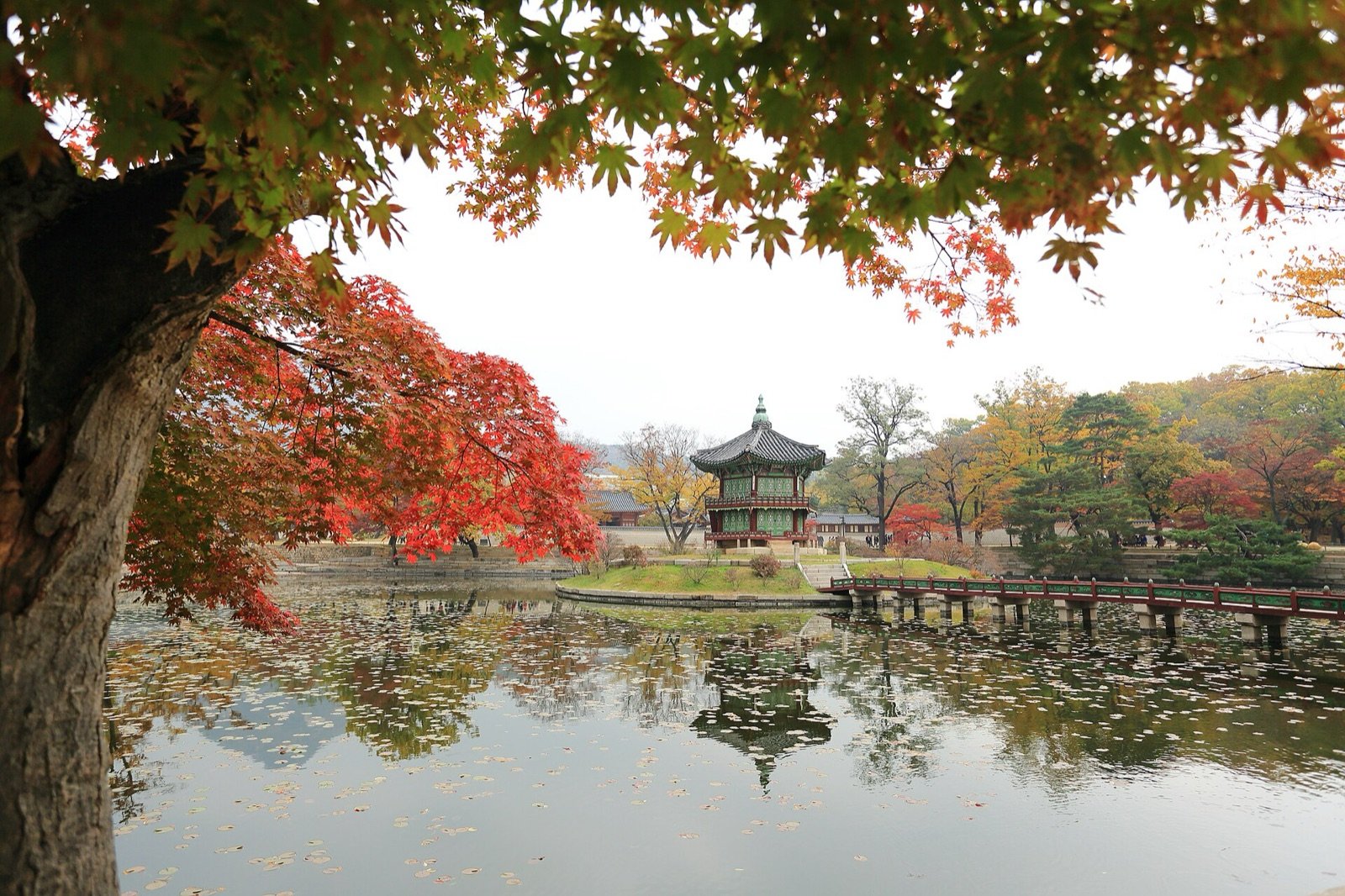
    Hyangwonjeong Pavilion on its pond framed by red autumn maples and fallen leaves
    Hyangwonjeong Pavilion in November color. Worth every step.

    Keep walking. Yes, all the way to the back. Your reward is a six-sided, two-story pavilion on its own little island in a square pond, with Chwihyanggyo Bridge leading out to it. Kings and their families came here to relax, so clearly they knew where the good corner was. If I had time for only one corner, this would be it.

    It’s from the 1800s, and I’d call autumn its moment. If it’s leaf season, go here first.

    The National Folk Museum of Korea is just east of the pavilion, and the National Palace Museum sits on the west side, outside Heungnyemun. Skip both today, because in my book they are rainy-day plans.

    Is the English guided tour worth it?

    Yes, take the tour. These buildings mean a lot more with a story attached, and it beats reading every sign with your neck craned. English tours leave every day except Tuesday at 11 a.m., 1:30 p.m., and 3:30 p.m., and groups under 10 can just turn up.

    Meet in front of the information office, just inside Heungnyemun, and don’t be late, because latecomers can’t join. Expect 1 to 1.5 hours, or 30 minutes less until November 15, 2026. Rain doesn’t stop them, so bring an umbrella.

    Japanese and Chinese tours run too, with Spanish on Fridays and Saturdays and French on Wednesdays and Thursdays. Groups of 10 or more need a reservation, so call the palace office on +82-2-3700-3900.

    Yuna’s pick

    First palace ever: the 10 a.m. ceremony, then the 11 a.m. English tour.

    Here for photos: skip the tour and head straight for Hyangwonjeong.

    Kids in tow: the ceremony and the pond, then leave while everyone’s still happy.

    Gyeongbokgung Palace and Gwanghwamun lit up at dusk with dark mountains behind them
    Gyeongbokgung from above at dusk, with the mountain behind it.

    How I’d plan your morning

    1. 9:30 a.m.: come up at Exit 5 and walk to the gate, so you’re settled before the ceremony.
    2. 10 a.m.: watch the guards change, which takes about 20 minutes.
    3. 11 a.m.: join the English tour at the information office.
    4. After the tour: walk back to Hyangwonjeong on your own and take your time.

    Skip the afternoon version in November. A 2 p.m. ceremony and a 3:30 p.m. tour sound fine until you remember the 5 p.m. closing, and then you’re racing the clock.

    Hours and getting there

    The palace closes earlier in the colder months, and you need to be through the gate an hour before closing:

    Months Open Last entry
    November to February 9 a.m. to 5 p.m. 4 p.m.
    March to May, September, October 9 a.m. to 6 p.m. 5 p.m.
    June to August 9 a.m. to 6:30 p.m. 5:30 p.m.

    One Tuesday twist works in your favor: if a Tuesday falls on a public or substitute holiday, the palace opens, and the next non-holiday becomes the closed day.

    The easy subway stop is Gyeongbokgung Station (Line 3), Exit 5, about a 2-minute walk. Gwanghwamun Station (Line 5), Exit 2 and Anguk Station (Line 3), Exit 1 are about 6 minutes on foot. Your map app wants 161 Sajik-ro, Jongno-gu.

    Buses 109, 171, 272, 601, 606, and 710 stop here too, and there’s a parking lot, but I’d take the subway.

    FAQ

    Is Gyeongbokgung open on Tuesdays?

    No, except when a Tuesday is a public holiday, and then it closes on the next non-holiday instead.

    Do foreigners get in free in hanbok?

    Yes, in a full hanbok, top and bottom. The rule is the same for Koreans and foreigners.

    Is there a night tour in November?

    Not that I could find. Night openings are seasonal, and the 2025 fall session ran in September, so watch the official notices if one is on your list.

    How long do you need at Gyeongbokgung?

    I’d plan on two hours. The official tour alone runs 1 to 1.5 hours, and Hyangwonjeong is a long way from the front gate.

    My advice: go early, wear shoes you can trust, and save your legs for the pond. Happy palace day!

    Hwaiting!

    Yuna

    📌 Read next

    🎟️ Book it

    Want it sorted before you fly? These are the ones I would look at on Klook:

    Sources and last check

    How I put this guide together: most of the official detail on the palace is only in Korean, so I read the pages and notices from the Royal Palaces and Tombs Center and the Korea Heritage Service, plus Visit Seoul and VISITKOREA, all checked on October 31, 2026. The other palaces’ ticket prices and the fee discussion come from Korean news coverage. Nothing here is sponsored (the booking links are affiliate links, as noted at the top), and no one at the palace reviewed it. More on how I research every guide is on the About page.

    Last checked: October 31, 2026. Fees, free dates, and ceremony times change, so please confirm on the official pages before you go. This is an independent guide, not affiliated with the Korea Heritage Service or any office named here.

    Official sources:

  • Korean Etiquette for First-Time Visitors: Dos, Don’ts & Tipping

    Korean Etiquette for First-Time Visitors: Dos, Don’ts & Tipping

    Last checked: October 31, 2026

    Most etiquette lists make Korea sound like an exam you can fail. It isn’t. Short version: use two hands, keep your chopsticks out of the rice, and don’t tip. Only one rule below can cost you real money, and it comes at the end.

    Quick answer

    • 🍜 At the table: wait for the eldest to start, never stand chopsticks in rice, and skip the tip
    • 🚇 On the subway: leave the pink seats empty and keep your voice down
    • 📍 In Bukchon: tourists are limited to 10 a.m. to 5 p.m. on Bukchon-ro 11-gil, with a 100,000-won fine

    Etiquette guides love a long list, and mine is short on purpose. I wouldn’t stress about getting all of this right. Nearly every rule comes back to one idea, that older people go first, and a little effort goes a long way.

    At the table: the rules that actually come up

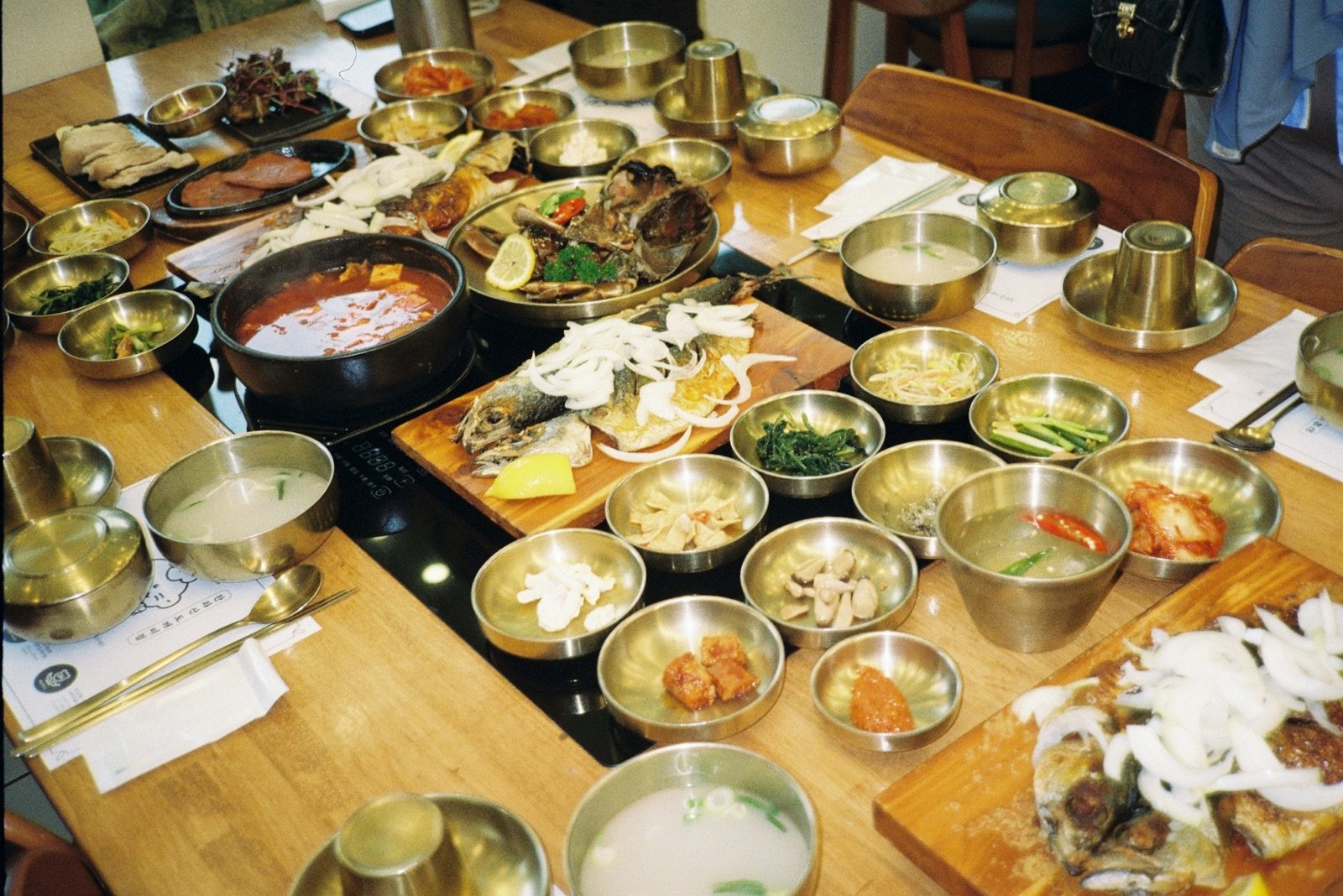
    A wooden table covered with small brass bowls of Korean side dishes and stew
    A shared Korean table. Those small dishes are for everyone.

    Most of this comes up over food, because Korean meals are built around sharing, which is half the fun. Soups, stews, and side dishes usually arrive in communal dishes, and picking through one for the best bits is a small but real no.

    It comes down to a few habits:

    • Wait a beat: start once the eldest person at the table begins eating.
    • Leave the bowl down: the rice bowl usually stays on the table, with rice on the left and soup on the right.
    • Use the spoon for rice: that’s its job here.
    • Hands off, mostly: avoid touching food with fingers, except when wrapping something in lettuce or cabbage.
    • Tidy up: put the chopsticks and spoon back where they started at the end.

    Eating with an older Korean friend or a colleague? This is where I’d pay the most attention. Out with people your own age at a noisy barbecue place, you can relax a lot more.

    The one chopstick rule I’d never break

    A Korean metal spoon and a pair of metal chopsticks side by side on white
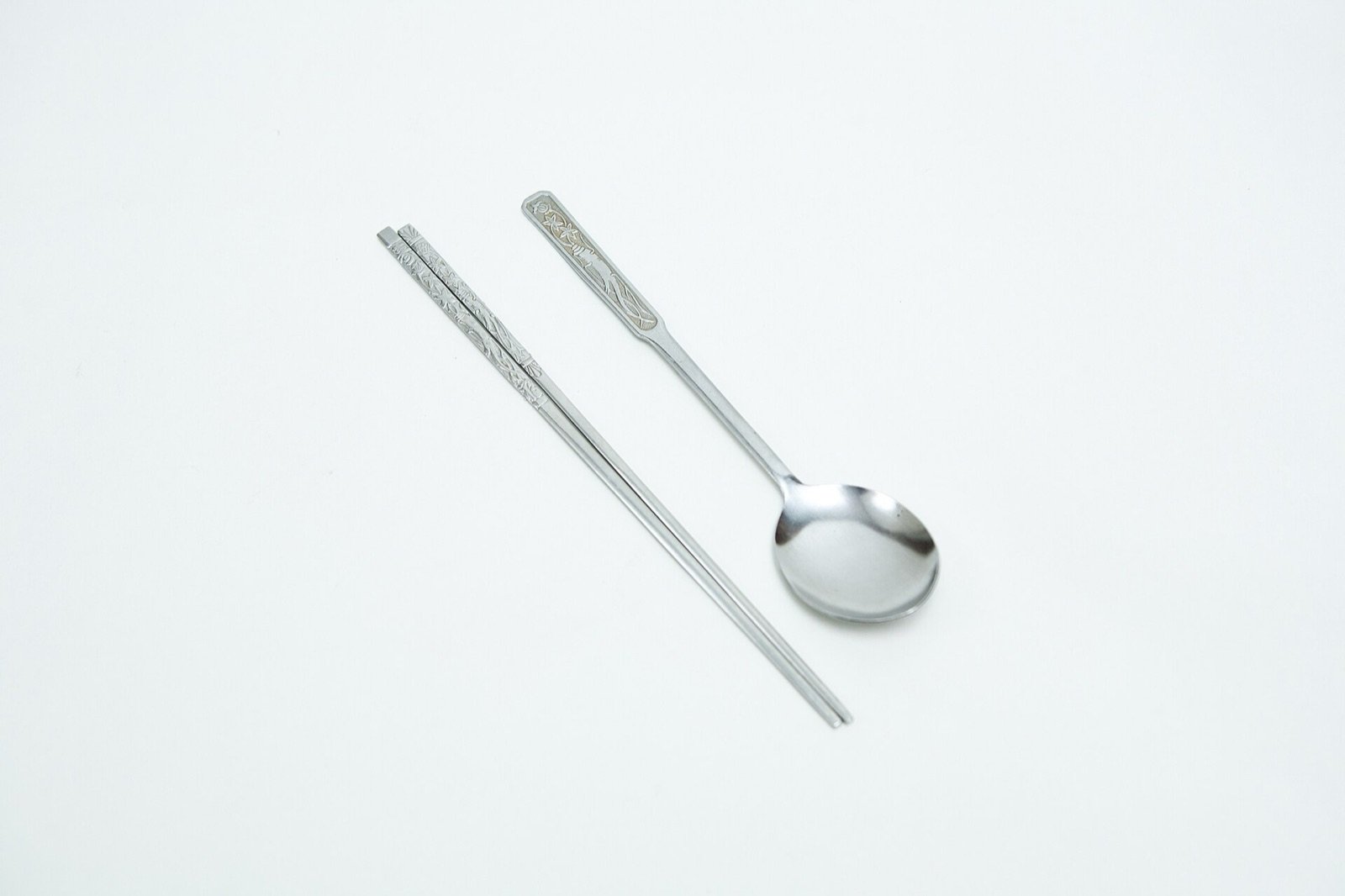
    Sujeo, the Korean spoon and chopstick set. Yes, they’re metal. Photo: National Institute of Korean Language, CC BY-SA 2.0 KR, via Wikimedia Commons

    Never leave your chopsticks or spoon standing up in a bowl of rice. Chopsticks in rice belong to rituals for the dead, the kind of thing that makes a whole table go quiet. I think it’s the only table rule worth real worry, because everything else here gets a kind smile.

    Rest them beside your bowl instead, and your neighbors can go back to eating. The set is called sujeo, by the way, and the spoon does more of the work than most first-timers expect.

    💡 Yuna’s tip

    Need to blow your nose at dinner? Step away from the table first. That one and picking your teeth are both on the don’t list.

    Do you tip in Korea? No, and here’s what to do instead

    You can stop doing the math. Tipping is not required or expected in Korea, and that goes for the fancy barbecue place too. Some people may accept a tip and others will refuse it, so skip it and spare you both the awkward moment.

    While you’re enjoying not tipping: water and side dish refills are free, and tables have a call button, so you can retire the big wave. No button at yours? This word does the job:

    💬 Say it in Korean

    저기요

    jeogiyo

    “Excuse me.” This gets someone’s attention in a restaurant or a shop. Say it a little louder than feels polite!

    Pouring drinks: the short version

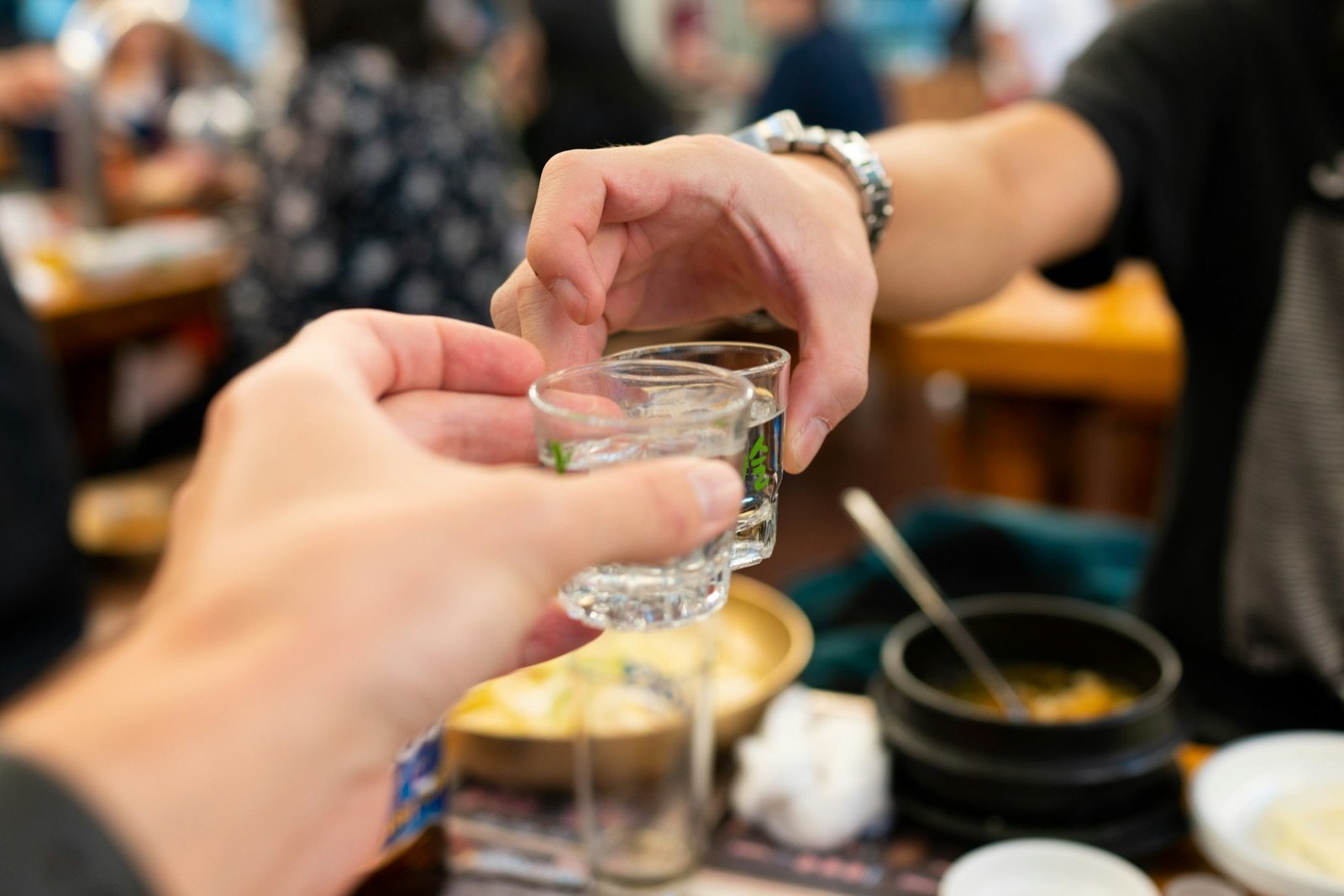
    Two hands clinking small soju glasses over a restaurant table in Seoul
    A soju toast in Seoul. One hand is fine among friends.

    Drinking has the most rules, and most of them only matter with someone older than you. Never pour your own drink, fill the older person’s glass first, use two hands for pouring and receiving, and turn your head to the side when you sip.

    One hand is fine, by the way, when the age gap is under five years. And since nobody pours their own glass, watch your neighbor’s, and someone will watch yours.

    Honest take

    With friends, skip nearly all of this. With someone’s parents, use two hands and turn your head, and you’ll be the favorite guest at that table.

    Bows, two hands, and shoes

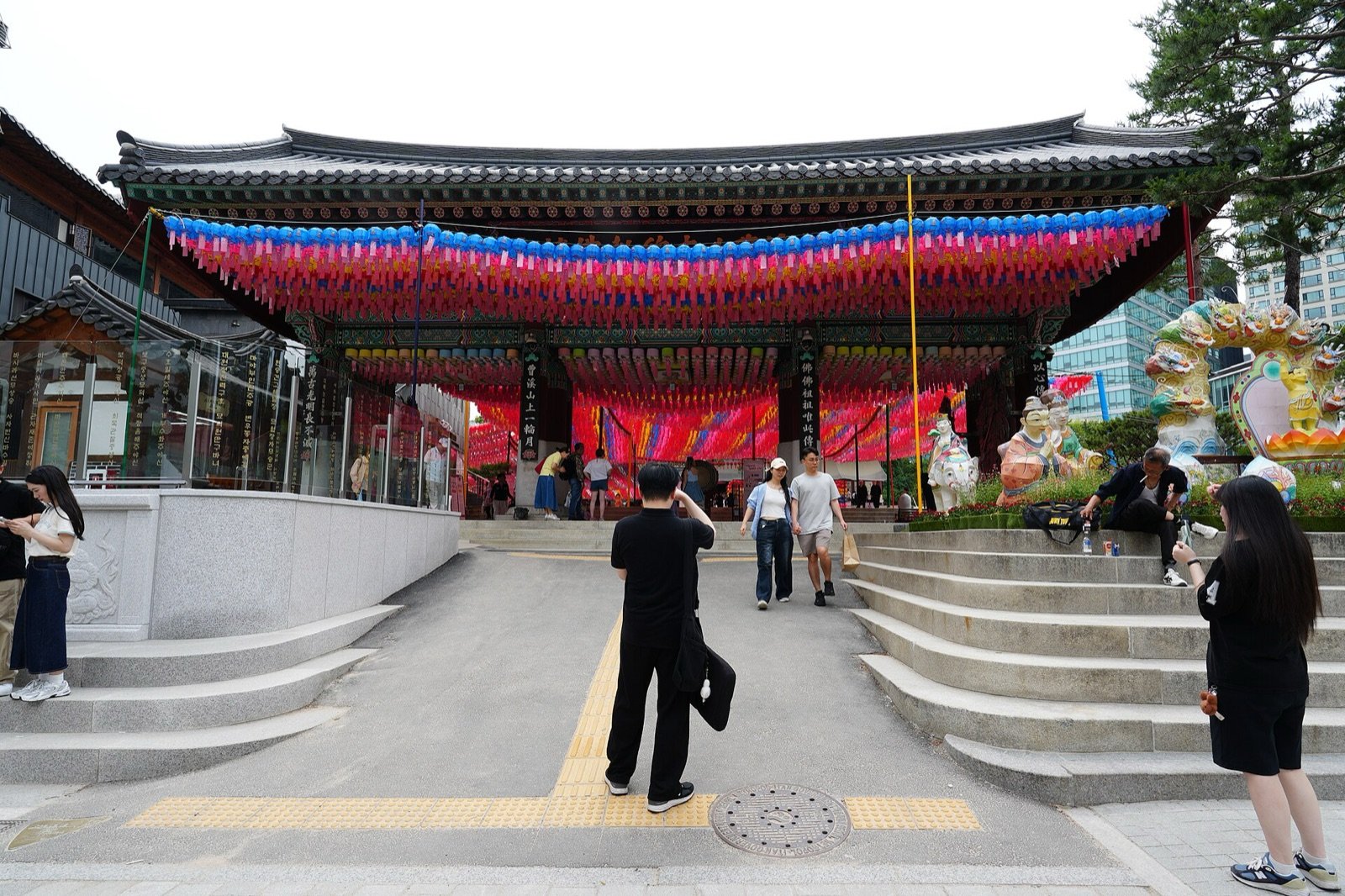
    Jogyesa Temple main hall in Seoul with rows of colorful lanterns and visitors outside
    Jogyesa Temple in Seoul. Shoes come off before you enter any hall. Photo: Sadopaul, CC BY-SA 4.0, via Wikimedia Commons

    For hello, a short bow does it, and that’s essentially a nod. The older or more senior the person, the deeper the bow, but a visitor’s nod is plenty. It works for shopkeepers, hotel staff, and the grandmother who just moved her bag for a stranger. If a handshake follows, support your right hand with your left.

    Pick up the two-hands habit first, because it fits everywhere: give and receive anything with both hands, whether that’s your card at a shop, a gift, or a business card.

    Shoes come off at the door of a home, temple, or guesthouse, and at some restaurants with low tables. At a Buddhist temple, that means every building, not only the main hall. A rack of shoes at the door is your answer, so I’d pack socks you’re happy for strangers to see.

    A few easy ones to finish. Family names come first, and given names wait until someone invites you to use them, so a title is safer with older people. Don’t point. It’s rude, and the habit is easy to drop. Big public kisses tend to get frowned upon. And if you’re trying out your Korean, stay formal at first and don’t call anyone “you.”

    Yuna’s pick

    My three, if you only keep three: two hands, a small nod, and the spoon for rice.

    Add waiting for the first bite and pouring with two hands when you’re eating with older people.

    Street food with friends? None of this will come up.

    Invited to a wedding or a funeral?

    Unlikely on a short trip, but if it happens: no white dress at a wedding, shoes off at the funeral hall, and never a toast at the meal after a funeral. Toasts are only for happy occasions.

    On the subway: pink seats and quiet voices

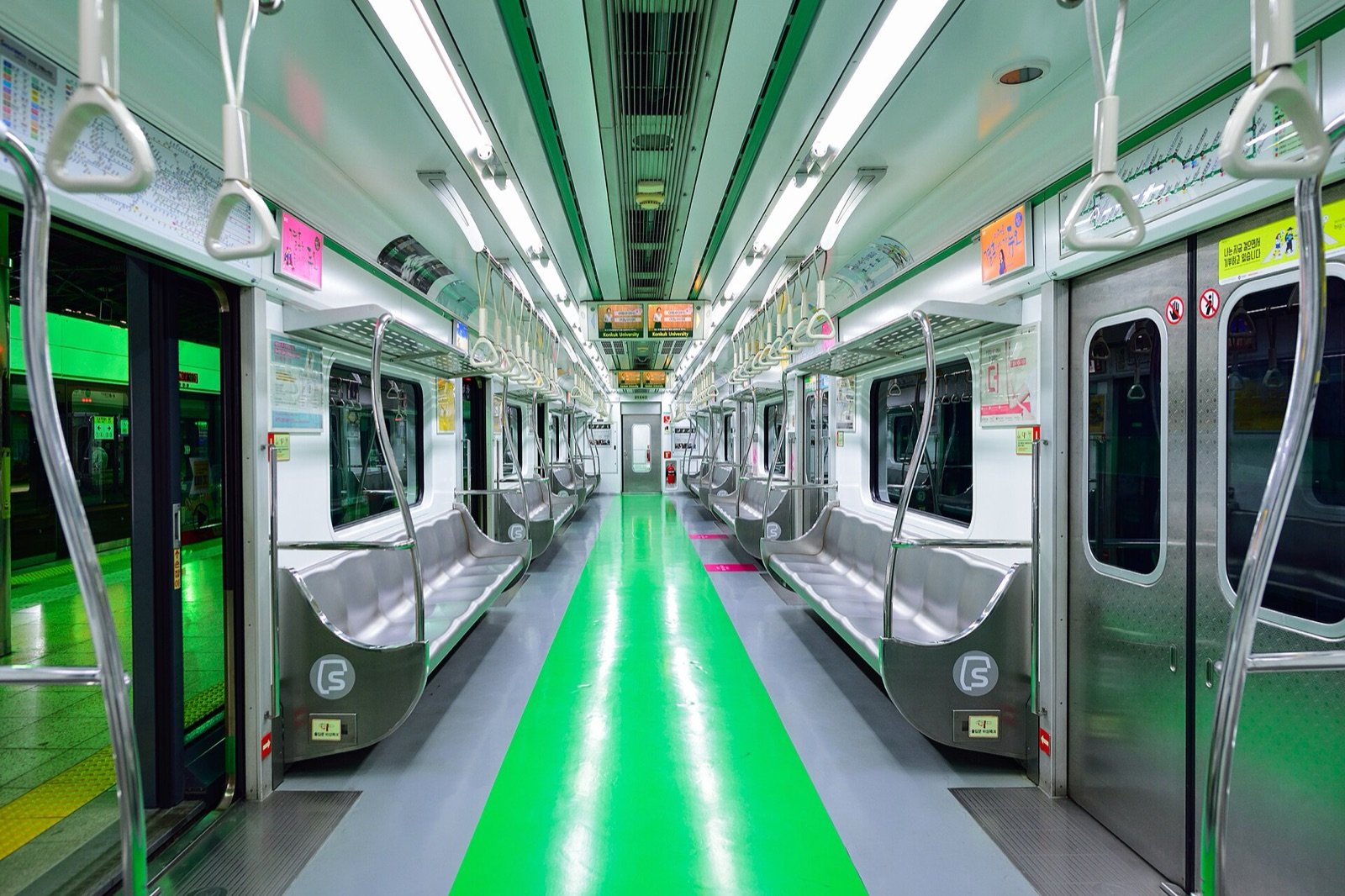
    An empty Seoul Line 2 subway car with long bench seats and a green floor stripe
    Inside a Seoul Line 2 train. Keep your voice low in here. Photo: Cfktj1596, CC BY-SA 4.0, via Wikimedia Commons

    Seoul’s subway has pink seats for pregnant riders, plus priority seats for older riders and people with disabilities. The pink seats run on voluntary consideration, not law. So nobody will fine you, but you would be that person in the pink seat.

    My rule of thumb: take an empty regular seat if there is one, and stand if there is not.

    Keep your voice down, too, especially if you’re speaking your own language. I think that’s the fairest note in any etiquette guide, because you’re easier to hear than you realize.

    The rule that can actually cost you: Bukchon after 5 p.m.

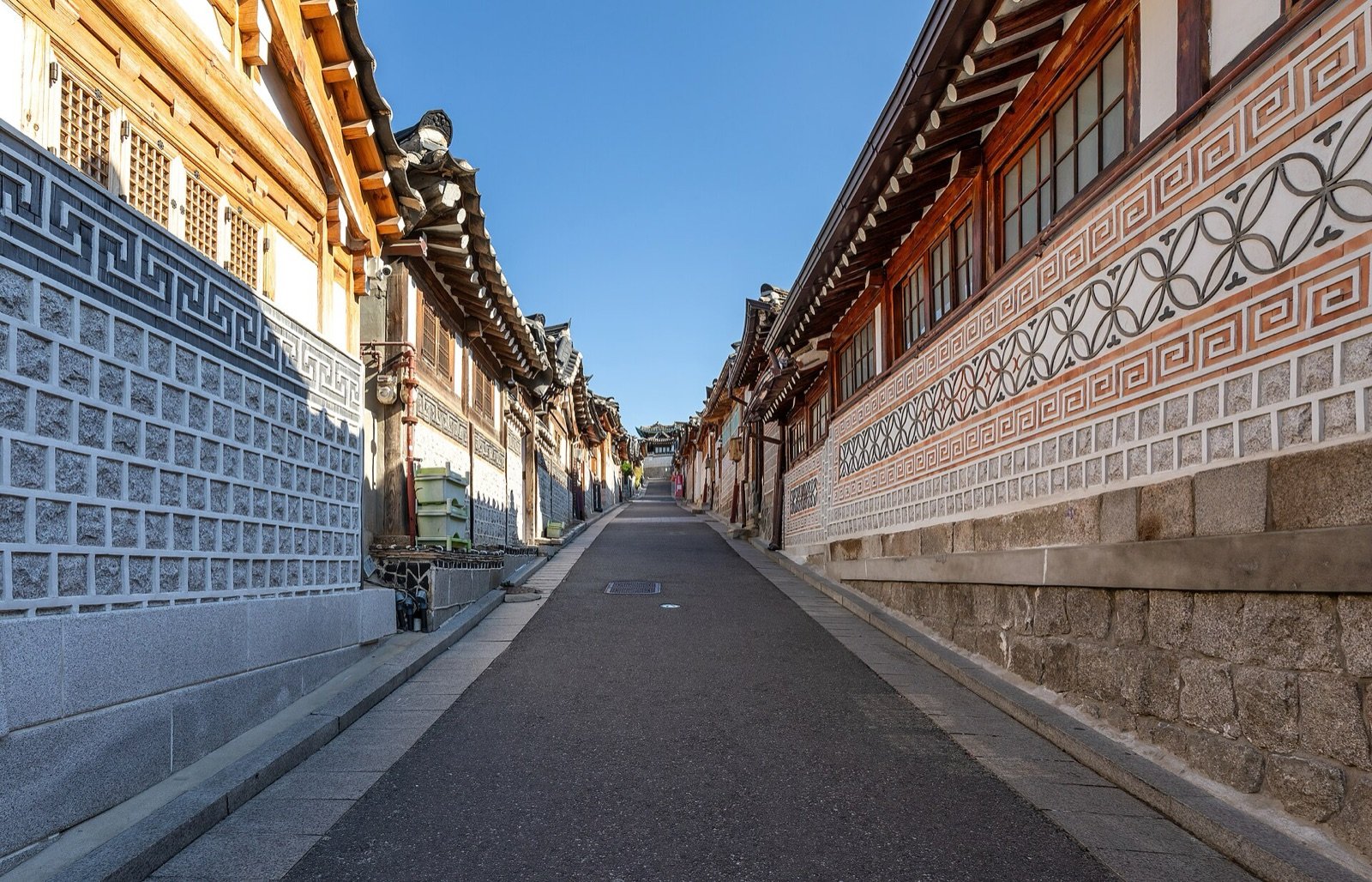
    Bukchon-ro 11-gil, a quiet paved street lined with hanok houses under a blue sky
    Bukchon-ro 11-gil, the street with the tourist hours. People live here. Photo: Basile Morin, CC BY-SA 4.0, via Wikimedia Commons

    This one is a rule with a fine, not a matter of manners, and it’s the part of this guide I’d read twice. Bukchon is a real neighborhood, and in 2024 Jongno District made part of it a special management area to protect residents from tourist crowds. In the Red Zone around Bukchon-ro 11-gil, behind Jeongdok Library, tourists may visit only from 10 a.m. to 5 p.m.

    • The fine: 100,000 won if you ignore the warning. An officer warns you first, and the rule covers Korean and foreign tourists alike.
    • Not you if: you live there, you’re visiting someone who does, you’re shopping or selling there, you’re staying there, or you’re just passing through.
    • Since when: March 1, 2025, and a June 2026 news report described it as still in place.

    Being exempt is not a free pass. Anyone caught doing tourist things, such as taking photos or videos, can still be fined, so put the camera away after 5 p.m.

    The district also announced limits on charter buses from January 2026, along with new drop-off points, so on a group tour you may be walking in from the edge of the area.

    The reason is simple enough: the crowds were disrupting daily life for the people who live here. The Red Zone covers about 34,000 square meters of real homes, so think neighborhood, not theme park.

    Signs on the street beat anything I’ve written here, so follow those first.

    My pick is a morning visit, soon after 10 a.m., with your voice low and your phone mostly in your pocket. You’re walking past people’s bedrooms, after all.

    FAQ

    Is it rude to tip in Korea?

    It isn’t rude, but it isn’t expected. Some people will accept and some will refuse, so I’d keep it simple and skip it.

    Do I have to bow?

    No, but a small nod is friendly and easy, and it’s all a visitor needs.

    Do I need to take my shoes off in restaurants?

    Only at some, usually the ones with low tables, so copy the other diners.

    What if I get something wrong?

    Then a small nod and a smile will cover most of it. These are habits, not laws, and Bukchon is the one exception on this page.

    Can I eat rice with chopsticks?

    Use the spoon. Nobody will mind the chopsticks, but the spoon is the easier tool anyway.

    Two hands, one nod, no tip, and out of the Red Zone by 5 p.m. That covers most of it. If a rule has changed, tell me on the Contact page and I’ll check it. Enjoy your trip!

    Hwaiting!

    Yuna

    📌 Read next

    Sources and last check

    How I put this guide together: from Visit Seoul, VISITKOREA, Korea.net, and Seoul city pages, plus news reports quoting Jongno District, all checked on October 31, 2026. Several of the manners pages are years old, so I’ve kept to the habits they agree on. Nothing here is sponsored. More on how I research every guide is on the About page.

    Last checked: October 31, 2026. Jongno District’s own website wouldn’t open when I checked, so the Bukchon details come from Seoul’s city news site and reports quoting the district. Local rules change, so please follow any signs you see on the street. This is general information, not legal advice, and this is an independent guide, not affiliated with any office named here.

    Sources:

  • Gwangjang Market Food Guide (2026): What to Eat, Hours & Tips

    Gwangjang Market Food Guide (2026): What to Eat, Hours & Tips

    Some links in this guide are affiliate links. If you book through them, Hello Korea Tips may earn a small commission at no extra cost to you.

    Last checked: October 31, 2026

    You walk in hungry, the griddles are going, and every bench seems to be full of people who know exactly what to order. Don’t worry, you only need a short list. I’d start with one mung bean pancake, keep some cash in your pocket, and ask the price before you sit. Here’s what to eat, when to go, and how I’d avoid overpaying.

    Quick answer

    • 🍜 Order first: bindaetteok (mung bean pancake), then small gimbap
    • 🚇 Find it: Jongno 5-ga Station (Line 1), Exit 8, with the food alley open daily from 9 a.m. to 11 p.m.
    • ✅ Worth it if: you like grazing through small plates at a busy counter

    I think this is one of the easiest ways to eat through old Seoul in a single afternoon, as long as you walk in with a plan. So let’s make one.

    Why does everyone send you to Gwangjang Market?

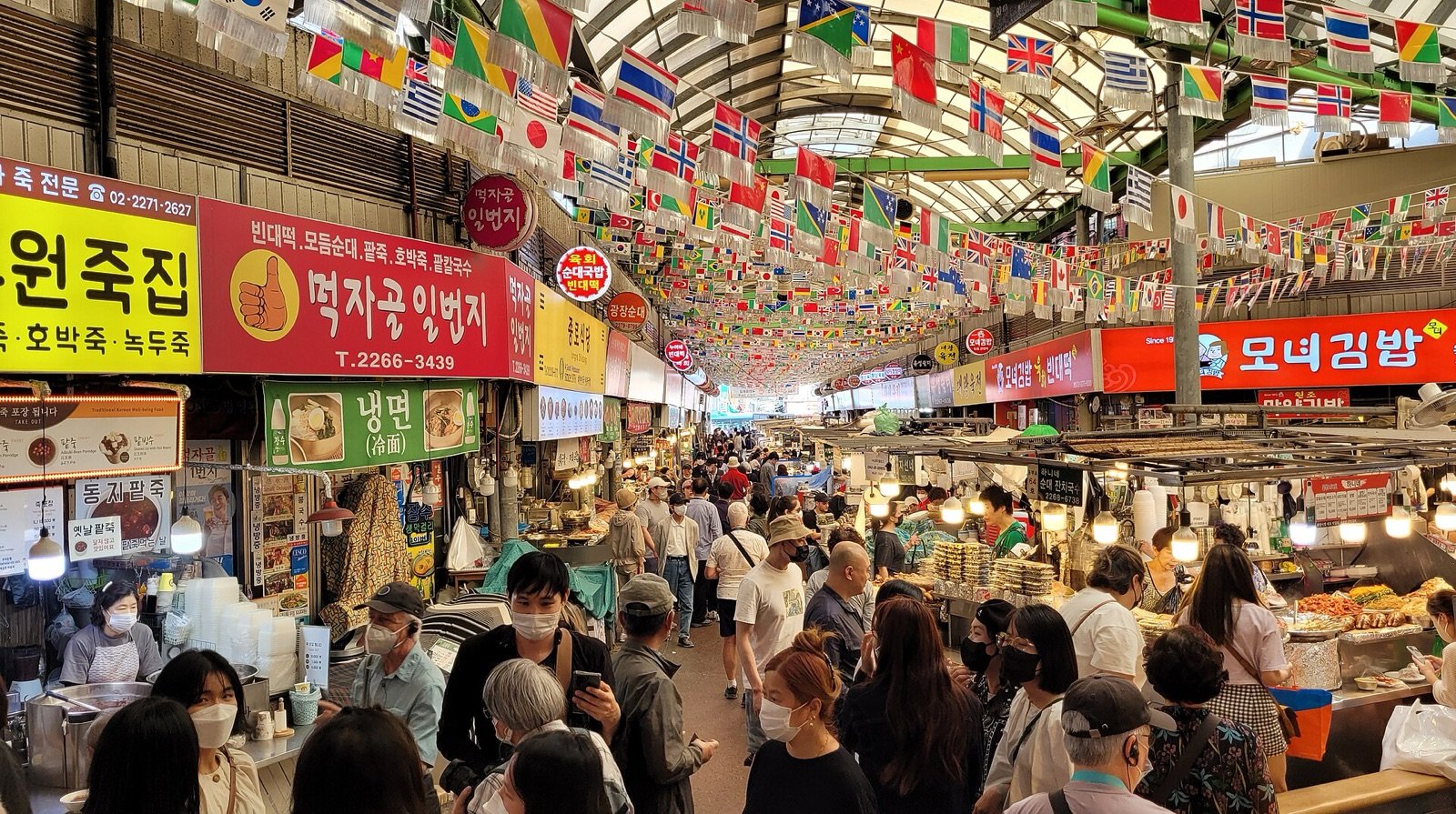
    Shoppers walking through a covered lane of Gwangjang Market under rows of colorful flags
    A covered lane of Gwangjang Market by day. Look up for the flags.

    Partly its age. This place opened on July 4, 1905, as the first permanent market in Korea to run every day. It began as a textile and clothing market, and you can still buy hanbok, fabric, and bedding here.

    The name means “to gather from afar and keep altogether.” Your stomach will do the same by the end, and it won’t feel sorry.

    Mostly, though, people come for the food street, the stretch connected to the East Gate, North Gate 2, and South Gate 1. Picture restaurants side by side, all baking mung bean pancakes and meatballs, with makgeolli (rice wine) going until late at night. The eateries run down the middle of the market in a rough cross shape, so getting properly lost takes real effort.

    Sit on a bench, eat, move on, and let the old griddles do the sightseeing. Don’t try to see all of it in one go. Pick your dishes first, and let the wandering happen around them.

    Start here: bindaetteok, the dish the market is known for

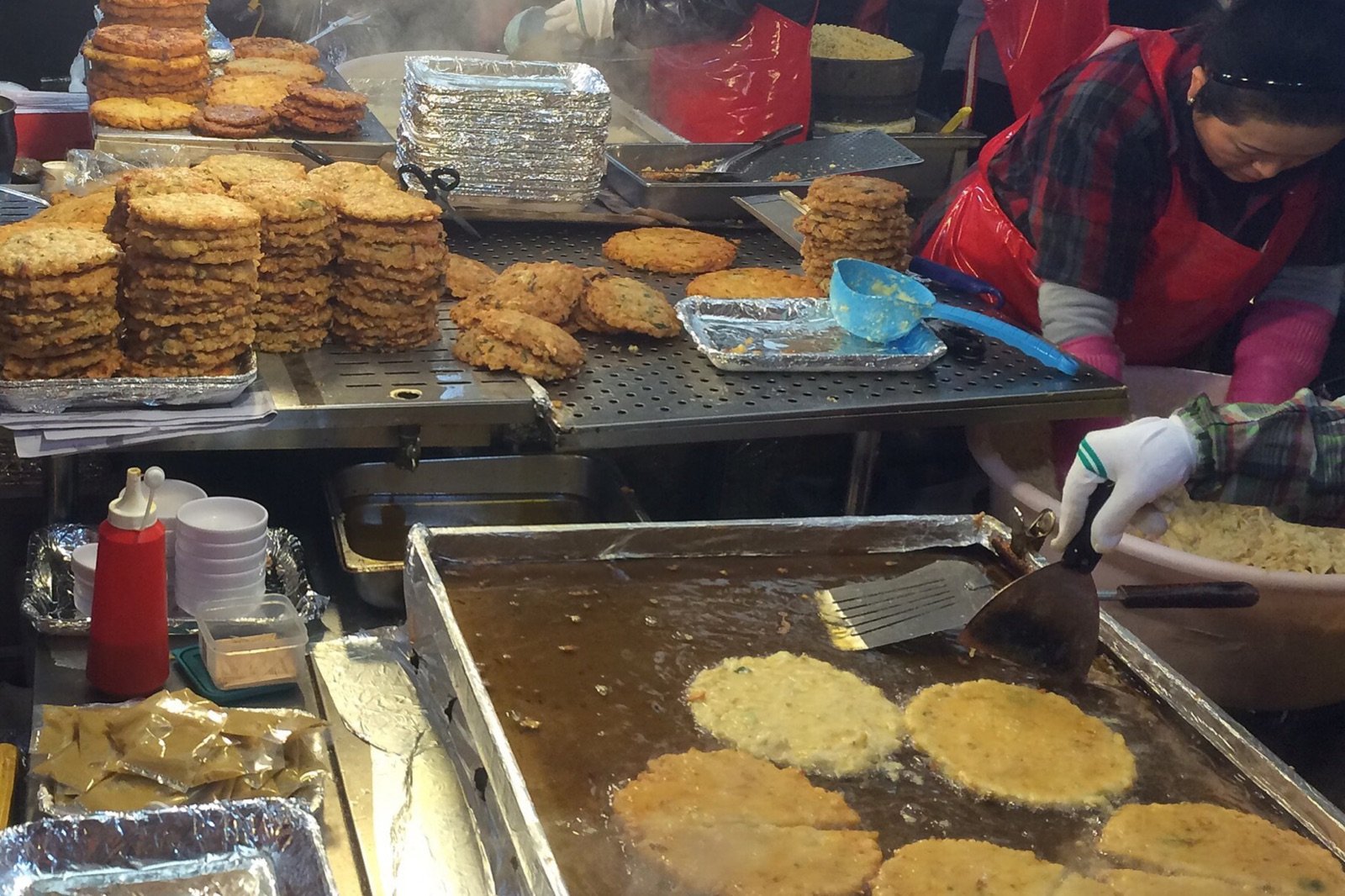
    Mung bean pancakes frying on a large griddle beside stacks of finished pancakes
    Bindaetteok on the griddle at Gwangjang Market. Follow the sizzle. Photo: Rystheguy, CC BY-SA 4.0, via Wikimedia Commons, cropped

    This is the market’s signature dish and its most popular food, so nobody gets to call you boring for ordering it.

    Think of a fried pancake of mung bean, meat, and vegetables, usually with meatballs frying right beside it. There’s a good story behind it, too: the stalls trace back to refugees from the Hwanghae-do region, now in North Korea, who fried with shortening from U.S. military bases.

    Start with Soonhee’s Bindaetteok. It grinds its mung beans on millstones and makes exactly two things, mung bean pancakes and meat pancakes, to eat at a table or take away.

    💡 Yuna’s tip

    Order one pancake to share, then decide. A whole market is waiting, and one plate shouldn’t end your day. Thirsty? Makgeolli is the pairing to ask for.

    I couldn’t find a current official pancake price, so I’m not printing an old one here. Check the board at the stall, and if you can’t find one, ask before you order.

    Small gimbap, big argument

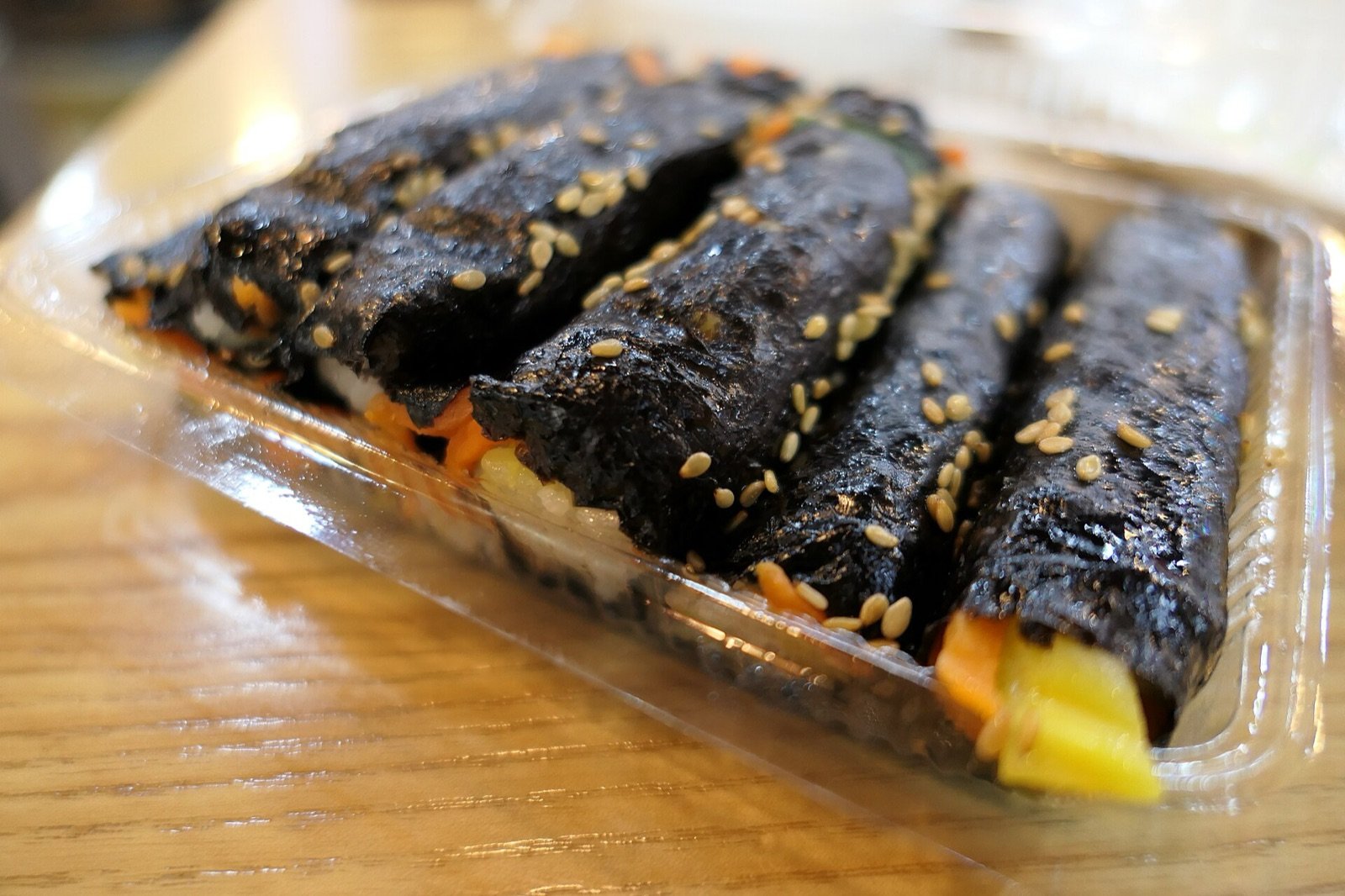
    Small seaweed rice rolls topped with sesame seeds in a clear takeout tray
    Small mayak gimbap rolls with sesame seeds. One is never the plan. Photo: bryan… from Taipei, Taiwan, CC BY-SA 2.0, via Wikimedia Commons

    Next up is the tiny gimbap. Mayak gimbap literally means “narcotic gimbap,” a joke about how addictive it’s supposed to be. Relax, the roll is only rice, seaweed, vegetables, sesame oil, and sesame seeds.

    You may also see it sold as kkoma gimbap (“small gimbap”), so look for either word on the sign, plus a little dish of soy sauce with wasabi for dipping.

    As for who made it first, Visit Seoul calls Mother and Daughter’s Gimbap “the real original,” with over 40 years behind it, then admits most other stores claim exactly that. I’m not refereeing this one! I’d just order a plate before you decide whether you’re hungry.

    Is yukhoe worth it if you’ve never had raw beef?

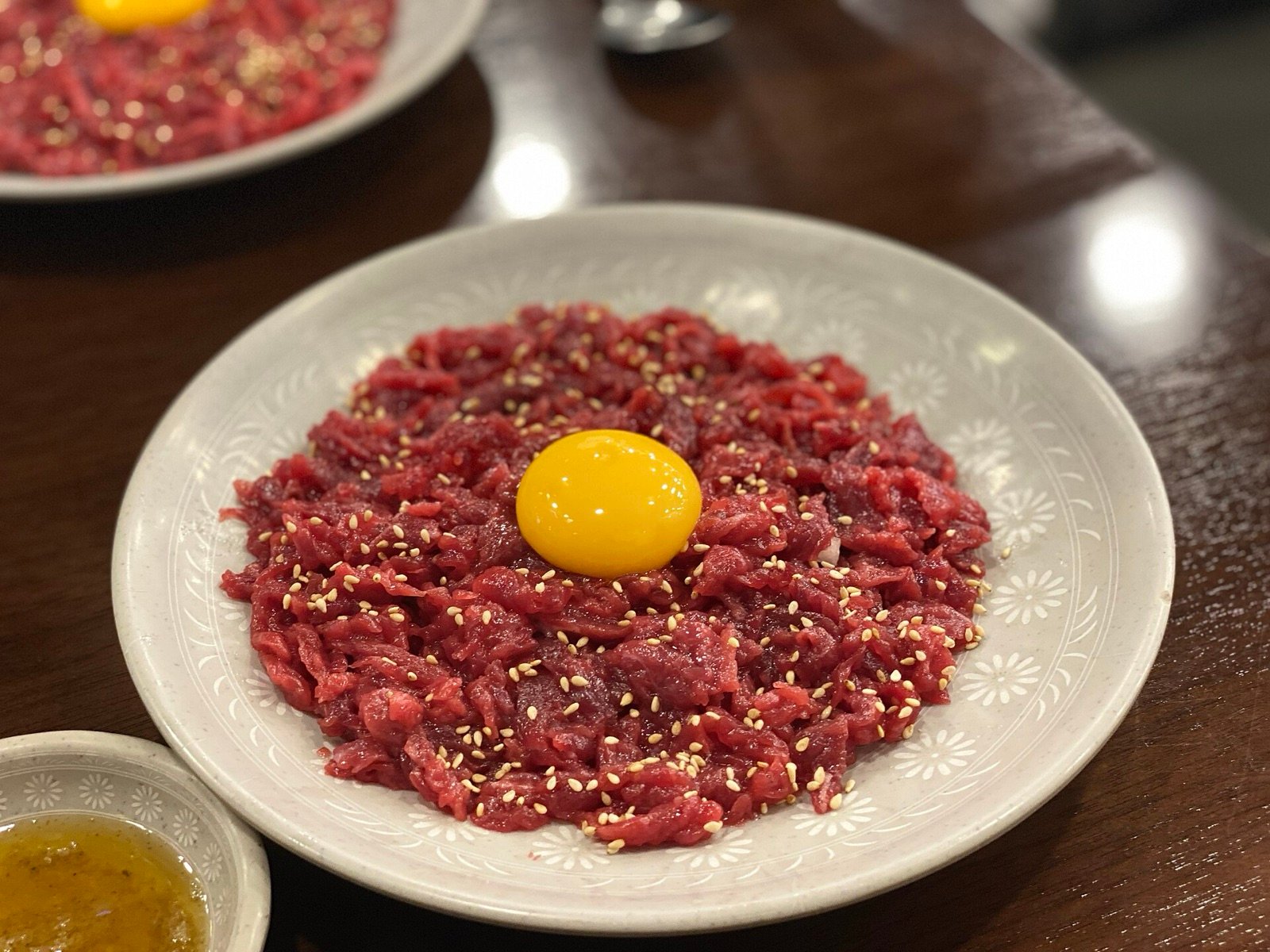
    A plate of Korean raw beef yukhoe with an egg yolk and sesame seeds on top
    Yukhoe, Korean raw beef, topped with an egg yolk and sesame seeds. Photo: revi, CC BY-SA 2.0 KR, via Wikimedia Commons

    If you’re curious, yes. This is the Korean version of beef tartare, and the long queues around the market say plenty. Raw beef sounds like a dare, but I think it’s one of the better dares in Seoul.

    It even has its own street, Yukhoe Alley, a short walk from the market. At Hyeongje Yukhoe Main, last I checked, beef tartare was 21,000 won and a beef tartare bibimbap was 10,000 won.

    Honest take

    Start with the 10,000-won bibimbap, the cheaper way to find out whether raw beef is your thing, and if it is, you already know where the full plate lives.

    What else should you order?

    Here’s the rest, in the order I’d bother:

    • Tteokbokki: sliced rice cakes in chili sauce, with eomuk (fish cake) alongside. If you like heat, this is your next stop.
    • Noodle soup and dumplings: stalls here appeared in Netflix’s Street Food. The official guides leave them unnamed, so I won’t guess.
    • Modum-jeon: a plate of assorted savory pancakes, for when one kind is not enough.
    • Sundae: sorry, no ice cream. This is a Korean sausage made with pork blood and intestine. Skip it if that sentence bothered you.
    • Bibimbap: the bowls here have a reputation for feeding two adults, so share.
    • Twisted doughnuts: dusted with cinnamon powder, if any room is left.

    If you only make it through the first two, I’d still call that a good lunch. The market has gotten younger, too. Pop-ups have kept coming since a Jeju Beer Company one in 2023, and ILHO Coffee Bar now carries on from the oldest stall, No. 001. Save that one for after the pancakes.

    Yuna’s pick

    Two of you: one bindaetteok, one plate of small gimbap, and something spicy.

    Just you: a pancake to go, and keep walking.

    Want to sit down properly? Noodle soup first, and call the pancake dessert.

    Will you overpay? Here’s how I’d avoid it

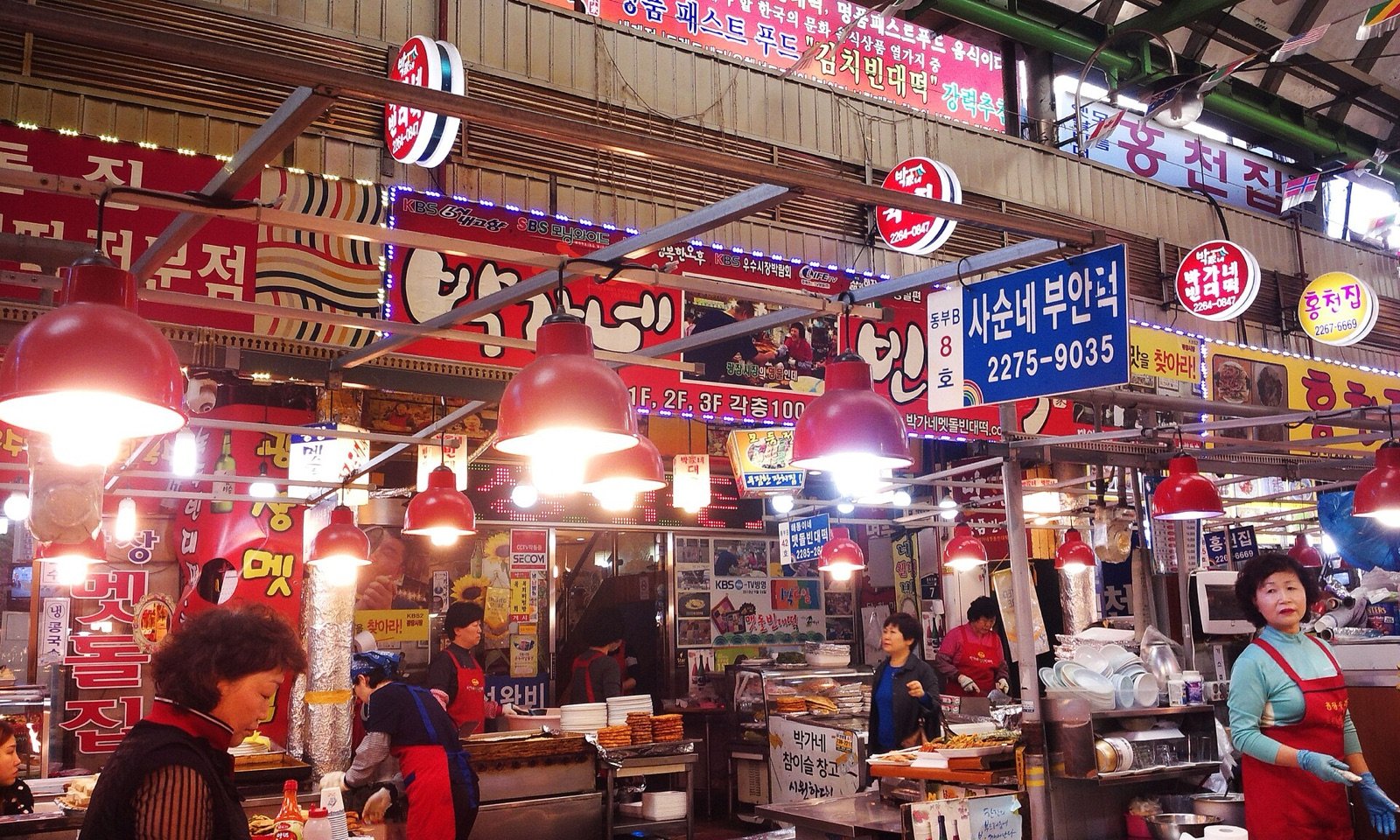
    Red lamps and hand-painted stall signs above vendors in the Gwangjang Market food alley
    Stall signs and red lamps in the food alley. Check prices first. Photo: Jocelyndurrey, CC BY-SA 4.0, via Wikimedia Commons

    Okay, the awkward part. People get overcharged here, and Seoul’s own English site says so: “reports of severe overpricing resurface from time to time.” The official tourism site insists most dishes are reasonably priced, and both can be true.

    In April 2026, a news report covered a foreign customer charged 2,000 won for an unlabeled bottle of water. That alone will not wreck your trip, but it will make you feel like a mark, and that’s what we’re avoiding.

    The merchants promised portion labels and card payment back in 2023, and Seoul now runs undercover price patrols plus a QR code for reporting gouging. How well it’s working, I couldn’t confirm, so assume nothing and ask.

    Should this scare you off? Not even a little. Plenty of the fun here is the chaos, and a few small habits keep it on your side. Just order like someone who asks questions:

    • Ask first: confirm the price before anything gets cut or plated, and skip the argument later.
    • Order small: one dish at a time, so a bigger plate never surprises you.
    • Bring cash: some stalls take cards and many refuse them, so keep some in your wallet.
    • Skip the tip: tipping is not required or expected in Korea.
    • If something goes wrong: call the 1330 travel hotline, +82-2-1330.

    💬 Say it in Korean

    이거 얼마예요?

    igeo eolmayeyo?

    “How much is this?” Point at the dish and ask before you order. Asking is perfectly normal at any stall.

    When should you go, and how do you get there?

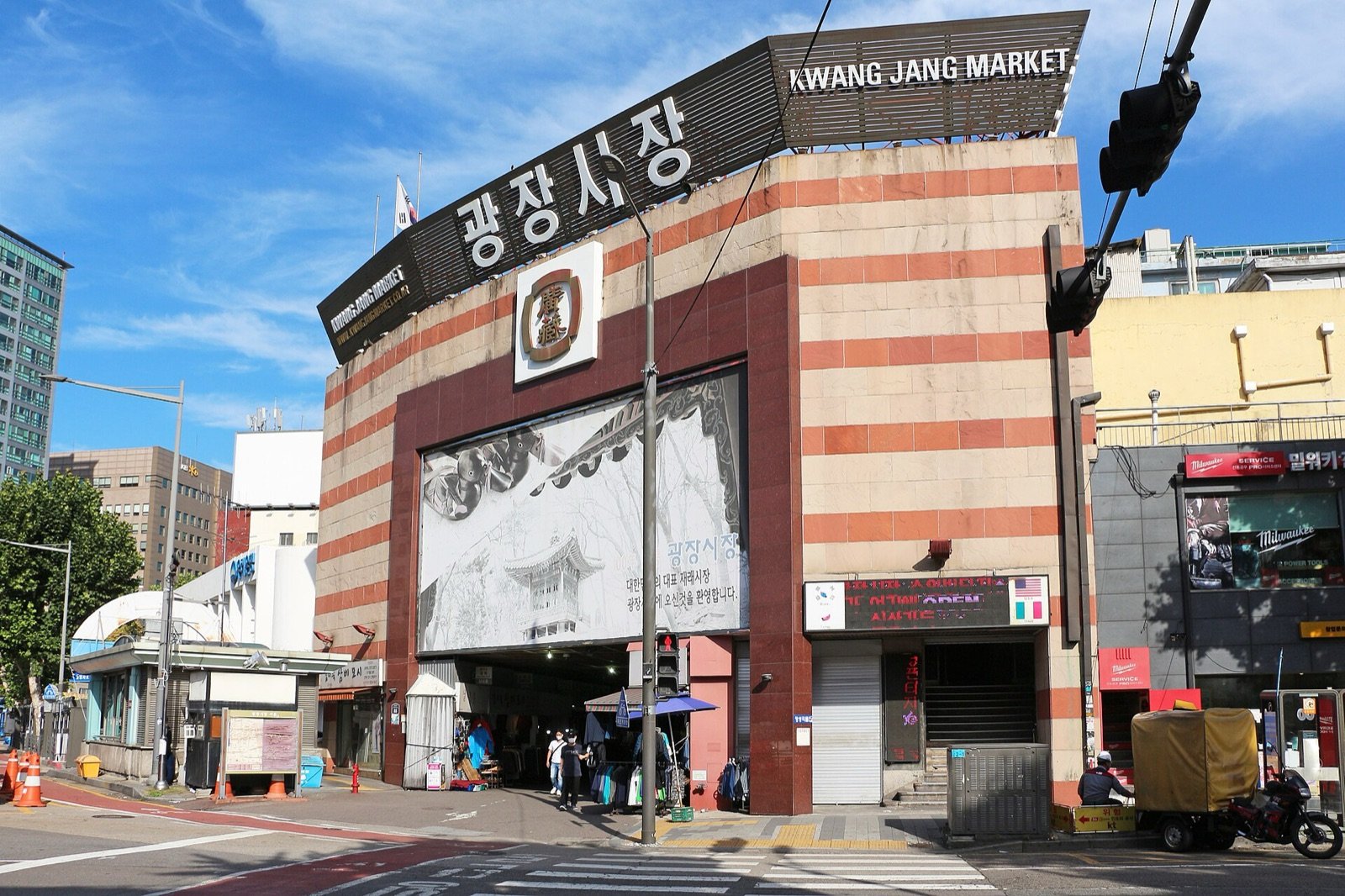
    The striped Gwangjang Market building with a large Hangul sign under a blue sky
    The market building from the street, with its big Hangul sign.

    The food alley is the easy part, while the rest of the market keeps shorter hours:

    Part of the market Hours Closed
    Food alley 9 a.m. to 11 p.m. Open all year
    Main market 9 a.m. to 6 p.m. Sundays
    Vintage clothing shops 10 a.m. to 7 p.m. Sundays

    Single stalls set their own hours, and Hyeongje Yukhoe Main closes on Wednesdays, so plan your raw beef accordingly.

    Come Monday to Saturday before 6 p.m. if you want shopping and food together, and come on a Sunday if you only care about lunch.

    For the subway, take Line 1 to Jongno 5-ga Station, where Exit 8 puts you about 60 meters away. Euljiro 4-ga Station (Lines 2 and 5) works too, about 100 meters from Exit 4.

    The address is 88 Changgyeonggung-ro, Jongno-gu, and if you’re somehow driving, aim for the Jongno 4-ga Jongmyo parking lot.

    How I’d spend two hours here

    1. Start at Exit 8: walk in and split one bindaetteok while it’s hot.
    2. Keep moving: grab small gimbap, then one spicy snack.
    3. Go upstairs: browse the hanbok and vintage shops on the 2nd floor.
    4. Finish slowly: sit down for noodle soup or a coffee.

    If vintage clothes are on your list, shop before the second round of food. Nobody tries on a jacket well with a stomach full of pancakes!

    FAQ

    Is Gwangjang Market open on Sundays?

    The food alley is. Official pages list the main market and vintage shops as closed on Sundays, so I’d plan on food only.

    Is Gwangjang Market worth it?

    On a first trip, yes. Go for the pancakes and the noise, and ask prices as you go. If you want a quiet sit-down dinner, this is the wrong address.

    Can I pay by card at Gwangjang Market?

    Sometimes. Some vendors take cards and many don’t, so carry enough cash for your whole visit.

    Are there English menus?

    At some places, not all. Menus in English, Chinese, and Japanese depend on the restaurant, so pointing remains a fine strategy.

    Ask the price, order the pancake, and leave room for one more dish than you think you can manage. If you find a menu or price that’s moved, the Contact page is the place to tell me, and I’ll check it against the official source.

    Hwaiting!

    Yuna

    🎟️ Book it

    Want it sorted before you fly? These are the ones I would look at on Klook:

    Sources and last check

    How I put this guide together: from Visit Seoul, VISITKOREA, the Seoul Metropolitan Government, and Korea.net, plus two news reports on prices, all checked on October 31, 2026. Prices and hours come from those pages, not from a visit. Nothing here is sponsored (the booking links are affiliate links, as noted at the top), and no stall or shop paid for or reviewed it. More on how I research every guide is on the About page.

    Last checked: October 31, 2026. Prices, hours, and payment rules change, so please check at the stall before you order. The market’s own website wouldn’t open securely when I checked, so I’ve used the pages below instead. This is an independent guide, not affiliated with Gwangjang Market or any shop named here.

    Sources:

  • Korea eSIM, SIM Card, or Pocket Wi-Fi (2026): How to Choose

    Korea eSIM, SIM Card, or Pocket Wi-Fi (2026): How to Choose

    Some links in this guide are affiliate links. If you book through them, Hello Korea Tips may earn a small commission at no extra cost to you.

    Last checked: October 31, 2026

    You land at Incheon, switch off airplane mode, and suddenly need a map and a ride into the city. Don’t worry, getting online is the easy part. If your phone isn’t carrier-locked and supports eSIM, I’d buy a data eSIM online before you fly. Here’s how to check your phone, where to buy, and when a Korean number is worth it.

    Quick answer

    • 📱 Best for most phones: a data eSIM, if your phone has no carrier lock and shows an EID
    • 💰 Price: 18,000 won for 3 days of LTE at SK Telecom or LG U+ (online, as of October 31, 2026)
    • 🧳 At the airport: all three carriers have 24-hour counters on the 1st floor of both Incheon terminals
    • ✅ Get a voice plan if: you need to call or text Korean numbers

    These three options solve different problems, and your phone settles most of the choice before price even comes up.

    eSIM, SIM card, or pocket Wi-Fi: what’s the difference?

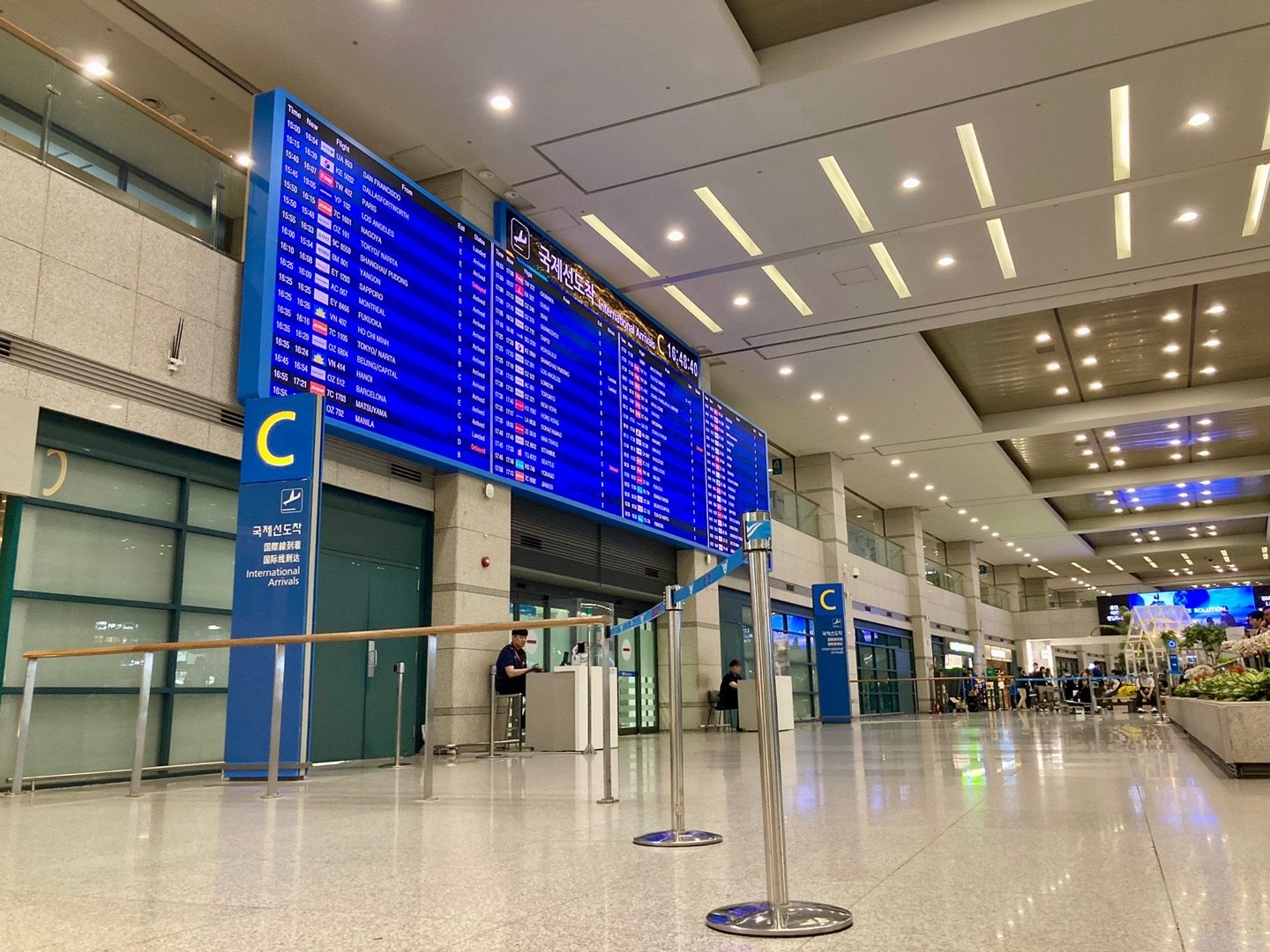
    International Arrivals exit C with a large arrivals board at Incheon Airport Terminal 1
    International Arrivals, exit C, at Incheon Terminal 1. Ideally, your maps already work here. Photo: Narubaru7, CC BY 4.0, via Wikimedia Commons

    SK Telecom, KT, and LG U+ each sell all three to visitors. In plain terms, an eSIM is a SIM you download, and a SIM card (Koreans call it a yusim) is the tiny chip you swap in. A pocket Wi-Fi is a small router you carry around.

    I compared them side by side using the carriers’ own English pages:

    What to know eSIM SIM card Pocket Wi-Fi
    Works on a carrier-locked phone No No Yes
    Where you get it Online or at the airport Airport counter pickup Rented with your passport and a card
    You return it No No Yes
    Lowest price at SK Telecom and LG U+ (Oct 31, 2026) 6,500 won for 1 day 6,500 won for 1 day 4,400 won a day

    My rule of thumb: let your phone decide first, then your budget. If it can’t take an eSIM or a SIM card, the choice is already made for you.

    What a data plan costs

    These are online LTE eSIM prices from the two carriers whose pages I could check, as of October 31, 2026:

    Days SK Telecom LG U+ (data only)
    1 6,500 won (data only) 6,500 won
    3 18,000 won 18,000 won
    5 27,500 won 27,500 won
    7 35,000 won 35,000 won
    10 38,500 won 38,500 won
    15 55,000 won 55,000 won
    30 71,500 won 71,500 won

    Same numbers, different plans. From 3 days up, SK Telecom adds voice and text, a free 3,000-won transport card, and free entry to sights such as Gyeongbokgung. That palace pass has to be registered and used by December 31, 2026. The LG U+ prices come before its online discount code.

    SK Telecom SIM cards start at the same prices, and 5G costs more, with its 3-day 5G eSIM at 25,000 won. I couldn’t confirm KT eSIM prices or any airport counter prices on the official pages, so I’d check those before you pay in person.

    Will an eSIM work on your phone? Check two things

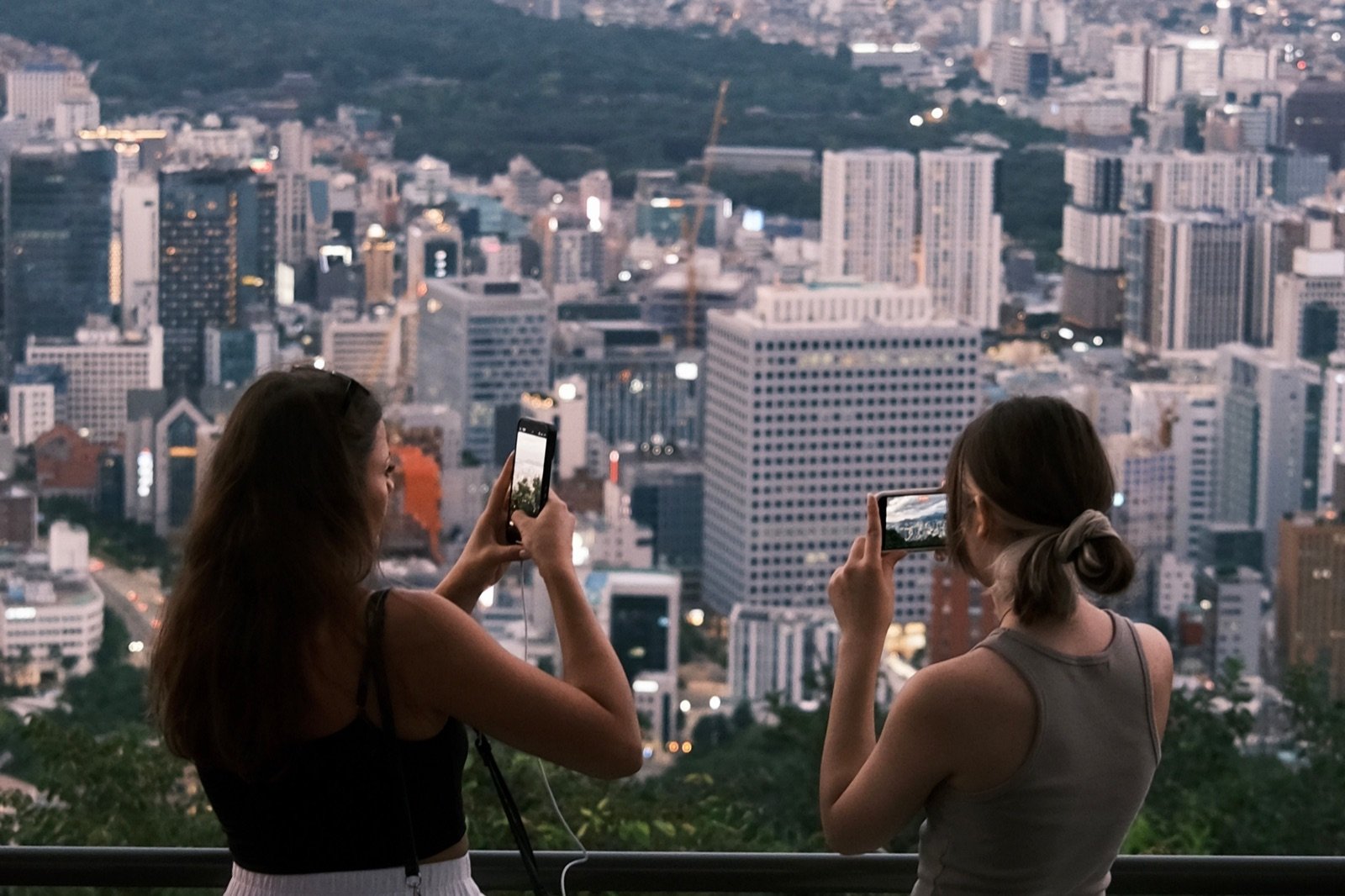
    Two travelers photographing downtown Seoul with their phones from a Namsan viewpoint at dusk
    Travelers photographing downtown Seoul from Namsan at dusk. Check your phone settings at home.

    I’d do this at home, a week or so before you fly, in case you need help from your carrier.

    Is your phone carrier-locked?

    All three carriers say their plans need a phone without a country lock, the kind of lock that blocks foreign SIMs. SK Telecom adds a sneaky detail: a locked phone can scan the QR code just fine and still not work.

    • iPhone: open Settings > General > About. If “No SIM restrictions” appears next to Carrier Lock, you’re good.
    • Pixel: phones from the Google Store come without a SIM lock. One bought from a carrier can stay locked for up to 2 years.
    • Still locked: only your current carrier can remove the lock (Apple says so plainly), so ask them early.

    Does it support eSIM?

    Two of the carriers suggest a quick test: dial *#06# in your phone app. If an EID appears, your phone supports eSIM.

    • iPhone: XS, XS Max, XR, or later.
    • Pixel: look for the EID under Settings > About phone > SIM status.
    • Bought in the US: iPhone 14 or later, and Pixel 10 or later (except the Pixel 10 Pro Fold), are eSIM-only, so a SIM card is off the table.

    One more for Android: LG U+ says its eSIM doesn’t support Google Pixel, Motorola, or OPPO phones. The other two don’t list that limit on the pages I checked, though silence is no promise it works.

    ⚠️ Heads-up

    eSIMs are hard to get money back on. KT won’t cancel or refund one once it’s bought, and LG U+ won’t refund a data eSIM after payment. SK Telecom takes refund requests for a scanned eSIM only when a lock or missing eSIM support is the reason. I’d check both before you pay.

    Why a data eSIM is my default pick

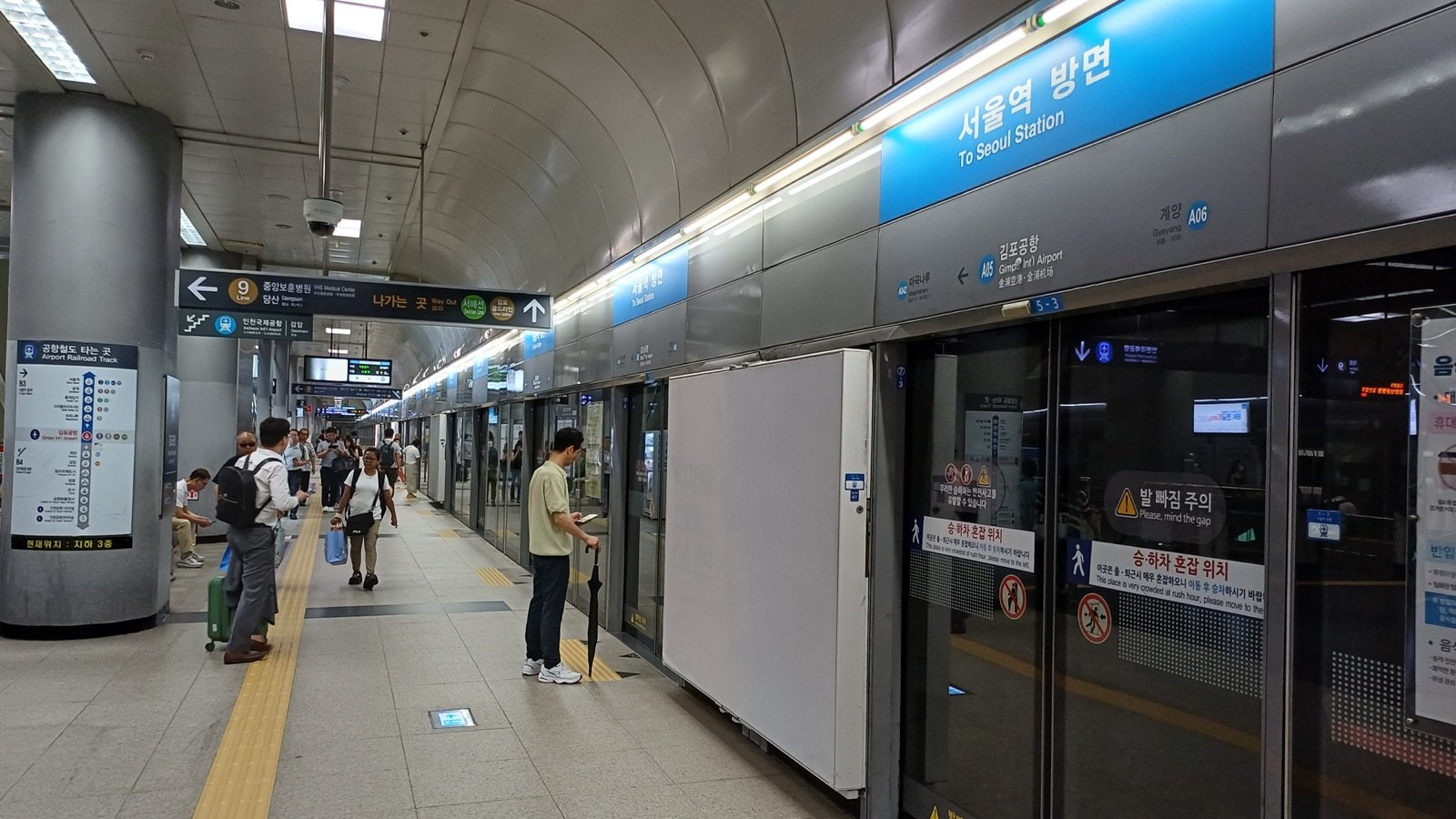
    Airport Railroad platform at Gimpo Airport Station with screen doors and a To Seoul Station sign
    The Airport Railroad platform at Gimpo Airport Station. Data first, then directions.

    Honestly, for most visitors I’d go eSIM. No card to collect, nothing to return, and after a long flight I’d rather walk straight to the train than join a counter line.

    Your home number can stay on, too. Supported iPhones can keep two eSIMs active at once, and FaceTime and iMessage keep using your home line even if the travel eSIM is the only one switched on.

    On iOS 26 or later, add the travel eSIM before you leave and you’ll get a “Turn On Travel eSIM” alert when you arrive. With both lines on, the travel eSIM handles data, but your home line might still charge roaming fees. I’d make sure Settings > Cellular > Cellular Data points to the travel line.

    On a Pixel, go to Settings > Network & internet > SIMs > Add SIM > Set up an eSIM. Pixel 7 and later can run two eSIMs at once if the carrier allows it.

    💡 Yuna’s tip

    I’d install it at home on your own Wi-Fi, since setup needs an internet connection. Then don’t delete it mid-trip: none of the three carriers will reissue a deleted eSIM.

    No rush, either. SK Telecom gives you 180 days to scan the QR code, KT 90 days to install, and LG U+ 60 days to activate. Miss the KT deadline and the eSIM is canceled with no refund.

    When do your days start? At LG U+, the first time you use data, not when you pay. The other two don’t say on the pages I checked, so I’d ask them before you install at home.

    When a SIM card or pocket Wi-Fi makes more sense

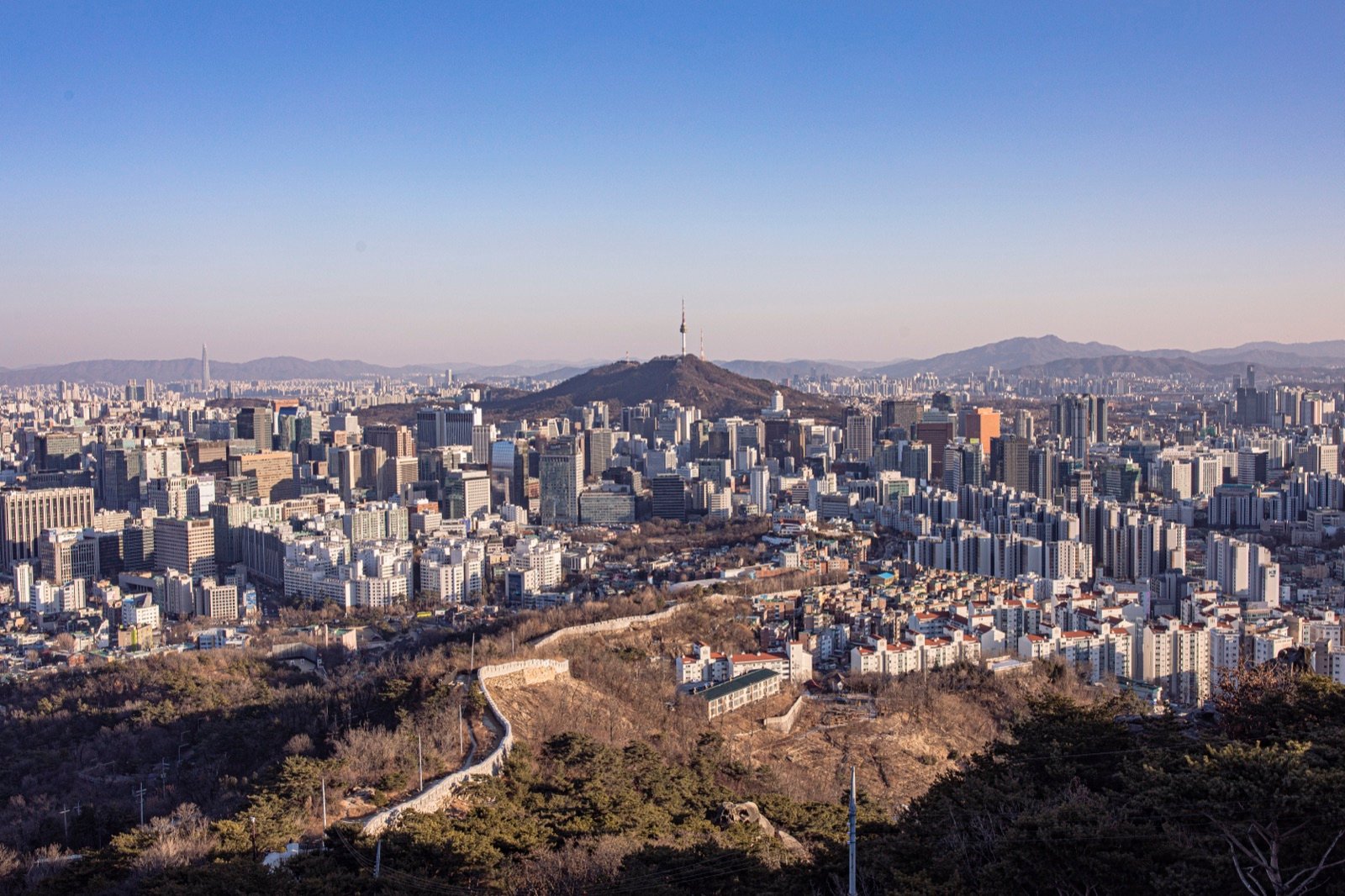
    Downtown Seoul from Inwangsan, with N Seoul Tower on Namsan and the old city wall
    Downtown Seoul from Inwangsan. Up here, everyone in the group wants to post. Photo: Seoul Tourism Organization (Seoul Tourism Archive), KOGL Type 1 (copyright policy)

    If your phone has no carrier lock and a SIM tray but no eSIM, a SIM card does the same job. The trade-off is pickup: you collect it at an airport counter, and KT checks your passport there, while LG U+ has you upload it.

    A pocket Wi-Fi works even with a locked phone, because your phone just joins its Wi-Fi. As of October 31, 2026, all three carriers rent one from 4,400 won a day, and SK Telecom suggests 3 to 5 devices per router.

    Here’s the catch: “unlimited” means something different at each carrier, for routers and eSIMs alike.

    • SK Telecom: routers may slow down after 1 GB a day. LTE plans hold 100 Mbps with no data cap.
    • KT: routers run at 20 Mbps with no limit. eSIMs and SIMs drop to 5 Mbps after 11 GB a day, refilled at midnight.
    • LG U+: routers get 4 GB a day, then up to 5 Mbps until midnight. Data eSIMs allow hotspot use.

    For the router deposit, bring your passport and a credit card. SK Telecom and KT don’t take debit cards; LG U+ does, but charges a 70,000-won deposit, refunded automatically when you return the router in good condition.

    Honest take

    I’d rent a router only for a group sharing data, or for a phone that’s stuck locked. A router is one more gadget to keep charged, and one more airport stop on your way home. Not my idea of a relaxed last morning!

    If you’re still torn, here’s how I’d decide:

    Yuna’s pick

    No carrier lock and an EID on screen: I’d get a data eSIM online before you fly.

    No carrier lock, but no eSIM either: I’d go with a SIM card from an airport counter.

    A locked phone, or a group sharing one connection: I’d rent a pocket Wi-Fi.

    Buying at Incheon Airport: where the counters are

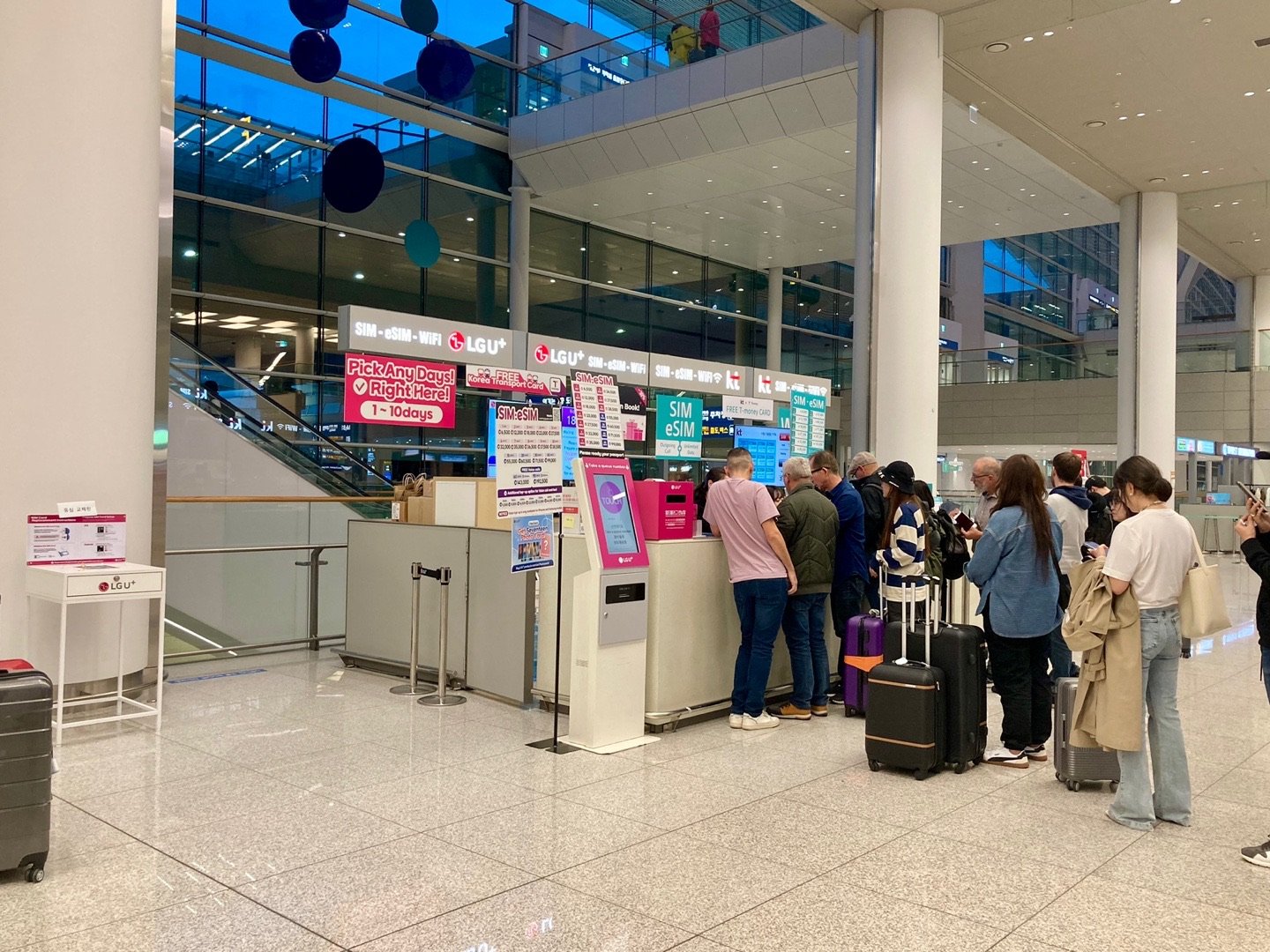
    Travelers with suitcases lining up at a SIM, eSIM and Wi-Fi counter at Incheon Airport
    A SIM and eSIM counter at Incheon Terminal 2. Keep your passport handy here. Photo: Narubaru7, CC BY 4.0, via Wikimedia Commons

    Buying in person works too, and I’d do it if you want a voice plan, since some are airport-only: the KT eSIM with calls and texts, and LG U+ data-plus-voice plans. The main counters are on the 1st-floor arrivals level.

    • Terminal 1: all three carriers have 24-hour counters near Arrival Hall F on the west side. Their counters near Arrival Hall A, on the east side, keep 6 a.m. to 10 p.m. hours.
    • Terminal 2: all three have 24-hour counters on the 1st floor.
    • Departures, 3rd floor: both terminals have carrier counters too, mostly open 6 a.m. to 10 p.m.

    💡 Yuna’s tip

    Landing after 10 p.m.? In Terminal 1, skip the Hall A side and head straight for the 24-hour counters near Arrival Hall F.

    LG U+ is happy to see walk-ins on arrival day, but says booking ahead gets you extra benefits. You can return its router at any of its counters at Incheon, Gimpo, or Gimhae airport.

    If you’re staying three days or more, look at the transit card extras. SK Telecom adds a free 3,000-won transport card to its 3-to-90-day plans, and LG U+ gives a free T-money card with 3-day-plus plans picked up at the airport. Whether to top it up or get a transit pass instead is its own question, and my Seoul Climate Card guide answers it.

    Do you need a Korean phone number?

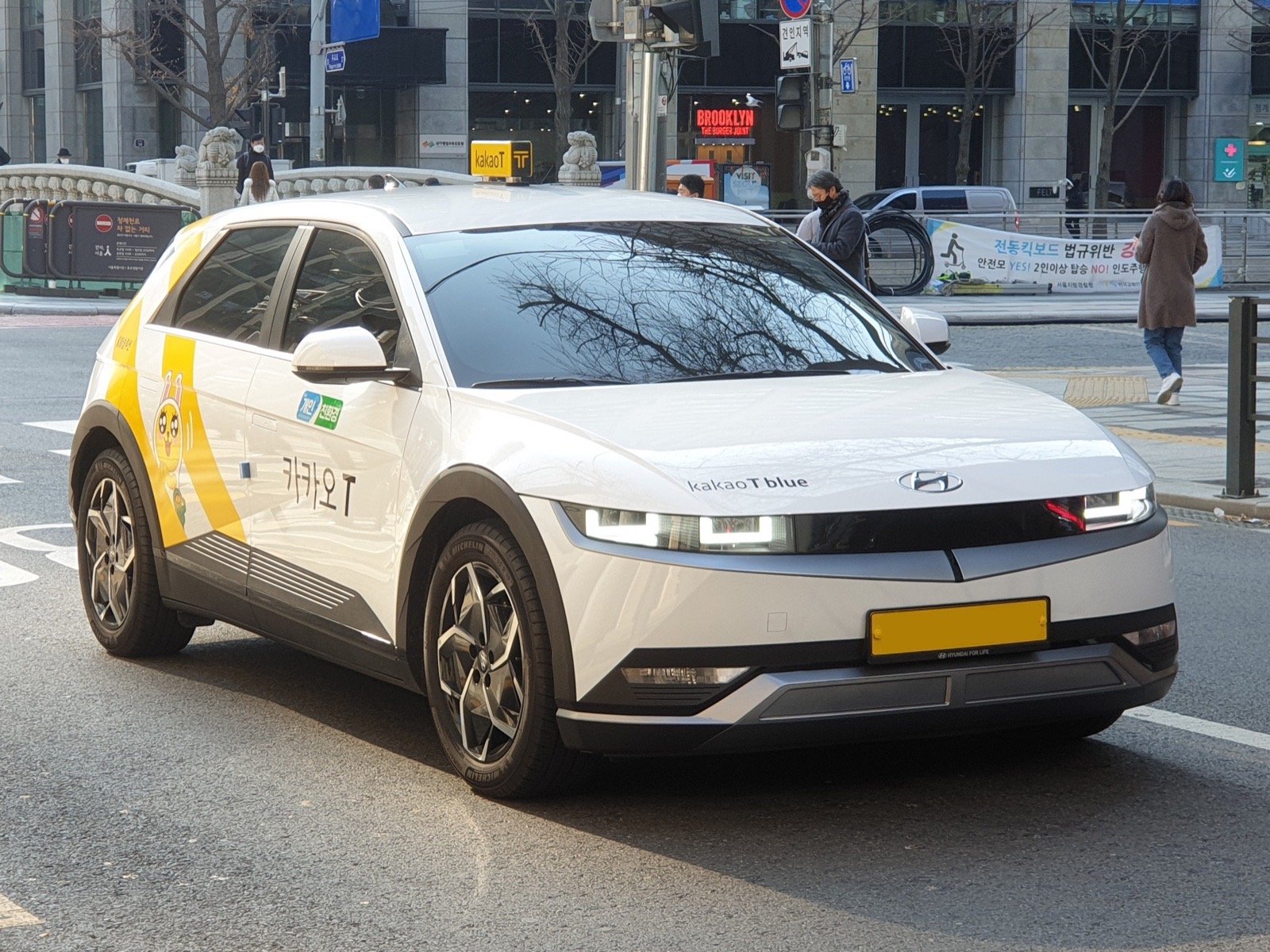
    A white Kakao T Blue taxi with a yellow roof sign on a street in Seoul
    A Kakao T Blue taxi in Seoul. Some taxi apps want a phone number. Photo: Damian B Oh, CC BY-SA 4.0, via Wikimedia Commons

    For most visitors, I don’t think so. At SK Telecom and KT, data works whether or not you’ve done the passport check, and both allow internet calls such as FaceTime. That covers most of what a visitor needs.

    If you do need calls and texts, here’s how they work:

    • Data-only plans: no outgoing calls or texts. LG U+ data plans can still receive them, and KT can’t add voice to a data plan later.
    • Voice plans: incoming calls and texts are free at SK Telecom and KT. Outgoing calls cost 4.4 won a second at SK Telecom (as of October 31, 2026).
    • Passport check: at SK Telecom and KT, it’s done after Korean immigration, online from 8 a.m. to 10 p.m. or at the airport counter. Each passport can verify just one plan; SK Telecom allows another once the first ends.

    The real limit is ID checks. Picture it: you’re booking dinner, and the restaurant app wants to text a code to a Korean number. Only LG U+ says its voice plans pass that kind of text check, and its data-only plans don’t.

    A full identity check is a firm no. None of the three carriers’ tourist plans support it, so any app or site that insists on one is off the table. My take: a Korean number helps with calls and texts, not with proving who you are.

    💬 Say it in Korean

    본인인증

    bonin injeung

    “Identity verification.” If you see this on a Korean app or website, it wants the ID check that tourist SIMs and eSIMs can’t do, so look for another way to sign up.

    Which taxi apps work without a Korean number?

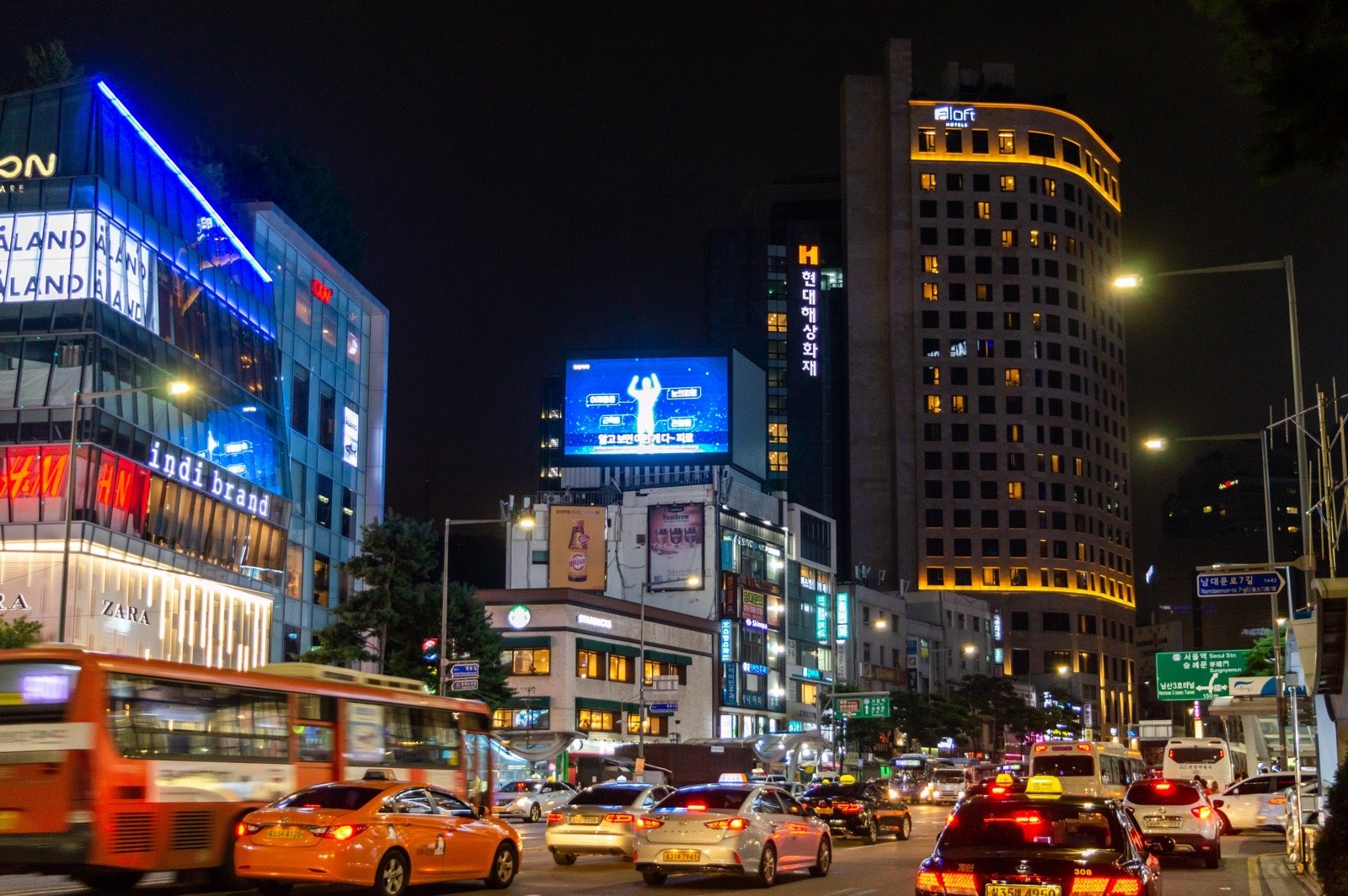
    Orange and white taxis and a city bus on Namdaemun-ro in Myeongdong, Seoul, at night
    Namdaemun-ro in Myeongdong at night. Set up a taxi app early. Photo: Tristan Surtel, CC BY-SA 4.0, via Wikimedia Commons

    Good news: not every taxi app needs a Korean number. VISITKOREA, the Korea Tourism Organization site, lists these:

    • k.ride: a taxi app for foreign visitors that Kakao Mobility launched in 2024. No KakaoTalk sign-up, foreign credit cards work in the app, and it comes in English, Japanese, and Chinese.
    • TADA: sign up with an international mobile number and pay by credit card.
    • TABA: sign up with a phone number or a Google or Apple ID.
    • Kakao T: you first need a Kakao account, made through KakaoTalk.

    That page was last updated in October 2025, so the rules may have moved. I’d install your app and sign up at home, so any surprise happens on your couch, not at the curb!

    And delivery apps? I couldn’t find an official page from Baemin, Coupang Eats, or Yogiyo on whether a foreign number works, so I’m not going to guess. Check in the app before you get hungry!

    FAQ

    Can I buy a Korean eSIM before I arrive?

    Yes, from all three carriers. At KT and LG U+, though, plans with calls and texts are airport-only.

    Do I need my passport for a Korean SIM or eSIM?

    Keep it handy. KT asks for your passport details when you buy, and both SK Telecom and KT need a passport check in Korea before calls and texts come through.

    How long can I use a tourist SIM or eSIM?

    Up to 90 days. SK Telecom and KT sell these plans for short visits of 90 days or less.

    If you do one thing before your flight, make it this: check the lock and the EID on your phone before you pay for any plan. Spotted something that’s changed? Tell me on the Contact page and I’ll check it against the official source.

    Hwaiting! (It’s how Koreans say “you’ve got this.”)

    Yuna

    📌 Read next

    🎟️ Book it

    Want it sorted before you fly? These are the ones I would look at on Klook:

    Sources and last check

    How I put this guide together: from the English pages SK Telecom, KT, and LG U+ publish for visitors, Incheon Airport’s facility guide, Apple and Google help pages, and VISITKOREA, all checked on October 31, 2026. Nothing here is sponsored (the booking links are affiliate links, as noted at the top), and no carrier paid for or reviewed it. More on how I research every guide is on the About page.

    Last checked: October 31, 2026. Prices, plans, and counter hours change often, so please confirm on the official pages before you buy. This is an independent guide, not affiliated with SK Telecom, KT, LG U+, Incheon International Airport, Apple, Google, or any app named here.

    Official sources (all in English):

  • Incheon Airport to Seoul (2026): AREX, Limousine Bus or Taxi?

    Incheon Airport to Seoul (2026): AREX, Limousine Bus or Taxi?

    Some links in this guide are affiliate links. If you book through them, Hello Korea Tips may earn a small commission at no extra cost to you.

    Last checked: October 31, 2026

    You’ve just landed, you’re tired, and the arrivals hall has signs for trains, buses, and taxis all at once. Don’t worry, you only need one of them. With light bags, I’d take the all-stop AREX train on a T-money card, the cheapest option here. Below, I’ll match the others to your luggage, group size, landing time, and hotel.

    Quick answer

    • 🚇 All-stop AREX: 59 minutes from T1 to Seoul Station, 4,750 won on T-money (not the Climate Card)
    • ⏱ AREX Express: 43 minutes from T1, nonstop to Seoul Station, 13,000 won
    • 🚌 Limousine bus: most routes 17,000 or 18,000 won, and I’d buy the ticket first
    • ✅ My default: the all-stop train, unless you have big bags, a group, or a late landing

    Times and fares here are from Terminal 1 unless I say otherwise; trains start at Terminal 2, so from there it’s a few minutes longer, and the all-stop train costs a bit more.

    First, which terminal did you land at?

    Arrivals hall at Incheon Airport Terminal 2 with SIM card counters and an Arrivals A sign
    The arrivals hall at Terminal 2. Trains and buses are both one floor down.

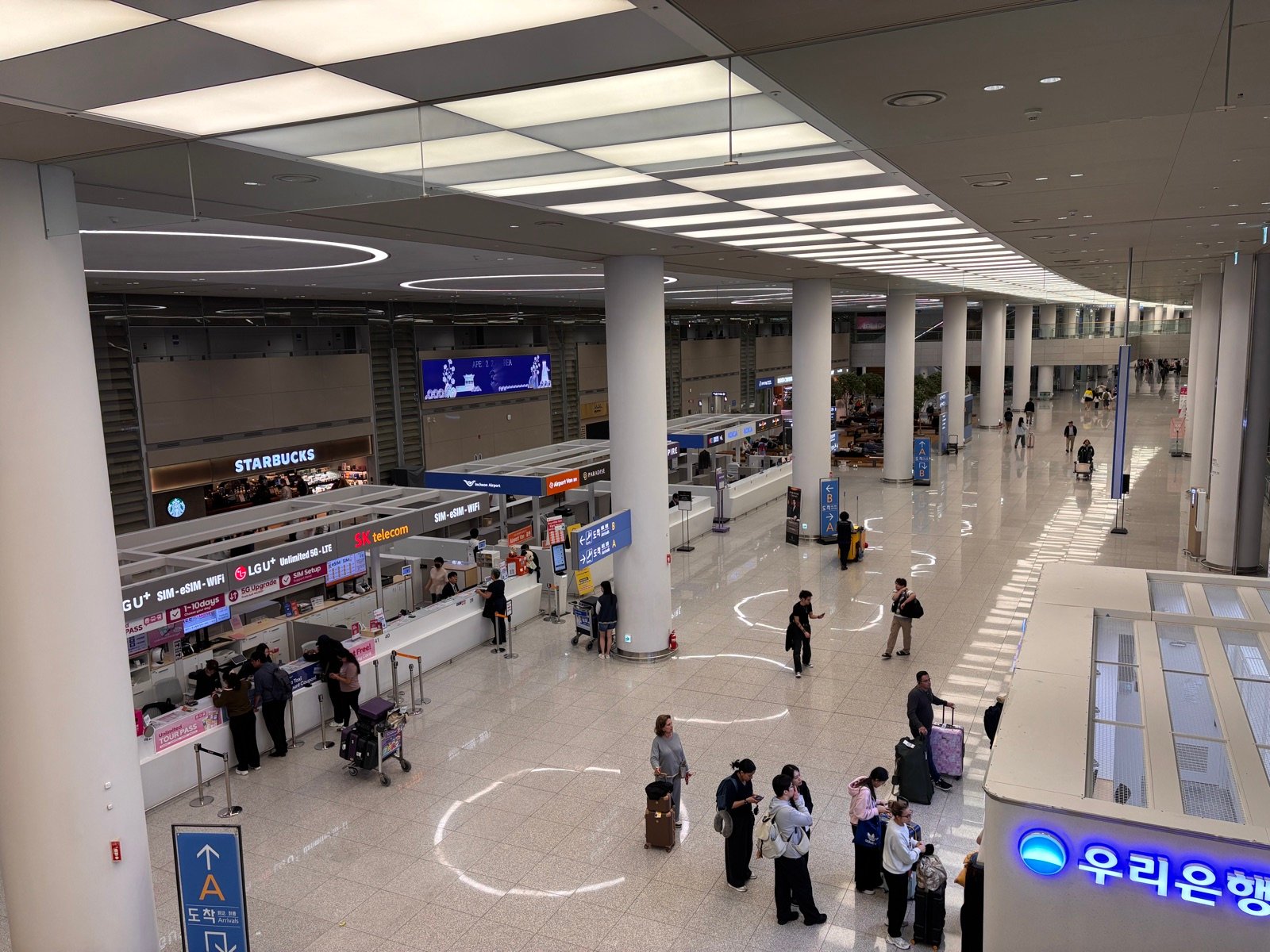
    Incheon has two terminals, T1 and T2, and almost everything below depends on which one you’re in. Here’s where to head once you’re through the arrivals doors:

    • Terminal 1: trains leave from the Transportation Center, which you reach through B1. The platforms are further down, on B4. Buses to Seoul leave from outside exits 3 to 7 on the arrivals floor.
    • Terminal 2: trains and buses are both in the Transportation Center on B1. Seoul buses use stops 11 to 35 in the middle, and the train platforms are on B3.

    All-stop trains start at T2 and reach T1 six minutes later. Most buses work the same way: comparing the airport’s own timetables, I found they leave T2 first and T1 about 20 minutes after.

    One more thing before you book anything with a set time. The airport itself says to allow one to two hours after landing for immigration, and I’d plan on the longer end if you checked a bag.

    Train, bus, or taxi? Here’s how I’d choose

    A white Airport Limousine bus waiting at a covered bus stop at Incheon Airport Terminal 1
    A limousine bus stop at Terminal 1, with signs pointing to trains and taxis. Photo: Narubaru7, CC BY 4.0, via Wikimedia Commons

    I’d base it on four things: your bags, your group size, when you land, and where you’re sleeping.

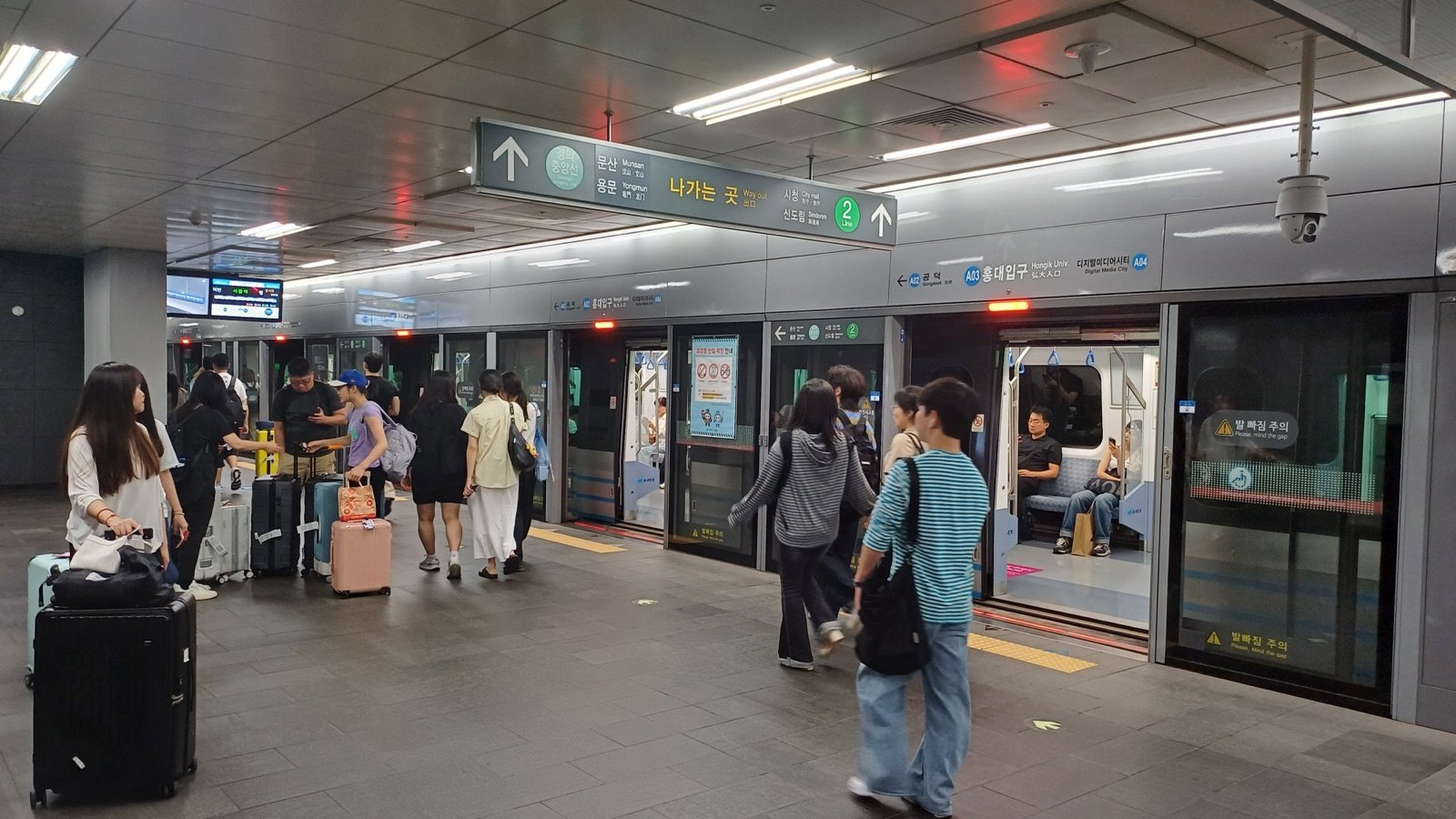
    The hotel question settles most of it. The all-stop train drops you right at Seoul Station, Gongdeok, Hongik Univ., or Digital Media City. The buses go to areas the train doesn’t reach directly, like Myeongdong, Gwanghwamun, Gangnam, and Jamsil.

    Yuna’s pick

    Light bags and a hotel near an AREX stop? I’d take the all-stop train. It costs the least and runs often.

    Big suitcase and a hotel near a bus stop in Myeongdong, Gangnam, or Jamsil? My pick is the limousine bus, so you skip a subway hwanseung (transfer) with luggage in tow.

    Three or four of you with lots of bags, or a hotel far from both? I’d go by taxi, a large 9-seat one if the bags won’t fit a regular cab. Train and bus fares are per person, while a taxi runs on one meter.

    Landing late changes the math. The last all-stop train to Seoul Station leaves T1 at 11:38 p.m., and the last Express at 10:48 p.m. Add immigration on top, and a late flight can miss both.

    If that’s you, read the late-night section before you fly.

    The all-stop AREX train: cheap, frequent, and my default

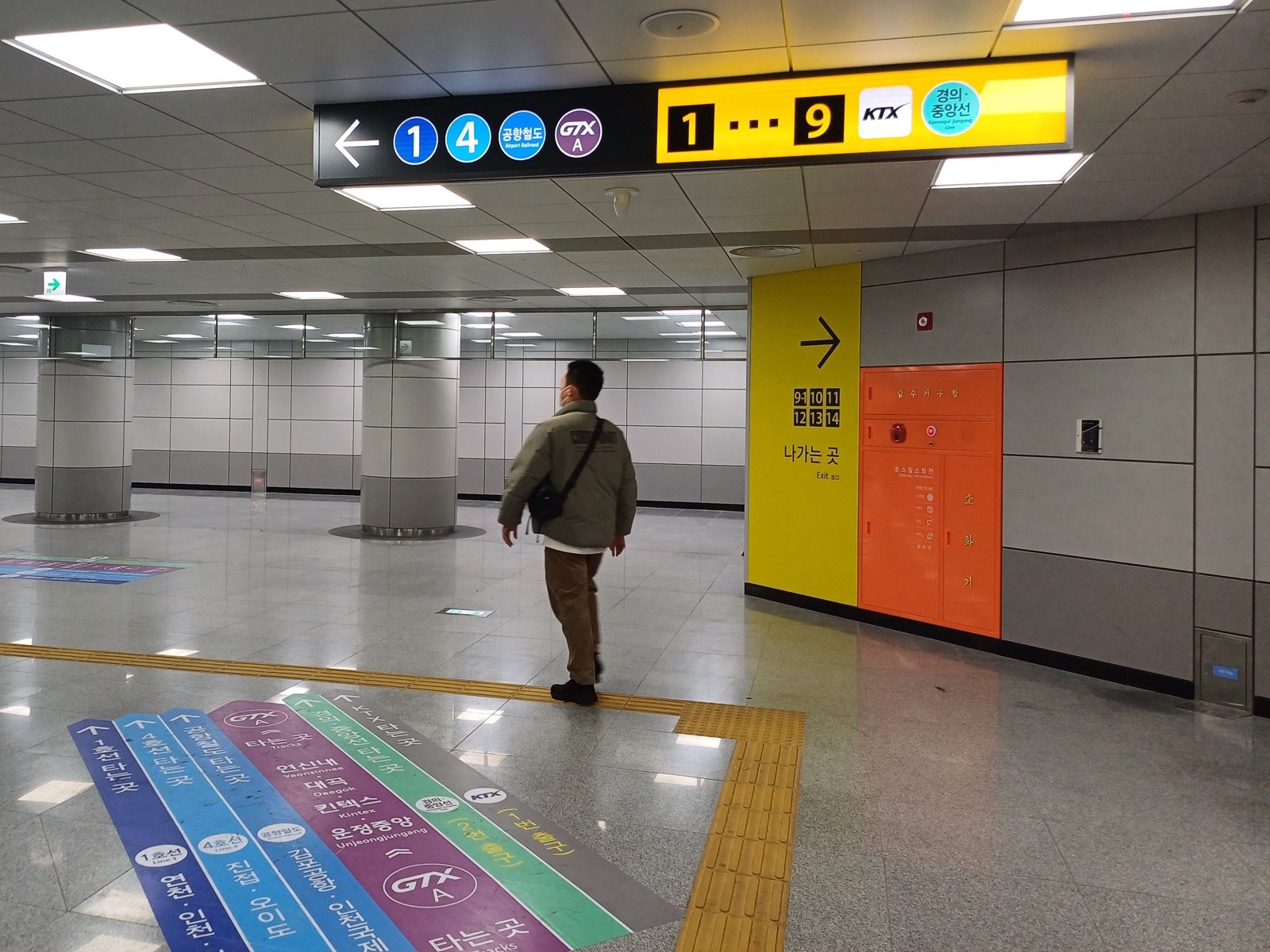
    Signs for Lines 1 and 4, the Airport Railroad and GTX-A in a Seoul Station concourse
    Seoul Station, the end of the line. Signs point to Lines 1 and 4.

    AREX (the Airport Railroad) runs two kinds of trains, and the all-stop one is my default. It takes 59 minutes from T1 to Seoul Station and 66 minutes from T2, though some trains take 2 to 6 minutes longer.

    It runs often, too. I counted the official weekday timetable: from T1, a train to Seoul Station leaves every 4 to 11 minutes between 7 a.m. and 9 p.m. The first trains leave T2 at 5:08 a.m. and T1 at 5:14 a.m.

    Here’s where it stops in Seoul, with adult T-money fares as of October 31, 2026:

    Stop Main transfers Fare from T1 / T2 Time from T2
    Seoul Station Lines 1, 4, KTX 4,750 / 5,350 won 66 min
    Gongdeok Lines 5, 6 4,650 / 5,250 won 62 min
    Hongik Univ. Line 2 4,650 / 5,250 won 58 min
    Digital Media City Line 6 4,550 / 5,150 won 54 min
    Magongnaru Line 9 4,350 / 4,950 won 47 min
    Gimpo Airport Lines 5, 9 4,350 / 4,950 won 44 min

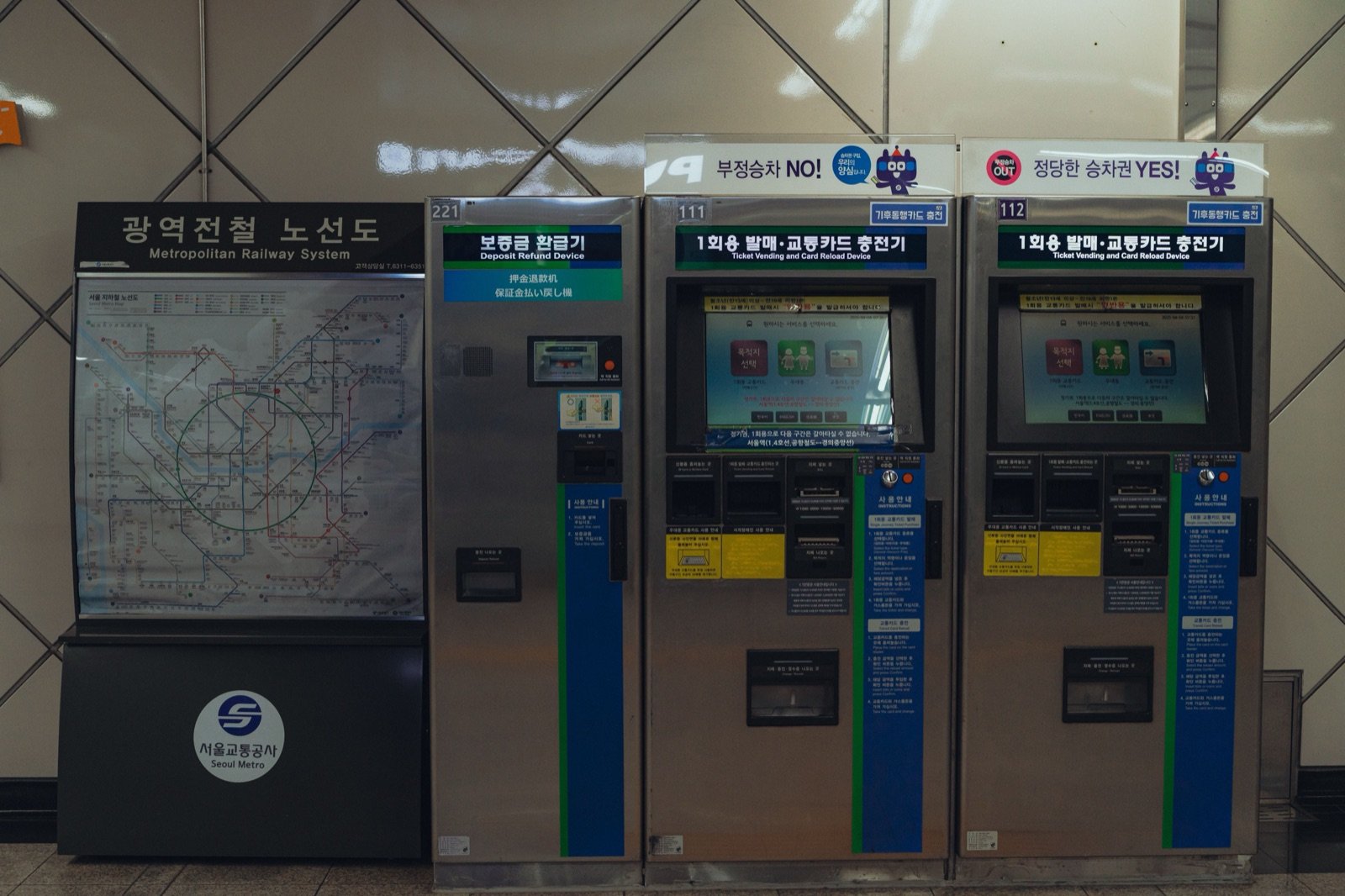
    T-money is the standard rechargeable transit card in Korea: you load money and pay as you go. AREX says you can buy one at convenience stores and transit card vending machines, then top it up at station ticket machines.

    The other choice is a single-journey ticket from the machines on B1 of the Transportation Center. It costs 100 won more, plus a 500-won deposit you get back at the deposit refund machine where you get off.

    ⚠️ Heads-up

    On arrival day (airport to Seoul), the Climate Card doesn’t work, and AREX stations can’t charge it. Pay for your ride in another way, such as a T-money card or a single-journey ticket.

    Is the AREX Express worth 13,000 won?

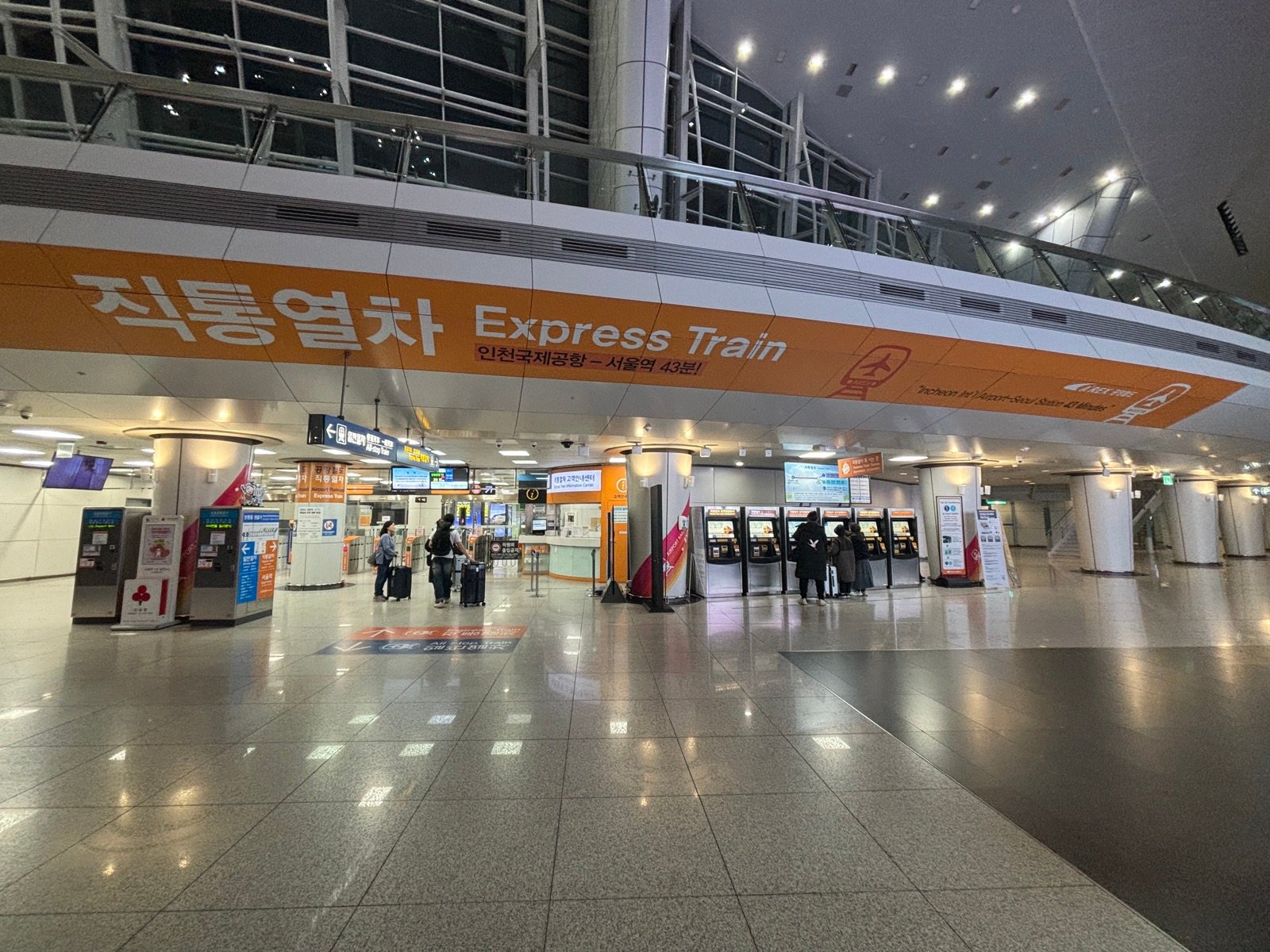
    AREX railway concourse at Incheon Airport Terminal 1 with an orange Express Train banner
    The Express Train area at Terminal 1 station. Buy the ticket before the gate. Photo: MNXANL, CC BY-SA 4.0, via Wikimedia Commons

    The Express runs nonstop between the airport and Seoul Station, and you buy a separate ticket before you board. It takes 43 minutes from T1 and 51 from T2, with trains leaving T1 between 5:24 a.m. and 10:48 p.m.

    An adult ticket is 13,000 won, and a child’s (ages 6 to 12) is 9,500 won. Seats are reserved, and you get free Wi-Fi, onboard attendants, and even bottled water if you ask!

    You can buy one on the AREX website, in the AREX Express app, or at machines on B1 of either terminal’s Transportation Center. Foreign Visa, Mastercard, JCB, Diners, Amex, and UnionPay cards are accepted for Express tickets. Kakao Pay, Alipay, WeChat Pay, and a few other wallets work online only.

    Booking online works up to two months ahead for up to 12 people, and you get a QR code to scan at the gate. If you book before you land, leave room for that immigration buffer. Your ticket also asks you to be on the platform 3 minutes before departure.

    Honest take

    From T1, the Express saves 16 minutes over the all-stop train and costs 8,250 won more than paying by T-money. With a big suitcase, I’d pay that for a reserved seat, but only when Seoul Station is where you’re going.

    Staying near Hongdae? Skip it. The all-stop train stops right at Hongik Univ., and the Express doesn’t. It also leaves roughly every 30 to 65 minutes, so if you’ve just missed one, the all-stop train may get you in first.

    Limousine buses: buy the ticket before you queue

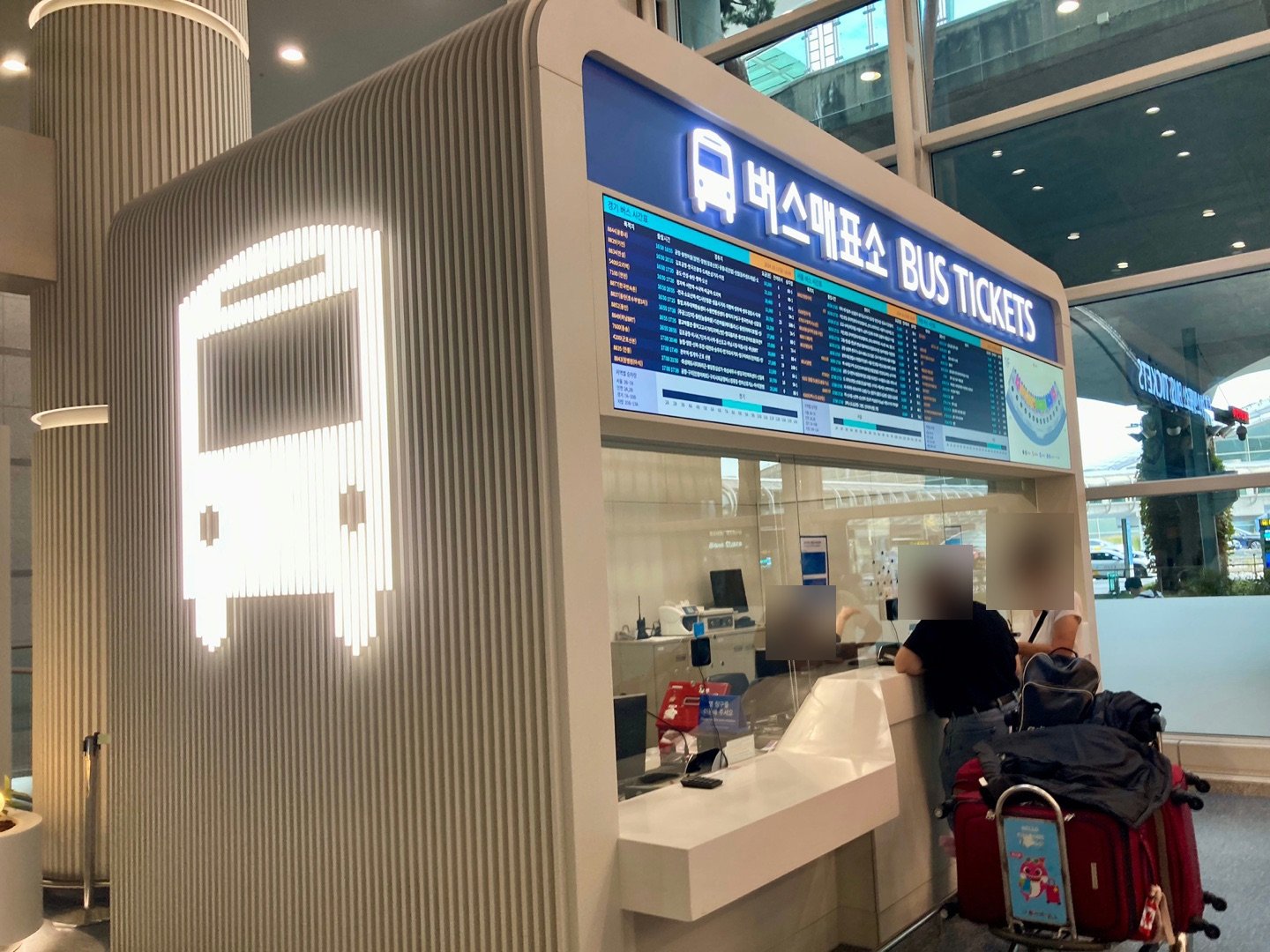
    Bus ticket booth with a lit bus icon at Incheon Airport Terminal 1
    The bus ticket counter at Terminal 1. Stop here first and skip the guessing. Photo: Narubaru7, CC BY 4.0, via Wikimedia Commons (faces blurred)

    Airport limousine buses are coaches that run from the airport straight to Seoul’s hotel areas. The airport lists 37 routes to Seoul, including four late-night ones. That’s a lot of numbers to scan when you’re jet-lagged!

    These are the ones I’d check first, with their stop numbers at each terminal:

    Bus Main stops Adult fare Stop (T1 / T2)
    6001 Seoul Station, Myeongdong, DDP (Dongdaemun) 17,000 won 5 / 29
    6002 Hongik Univ., Sinchon, Gwanghwamun, Cheongnyangni 17,000 won 6 / 30
    6015 Gongdeok, Namdaemun Market, Myeongdong 17,000 won 5 / 28
    6701 Gwanghwamun, City Hall, Myeongdong 18,000 won 3 / 18
    6702 Seoul Station, Itaewon, DDP 18,000 won 3 / 18
    6703 Gangnam: Sinnonhyeon, Coex, Seolleung 18,000 won 3 / 19
    6705A Jamsil (Lotte World), Dong Seoul Terminal 18,000 won 4 / 19
    6103 Samseong Station, Coex 18,000 won 7 / 21

    Here’s the catch: how you pay depends on the terminal and the bus company.

    • At T1: Airport Limousine boards ticket holders first, but the 6001, 6002, and 6015 go in line order and take cash, a transit card, or a ticket.
    • At T2: every Airport Limousine route needs a ticket.
    • At both terminals: the 6701, 6702, 6703, and 6705A, from a different company, take only a paper ticket, not cash or a transit card.

    Airport Limousine has no advance booking: it’s first come, first served. And the Climate Card doesn’t cover any of these buses.

    💡 Yuna’s tip

    Buy your ticket at a counter or kiosk before you join the line. A ticket works on every route at both terminals, and Airport Limousine’s kiosks run 24 hours.

    On bags, Airport Limousine allows two per person under 28 inches and 20 kg each, but only one bigger bag. Extra bags are 8,000 won each, carry-ons included. The 6700-series allows two bags, up to 40 kg in total.

    With two big suitcases each, I’d ask at the counter first.

    Taxis: simple, as long as you start at the right stand

    A silver Seoul taxi with a rooftop TAXI sign on a city street
    A Seoul taxi with its rooftop sign. Regular meters start at 4,800 won.

    A taxi is the door-to-door option, and the one I’d pick for a group with a pile of luggage. Regular taxis wait at stands 5C, 6C, and 6D at T1. At T2, Seoul taxis use 7C.

    Here’s what you’ll pay in a Seoul taxi, as of October 31, 2026:

    • Regular meter: 4,800 won to start, and it ticks up with distance and slow traffic.
    • Late night: 20% more from 10 to 11 p.m. and 2 to 4 a.m., and 40% more from 11 p.m. to 2 a.m.
    • Deluxe and large (9-seat): 7,000 won to start, at stands 7C/8C at T1 and 7D at T2.
    • No city-boundary surcharge into Seoul, because the airport is a shared service area for Seoul, Incheon, and four Gyeonggi cities.

    I couldn’t find an official estimate for the fare downtown, or whether highway tolls get added. I’d rather not guess, so I’d ask the driver for a rough figure before setting off.

    💬 Say it in Korean

    여기로 가 주세요

    yeogiro ga juseyo

    “Please take me here.” I’d show it with your hotel’s Korean name and address.

    Want help in English? Seoul runs the International Taxi for foreign visitors. It has desks at both terminals and its own stands (4C at T1, 3C at T2), with staff who help in English, Japanese, and Chinese.

    It offers flat fares by zone between Seoul and the airport, or the meter plus 20%, and takes foreign credit cards, transit cards, and cash. Book at least 24 hours ahead on intltaxi.co.kr, or walk up to the desk.

    💡 Yuna’s tip

    If someone inside the terminal offers you a ride, smile, say no thanks, and walk to the numbered taxi stands. The airport warns about call vans posing as taxis and overcharging.

    Landing late? Here’s what runs after the trains

    Curbside at Incheon Airport Terminal 2 at dusk, with an Airport Limousine bus and taxis below
    Terminal 2’s curb at dusk, with taxis waiting on the lower road.

    After the last trains, four night buses take over, with tickets from the counters or kiosks (times from T1):

    • N6000 (17,000 won): Gangnam Express Bus Terminal in 70 minutes
    • N6002 (17,000 won): Hongdae in 45 minutes, then Cheongnyangni
    • N6701 (18,000 won): Seoul Station in 60 minutes, then Euljiro 1-ga and DDP
    • N6703 (18,000 won): Coex in 65 minutes, then Jamsil and Gwangnaru

    The first leaves T1 at 11:40 p.m., and none leave T1 between 2:10 and 3:40 a.m. The N6701 and N6703 also sell tickets in the T-money GO app, but I’d skip it. Their airport stops take paper tickets only, and any QR ticket must be swapped at a staffed counter first.

    Honestly, if you’re out of arrivals after the last train, I’d take a taxi, surcharge and all, rather than figure out a night bus on a dying phone battery.

    FAQ

    How long does it take from Incheon Airport to Seoul?

    From T1 to Seoul Station, you’re looking at 43 minutes by Express or 59 by all-stop train. Bus times depend on traffic, and I couldn’t find official daytime figures.

    Can I use the Climate Card on AREX?

    Only toward the airport. Since September 13, 2024, you can ride AREX (the Airport Railroad) from a covered Seoul station, such as Seoul Station, Gongdeok, or Hongik Univ., to Incheon Airport Terminal 1 or 2 at no extra charge. My Climate Card guide has the details.
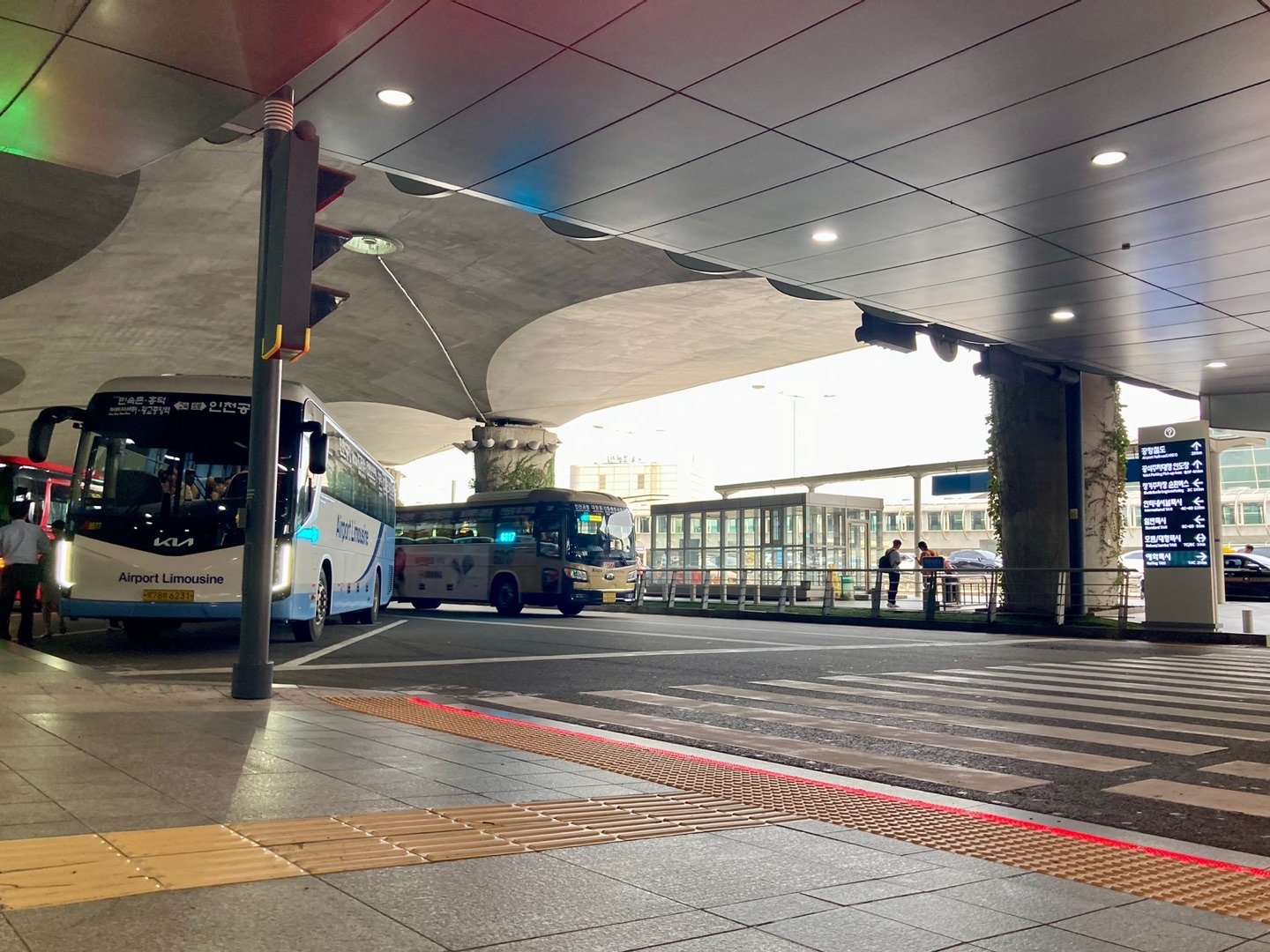
    Does AREX run all night?

    No: after the last trains, you’re on a night bus or in a taxi until the first train leaves T1 at 5:14 a.m.

    If you spot something that’s changed, tell me on the Contact page and I’ll check it against the official source. Enjoy that first hot shower at the hotel!

    Hwaiting! (It’s how Koreans say “you’ve got this.”)

    Yuna

    📌 Read next

    🎟️ Book it

    Want it sorted before you fly? These are the ones I would look at on Klook:

    Sources and last check

    How I put this guide together: from the official AREX, Incheon Airport, limousine bus, and Seoul city pages, mostly in Korean (links below). I counted train frequencies from the official timetables myself. Nothing here is sponsored (the booking links are affiliate links, as noted at the top), and no organization paid for or reviewed it. More on how I research every guide is on the About page.

    Last checked: October 31, 2026. Fares, timetables, boarding spots, and payment rules can change without notice, and the airport says its own pages are for reference only. Please confirm on the official pages before you travel. This is an independent guide, not affiliated with AREX, Incheon International Airport Corporation, any bus company, or the Seoul Metropolitan Government.

    Official sources (mostly in Korean; your browser’s translate feature helps):

  • Seoul Climate Card for Tourists (2026): Prices, Foreign Cards & T-money

    Seoul Climate Card for Tourists (2026): Prices, Foreign Cards & T-money

    Some links in this guide are affiliate links. If you book through them, Hello Korea Tips may earn a small commission at no extra cost to you.

    Last checked: October 31, 2026

    Short version: in Seoul for three days or more and taking three-plus trips a day? I’d get the Climate Card. If you ride less, take day trips, or use the Shinbundang Line, T-money is usually cheaper. Below, I’ll show you how the days really work and the airport rule that trips people up.

    Quick answer

    • 💰 Price: 1, 2, 3, 5, or 7 days for 5,000 to 20,000 won, plus 3,000 won for the card
    • 🚇 Covers: subway within Seoul and Seoul city buses, not the Shinbundang Line or GTX-A
    • 💳 Foreign cards: yes, at newer machines in Seoul Metro stations on Lines 1 to 8
    • ✅ Worth it if: 3+ days, 3+ trips a day, mostly inside Seoul

    The name doesn’t help, I know. “Climate Card” sounds more like a recycling campaign than a subway pass. The pass itself is simple: unlimited rides for a set number of days (some call it the tourist pass), sold only in Korea.

    What it costs, and when it actually pays off

    Travelers with a suitcase waiting at the platform screen doors of Anguk Station on Line 3
    Travelers waiting at Anguk Station on Line 3. Count your trips before you buy.

    My yardstick is the adult subway fare on a T-money card: 1,550 won a trip.

    I also count the 3,000-won card, because you’ll probably carry T-money anyway for arrival day and day trips. I worked out how many trips a day each pass needs to beat T-money:

    Pass and price Counting the 3,000-won card If you already own the card
    1-day
    5,000 won
    6+ trips that day 4+ trips that day
    2-day
    8,000 won
    4+ trips a day 3+ trips a day
    3-day
    10,000 won
    3+ trips a day 3+ trips a day
    5-day
    15,000 won
    3+ trips a day 3+ trips a day (2 is about even)
    7-day
    20,000 won
    3+ trips a day 2+ trips a day

    Quick note on counting: a trip here means one journey, not every time you board.

    On T-money, a transfer within 30 minutes of getting off (60 minutes between 9 p.m. and 7 a.m.) counts as part of the same trip, for up to five rides. So a quick subway-to-bus hop still counts as one trip.

    Take a relaxed week: out in the morning, back in the evening, two trips a day. Over seven days, that comes to 21,700 won on T-money, versus 23,000 won for a 7-day pass plus the card.

    For a week like that, I’d stick with T-money.

    If you pay by foreign card, the 3.7% fee doesn’t change any of these numbers.

    Honest take

    The 1-day pass is the hardest one to make worth it. With the card on top, you need six or more trips that day. I’d save it for your busiest day, not a slow one of cafes and side streets.

    Is a 1-day pass 24 hours? No, and it matters

    Platform screen doors and a train arrival board at Guil Station on Line 1 at dusk
    Guil Station on Line 1 at dusk. Too late to start a 1-day pass.

    Some English guides make it sound like a 24-hour pass. It isn’t! Day 1 is the day you charge it, and there’s no “activate later” option.

    Days are calendar days, counted inclusively, from 4 a.m. on day 1 until the last bus or train of the final day. Late-night buses are included, so the day really ends around 4 a.m. the next morning.

    So if you charge a 1-day pass at 7 p.m. on July 1, it still ends with the last service of July 1. You’ve paid 5,000 won for a few hours, and I’d hate for you to find that out at the gate.

    💡 Yuna’s tip

    Landing Monday evening and flying home Saturday? Use T-money on Monday, then charge a 5-day pass on Tuesday morning. It covers Tuesday through Saturday, including the regular (all-stop) AREX train to the airport.

    When a pass ends, you can charge a new one on the same card, even on a later visit. I’m a big believer in a slow first morning anyway: coffee first, then charge the pass.

    Where it works, and what changed on October 1, 2026

    A green Seoul branch bus, route 5524, passing a crosswalk in warm evening light
    A green Seoul branch bus. Seoul city buses are covered by the pass.

    On the subway, you can use it at stations within Seoul. On buses, it covers Seoul-licensed city and village buses, including late-night and circular buses, even when you board or get off in Gyeonggi Province.

    It doesn’t cover:

    • The Shinbundang Line (even at its stations inside Seoul) or GTX-A
    • Subway stations outside Seoul
    • Wide-area express buses, airport limousine buses, and buses licensed by other cities
    • Taxis, Ttareungyi (the city’s public bikes), the Hangang Bus, or shops, since the pass has no cash balance

    Staying around Gangnam? The Shinbundang Line is the one I’d watch for: a separately run line toward Pangyo, and an easy one to tap into out of habit.

    Here’s the catch if you’re reading older guides: on October 1, 2026, the pass stopped covering nearby cities such as Gimpo, Goyang, Gwacheon, Guri, Seongnam, Hanam, and Namyangju (the official notice says “and others”). Gimpo here means the city; Gimpo Airport station is inside Seoul.

    If you get off outside the area, the gate won’t let you out on the pass. Staff will charge the full fare from where you boarded, paid with a regular transit card.

    In practice, riding from Seoul Station to Bupyeong Market Station (the official example) means station staff charging you 1,950 won before you can leave. Not a fortune, but not my idea of a good end to a day out.

    For day trips to places like Suwon or Incheon, I’d carry T-money too. To check a specific station, use the coverage search on the official Seoul pages linked at the bottom.

    The Incheon Airport rule: it only works one way

    Travelers with suitcases on the Airport Railroad platform at Hongik Univ. Station in Seoul
    The Airport Railroad platform at Hongik Univ. Station. Toward the airport, the pass works.

    Since September 13, 2024, you can ride AREX (the Airport Railroad) from a covered Seoul station, such as Seoul Station, Gongdeok, or Hongik Univ., to Incheon Airport Terminal 1 or 2 at no extra charge.

    The other direction is a no: you can’t board at the airport stations with the pass.

    ⚠️ Heads-up

    On arrival day (airport to Seoul), the Climate Card doesn’t work, and AREX stations can’t charge it. Pay for your ride in another way, such as a T-money card or a single-journey ticket.

    Departure day is the easy direction. Picture it: bags packed, one last coffee, then you tap in at Hongik Univ. and ride the regular train to your terminal without paying extra.

    The pass works if it’s still valid, so I’d make sure yours still covers your flight day. Honestly, I’d rather not buy tickets with a suitcase in tow anyway.

    My take: skip the Express on the pass. Official pages only describe the regular all-stop train, and the AREX Express uses separate tickets.

    Can you buy it with a foreign card? Yes, at the newer machines

    Ticket vending and card reload machines beside a metropolitan subway map in a Seoul Metro station
    Ticket and recharge machines at a Seoul subway station. Not all take foreign cards.

    Good news: as of March 17, 2026, 440 newer ticket machines at 273 Seoul Metro stations (Lines 1 to 8) accept foreign-issued credit and debit cards such as Visa and Mastercard. Kakao Pay and Naver Pay work too!

    This is the order I’d go in (menu names may vary):

    1. Go on the morning of your first full day of riding, since charging starts the clock.
    2. Find a newer machine at a Seoul Metro station on Lines 1 to 8. On Line 1, that means stations between Seoul Station and Cheongnyangni; Korail-run stops may not have them.
    3. Buy the card (3,000 won), charge your days, and pay by foreign card, cash, Kakao Pay, or Naver Pay.
    4. Register it on the T-money Card & Pay website if you might want a refund. Unregistered cards can’t be refunded.
    5. Tap in and tap out every time, buses included. That’s it, you’re riding!

    💡 Yuna’s tip

    Not every machine is the new type. If one declines your card, don’t fight it. Try another newer machine, or pay with cash.

    Four more things I’d want to know:

    • Convenience stores: some near stations sell the card, but official sources don’t agree on which, so I’d go straight to a station machine.
    • Recharging: you can recharge at machines in Seoul subway stations; Korail, AREX, Shinbundang, and GTX-A stations can’t charge it. With a foreign card, use a newer Seoul Metro machine on Lines 1 to 8; others may take only cash or Korean cards.
    • Phones: the mobile version is Android-only and needs Korean identity verification, so I’d skip it and get the physical card.
    • Tap-to-pay: as of October 2026, you can’t tap a foreign bank card directly at subway gates. Seoul plans to add readers, buses first, and I’ll update this guide when it actually starts.

    💬 Say it in Korean

    기후동행카드 단기권

    gihu donghaeng kadeu dangigwon

    “Climate Card short-term pass.” Screenshot this and show it at the station counter. It saves a lot of pointing.

    Climate Card or T-money? Here’s how I’d choose

    Hand holding a Seoul Climate Card transit pass in front of blue subway platform screen doors
    The Climate Card. It says bicycle, but the short-term pass does not cover Ttareungyi.

    T-money is the standard rechargeable transit card in Korea: you load money and pay as you go. These are the adult fares:

    Ride T-money fare (as of Oct 2026)
    Subway, first 10 km 1,550 won
    Subway, longer rides +100 won per 5 km after 10 km (per 8 km after 50 km)
    Seoul city bus (trunk and branch) 1,500 won
    Village bus 1,200 won
    Late-night bus 2,500 won

    Yuna’s pick

    Three days or more, three-plus trips a day, staying inside Seoul? My pick is the Climate Card, especially if you’d rather not watch a balance.

    Taking only one or two trips a day, heading out of Seoul for the day, or using the Shinbundang Line, GTX-A, or an airport limousine bus? My vote goes to T-money.

    Honestly? For many itineraries, I think the simplest setup is both: the pass for busy sightseeing days, and T-money for the ride in from the airport and anything the pass doesn’t cover.

    On your last day, convenience stores refund small T-money balances for a 500-won fee (GS25 under 20,000 won; 7-Eleven up to 20,000 won; CU and emart24 up to 30,000 won).

    Need just a ride or two? A single-journey ticket costs 1,650 won plus a 500-won deposit you get back at the deposit refund machine in the station.

    Seven mistakes I’d hate for you to make

    Empty ticket gates at Myeongdong Station with green arrows and bilingual Way Out signs above
    Ticket gates at Myeongdong Station. Tap in and tap out, every time. Photo: LERK, CC BY-SA 4.0, via Wikimedia Commons (File: Seoul-metro-424-Myeongdong-station-gate-20181124-081950.jpg)

    My quick checklist before you tap in:

    1. Buying a 1-day pass in the evening. It ends with the last service that day. Mornings only, please.
    2. Trying to use it at the airport on arrival. You can only get off there. Arrival day is a T-money day.
    3. Tapping in on the Shinbundang Line or GTX-A. Not covered, even inside Seoul. Around Gangnam, read the sign twice.
    4. Riding to a station outside Seoul. You’ll pay the full fare at the exit. Pack T-money for your day trips.
    5. Trusting a 2024 guide. Coverage shrank on October 1, 2026, and “cash only” advice is outdated. I’d check the date on anything you read, this guide included.
    6. Boarding an airport limousine or wide-area bus. You’ll need T-money, cash, or a ticket. The pass sits this one out.
    7. Buying extra days “just in case.” Refunds take registration, paperwork, and a fee. Nobody flies to Seoul to do paperwork!

    Refunds: doable, but not fun

    Narrow stone-walled alley lined with hanok houses in Bukchon with N Seoul Tower in the distance
    A hanok alley in Bukchon. Some days are better on foot anyway.
    • You get back what you charged, minus the regular fare of every ride you took, minus a 500-won fee. After a few busy days, there may be nothing left, and the card price is not refunded.
    • The card must be registered on the T-money Card & Pay website first.
    • Card payments go back to the card; cash goes to a bank account. Without a Korean bank account, call the T-money customer center (1644-0088) first, since official pages disagree on cash refunds at the T-money head office.

    ⚠️ Heads-up

    Refunds run on a clock. Suspend your card while the pass is still valid (at a recharge machine or in the app), then file online within 15 days of the end date.

    My rule of thumb: buy only the days you need. I’d rather come up a day short than chase a refund, since you can charge a new pass on the same card once the old one ends.

    FAQ

    How long is the Climate Card 1-day pass valid?

    Until the last bus or train of the day you charge it, roughly 4 a.m. the next morning. So not a full 24 hours.

    Can I buy the Climate Card with a foreign credit card?

    Yes, at newer machines in Seoul Metro stations on Lines 1 to 8 (as of March 17, 2026), with a service fee of about 3.7% on average.

    Is the 30-day Climate Card still available?

    No. The prepaid 30-day pass could be charged until August 31, 2026, and used until September 29, 2026. Since September 1, 2026, Seoul’s Climate Pass (built on the national K-Pass program, with benefits aimed at Seoul residents) has replaced it. Short-term passes are still on sale.

    If you remember one thing, make it this: charge the pass on the morning you start riding. If you spot something that’s changed, tell me on the Contact page and I’ll check it against the official source. Have a great first ride!

    Hwaiting! (It’s how Koreans say “you’ve got this.”)

    Yuna

    🎟️ Book it

    Want it sorted before you fly? These are the ones I would look at on Klook:

    Sources and last check

    How I put this guide together: from the Seoul city and T-money pages in Korean (dates below), checked against the English notice on Korea.net. Nothing here is sponsored (the booking links are affiliate links, as noted at the top), and no organization paid for or reviewed it. More on how I research every guide is on the About page.

    Last checked: October 31, 2026. Prices, coverage, and payment options can change, so please confirm on the official pages before you travel. This is an independent guide, not affiliated with the Seoul Metropolitan Government, Seoul Metro, or T-money.

    Official sources (mostly in Korean; your browser’s translate feature helps):